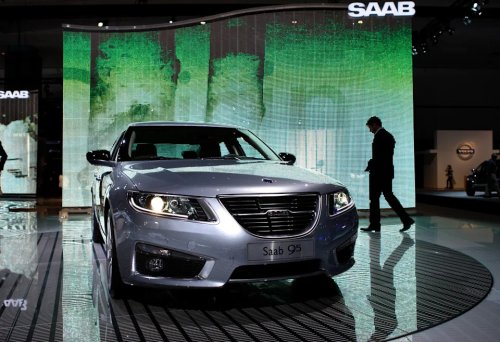
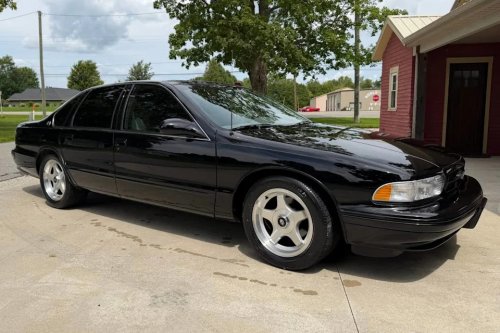
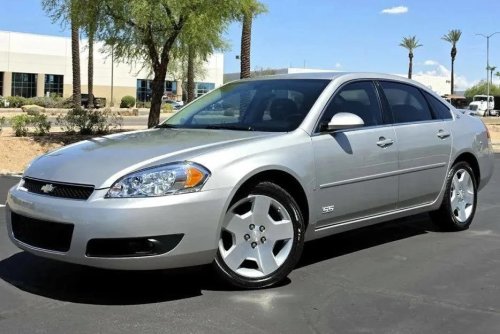
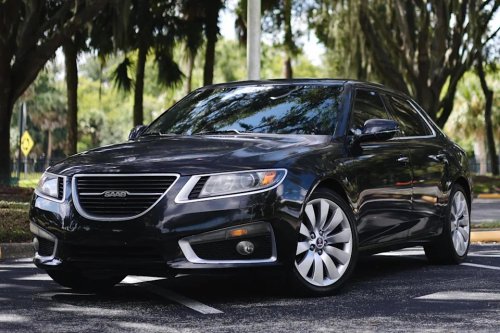
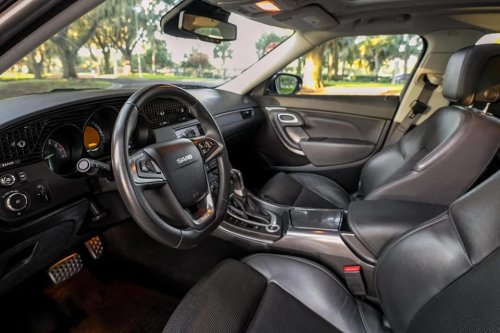
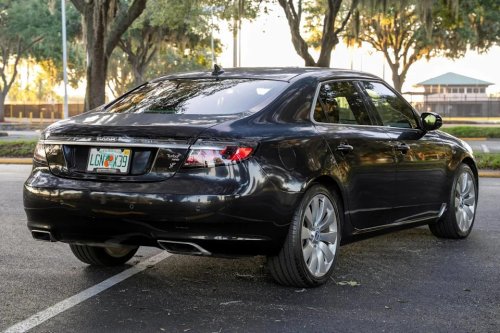
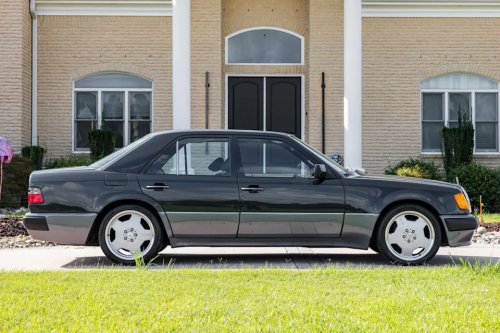
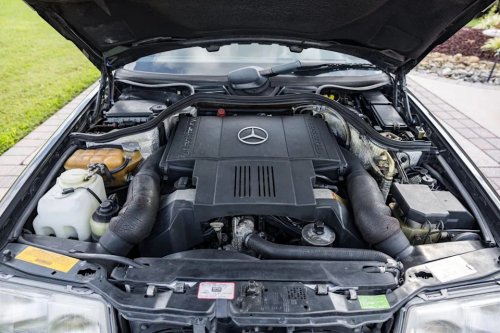
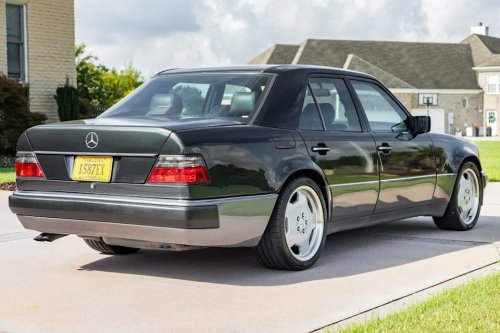


















3 Cars That Look Slow But Pack Hellish PerformanceAutoblogJoseph PudlewskiFri, September 18, 2026 at 11:45 PM UTCAdd us on GoogleAutoblog and Yahoo may earn commission from links in this article.While some sports cars boast aggressive bodywork, massive rear wings, and loud exhausts that make their presence known, others prefer to keep a low profile. Sleepers typically combine subtle styling with powerful engines, making them ideal cars for enthusiasts who enjoy keeping the element of surprise on their side. They may look like nothing more than a practical daily driver, but under the hood lies a true beast capable of unleashing performance that could put some sports cars to shame.Allen J. Schaben / Getty Images1. Chevrolet Impala SSWhen Chevrolet first unveiled the Impala SS in 1994, it came stocked with a 5.7-liter LT1 V8 engine that put out 260 horsepower transmitted to the rear wheels via a four-speed automatic transmission. That kind of power pushed the sedan to 60 mph in around seven seconds. While not all that impressive by today's standards, it was a true powerhouse in the mid-1990s, especially when combined with its subdued styling.TwoSons/Bring a TrailerFollowing the 1996 model year, Chevrolet discontinued the platform that underpinned the Impala, but the nameplate wouldn't be gone for long. The revived Impala arrived in 2000, but it wouldn't be until 2004 that the American automaker brought a revised performance variant to market. This time, a 3.8-liter supercharged V6 engine powered the sedan, generating 240 horsepower and reaching 60 mph in around 6.8 seconds.AdvertisementAdvertisementThat powertrain was around for just two model years before Chevrolet gave the Impala SS a massive upgrade. Circa 2006, the Impala SS came stock with a 5.3-liter LS4 V8 engine that pumped out 303 horsepower and raced to 60 mph in roughly 5.6 seconds.The LS4 small-block V8 engine was designed specifically for GM's front-wheel drive midsize sedans. It was shared among the Chevrolet Monte Carlo SS, Impala SS, and Pontiac Grand Prix. Unfortunately, the engine's bolt pattern required it to fit sideways into front-wheel drive engine bays. As a result, transmissions designed for rear-wheel drive vehicles couldn't be easily fitted with the LS4 engine.Unfortunately for Impala SS, the 2008 financial crash proved to be the death knell for the performance-driven model. Thanks to the company's financial issues, most low-volume specialty models were discontinued in order to reduce production costs. Not only that, but emissions and fuel efficiency regulations essentially made V8-powered passenger cars a liability rather than a net positive, effectively marking the end of the Impala SS.Bring a TrailerThinking about selling your car? Get an instant cash offer online now. Click here to get started.2. Saab 9-5 AeroNot to be confused with the 95, the Saab 9-5 first graced the market for the 1998 model year with simple styling, but it wouldn't make its way to our shores until the following year. Available in sedan and station wagon bodystyles, it served as an alternative executive car to the BMW 5 Series and Mercedes-Benz E-Class. While turbocharged engines were a staple of the nameplate, the Aero model was the most popular from a performance perspective.Cars & BidsDespite its muted styling, the 9-5 Aero was a true powerhouse. Under the hood sat a 2.3-liter turbocharged four-cylinder engine that delivered 230 horsepower and 258 lb-ft of torque. Later first-gen models would get boosted to 256 horsepower and 273 lb-ft of torque when paired with a manual gearbox. All that power gave the Saab 9-5 Aero a 155-mph top speed and 60 mph time of 6.5 seconds.AdvertisementAdvertisementThe second-gen 9-5 Aero wasn't around long, arriving for the 2010 model year and leaving the next, but it packed plenty of power. The 2.8-liter turbocharged V6 engine boasted an output of 300 horsepower and 295 lb-ft of torque. Power was delivered to the all-wheel drivetrain via a six-speed automatic transmission. It also featured a lower suspension with stiffer components and larger front brakes. Despite its larger engine, the second-gen 9-5 Aero posted a 6.1-second 60 mph time, narrowly failing to break the six-second mark.Cars & BidsThe second-generation Saab 9-5 Aero's powertrain was the first to utilize an asymmetrical turbocharging system. The setup offered simplicity, optimized real-world fuel consumption, and delivered improved low-end torque. It wasn't without its downsides, though. The turbo bearings wore more frequently, and, since it only spools off 1.5-liter of displacement, offers limited power and a rather low boost ceiling.While the Saab 9-5 Aero was certainly a sleeper of an executive car, it wasn't exempt from the downfall of the brand itself. Due to financial problems and corporate bankruptcy, Saab halted vehicle production and began liquidating assets in 2011.Cars & BidsShopping for a new car? Click here to get a great deal on your next vehicle. Powered by Carvana, no haggle pricing, 100% online.3. Mercedes-Benz 500EBorn from collaboration between Mercedes-Benz and Porsche, the 500E, later renamed the E 500, is practically the definition of a "wolf in sheep's clothing." Produced between 1991 and 1995, each model was engineered and hand-built by Porsche. Each car took 18 days to complete, and just shy of 10,500 examples rolled off the production line.Bring a TrailerUnder the hood of the Mercedes-Benz 500E sat a 5.0-liter V8 engine mated to a four-speed automatic transmission that sent power to the rear wheels. It generated 322 horsepower and 354 lb-ft of torque, pushing the sedan to 60 mph in as little as 5.9 seconds. The 500E featured a lowered stance and Porsche-tuned coil springs, as well as upgraded ventilated brakes. While the car itself is an impressive feat of engineering, the story behind it is just as interesting.AdvertisementAdvertisementNaturally, the 500E featured an upscale style, but it didn't scream performance by any measure. While it was built on the W124 compact sedan, Mercedes-Benz was busy developing the new S-Class, so they turned to Porsche to take care of the 500E. In order to fit the M119 V8 engine under the hood, Porsche widened the front frame rails, among other components. While the engine would fit, the car was too wide to be built in-house at Mercedes-Benz's Sindelfingen production facility. The German automaker turned to Porsche once more, this time to build the 500E at their Zuffenhausen facility.Bring a TrailerIn mid-1995, Porsche shifted their manufacturing capacity to the Audi RS2 Avant, leaving no room for the 500E. At the same time, Mercedes-Benz launched the next-generation E-Class and phased out the W124 in favor of the W210. By the end of production, just 1,500 examples of the 500E came to the United States.Final thoughtsBring a TrailerLooks can be deceiving, and even cars with the most subdued styling could be hiding a monster of a powertrain under the hood. For drivers who prefer to fly under the radar, sleeper cars are an attractive package. While they may not draw as many eyes as exotic cars, it's worth keeping in mind that the fastest car in the room may be the one nobody gives a second glance.Disclaimer: Autoblog aims to feature only the best products and services. If you buy something via one of our links, we may earn a commission.AdvertisementAdvertisementThis story was originally published by Autoblog on Sep 18, 2026, where it first appeared in the Features section. Add Autoblog as a Preferred Source by clicking here.