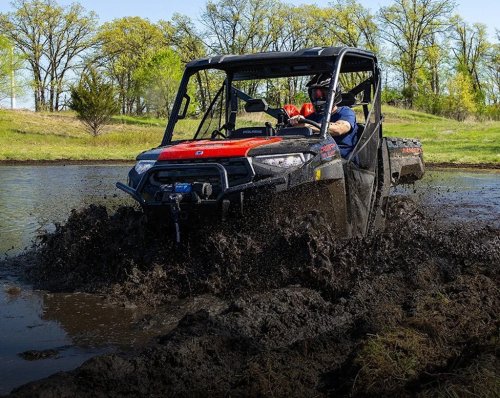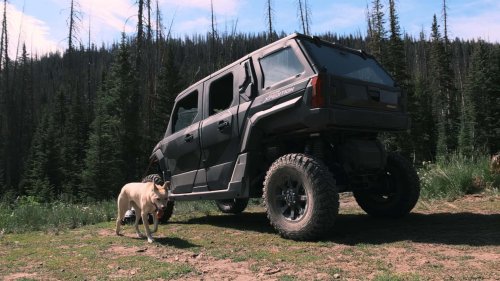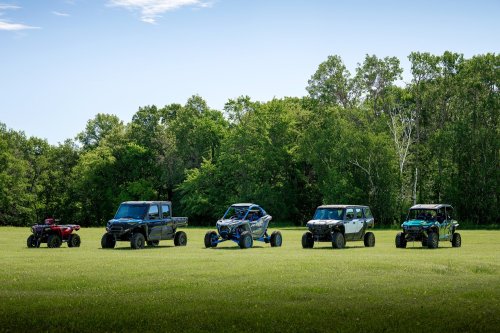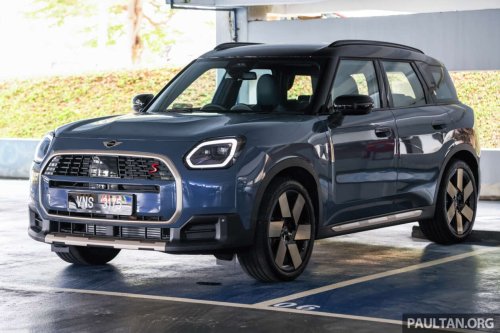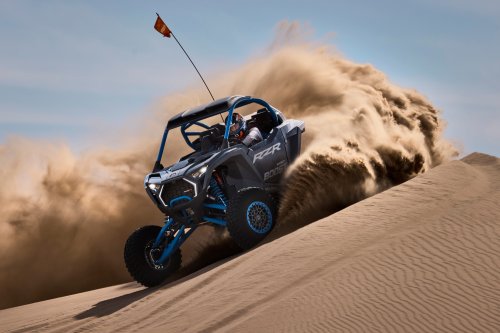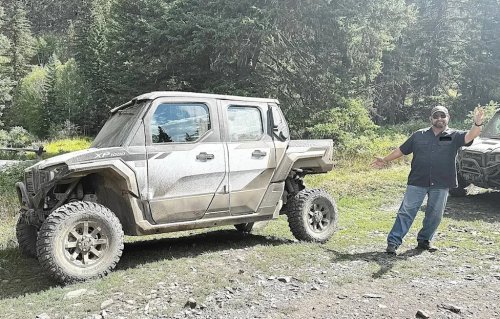
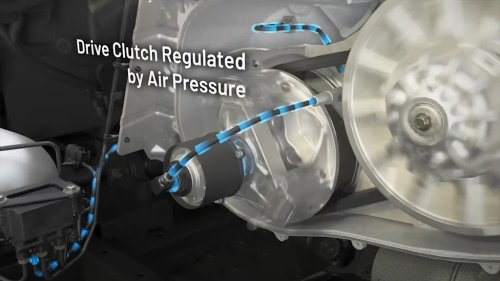
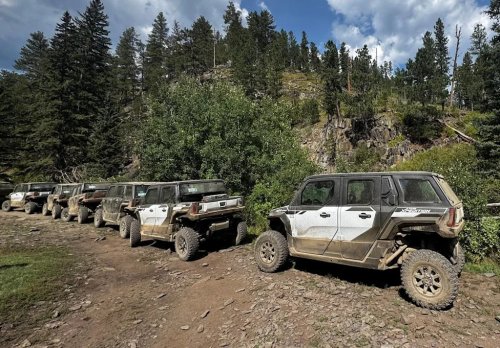
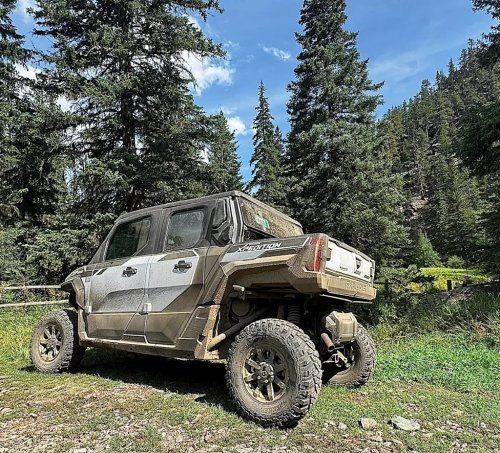
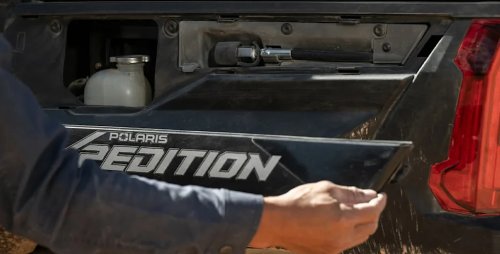
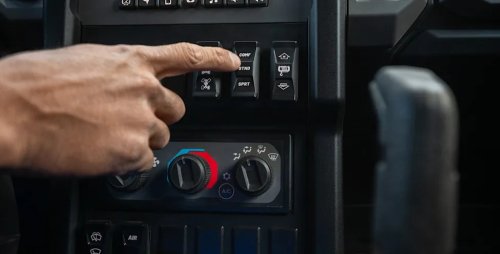


















2027 Polaris Xpedition NUMATIX Review: The CVT Finally Learned Some MannersAutoblogNathan AdlenFri, September 11, 2026 at 9:01 AM UTCAdd us on GoogleAutoblog and Yahoo may earn commission from links in this article.The Polaris Xpedition has always been a bit of an oddball, and I mean that in the best possible way. It is a side-by-side that seems to have looked at the traditional formula and decided it needed to be considerably larger, more comfortable, and more useful. The 2027 Xpedition NUMATIX takes that idea a step further by addressing something I didn't realize was much of an issue until I drove one with the new system: the NUMATIX CVT.I've driven plenty of CVT-equipped side-by-sides, so I know the drill. You hit the throttle, the engine revs climb, and then you spend the rest of the day making small throttle adjustments while listening to the engine sing the mechanical equivalent of an opera. It's part of the experience, but after spending a day in the Black Hills of South Dakota with the NUMATIX system, I realized that it doesn't have to be that way.AdvertisementAdvertisementAnd that's a very good thing.ND AdlenA Side-by-Side That Isn't Exactly "Side" by SideThe 2027 Polaris Xpedition is powered by a 999cc ProStar 1000 four-stroke, DOHC twin-cylinder engine producing 114 horsepower. My tester was the four-passenger version with a rear dump bed, although Polaris also offers fully enclosed versions that turn the rear cargo area into something resembling an SUV. Calling the Xpedition a side-by-side is technically correct, but the dimensions make that description feel increasingly optimistic.This thing is enormous for a UTV. Its overall dimensions come surprisingly close to those of a modern two-door MINI Cooper, which means you aren't putting it in the back of your pickup unless your pickup is approximately the size of a small building. Starting around $42,000 and easily climbing beyond $47,000 with options, the Xpedition is also well beyond traditional "toy" territory. This is a serious piece of equipment designed for people who need to travel through places where normal vehicles would rather not go.Related: The New Mitsubishi Pajero May Get a Hardcore Ralliart VersionAdvertisementAdvertisementThe size does have its advantages. The long wheelbase and wide stance give the Xpedition a planted, stable feeling that I really appreciated throughout our testing. It doesn't have the twitchy character some smaller side-by-sides can exhibit, particularly when you're moving quickly over rough terrain. The VersaTrac drivetrain provides on-demand two-wheel drive, four-wheel drive and low range, giving it the tools necessary to deal with everything from fast dirt roads to technical terrain.Of course, all of that is connected to a CVT.That's where NUMATIX changes the equation.ND AdlenThe CVT Is the StoryPolaris calls NUMATIX an industry-first pneumatically controlled CVT, and the basic idea is pretty clever. The system uses compressed air to actively regulate clutch pressure, monitoring terrain, vehicle behavior and driver inputs as often as 200 times per second. Instead of allowing the CVT to simply sit at high engine RPM whenever you're maintaining speed, NUMATIX can reduce cruising engine speed by approximately 45 percent.AdvertisementAdvertisementAt a steady 30 mph, Polaris says the engine can drop from around 7,500 rpm to approximately 4,500 rpm while maintaining the same vehicle speed. That sounds like a relatively boring engineering statistic until you're sitting behind the wheel and suddenly realize you're cruising along without the usual CVT drone. Polaris also says the system can reduce perceived cabin noise by as much as 40 percent at 35 mph, and while I didn't have a decibel meter strapped to my head, the difference was obvious.PolarisIn Comfort mode, NUMATIX essentially tells you to stop worrying about what the CVT is doing because it has it under control. The system automatically adjusts the clutch pressure and belt engagement to maintain speed with considerably less throttle input. The result is a quieter, smoother and more relaxed driving experience, particularly when you're covering longer distances.Sport mode is where the personality changes. It turns off the pneumatic intervention and allows the CVT to behave more traditionally, which means more engine noise and higher RPM. It does feel more raucous, but I didn't find the performance improvement significant enough to justify spending the entire day there. I left the Xpedition in Comfort for most of the test, and once I got used to the system, I really didn't want to give it up.The Black Hills Were PerfectPolaris took us into the Black Hills of South Dakota, which turned out to be an almost comically good test environment. We experienced dry, dusty trails, rocky terrain and fast sections before the weather decided we hadn't suffered enough and opened up with a massive hailstorm. After that came mud and some seriously gooey low-traction conditions.AdvertisementAdvertisementIn other words, somebody accidentally ordered the entire off-road testing menu.The Xpedition performed extremely well through all of it. The long wheelbase and wide track provided excellent stability, while the four-wheel-drive system gave me the traction I needed when things got slippery. The ride is good for a side-by-side, although you should keep your expectations realistic. You're still sitting in a machine designed to drive over rocks, mud and terrain that would make a normal crossover call roadside assistance.ND AdlenWhat impressed me more was how comfortable the Xpedition remained while doing it. I left the air conditioning running for much of the day, enjoyed the JBL Trail Pro audio system once I finally convinced Bluetooth to cooperate with my phone, and generally felt like I was being coddled while bouncing around the backcountry. That's not something I expected to say about a vehicle that was actively driving through mud.The RIDE COMMAND system was also excellent. Its off-road GPS and Group Ride functionality helped me find the rest of the convoy after I managed to get a little lost, because apparently even automotive journalists occasionally need electronic supervision. Keeping track of the other vehicles and navigating unfamiliar trails is exactly the sort of situation where this technology makes sense.ND AdlenThere's More to "Air" Than Meets the EyeThe onboard compressor isn't simply there to make NUMATIX work. Polaris gives owners access to that compressed air for practical purposes, including airing up tires with the supplied 25-foot hose and operating certain accessories.AdvertisementAdvertisementFor somebody using an Xpedition on a ranch, hunting property or extended camping trip, that's genuinely useful. You're already carrying a large, expensive machine into the middle of nowhere, so having your own air supply along for the ride is a nice bonus.PolarisAnd considering NUMATIX costs roughly $1,000 more, I'd probably spend the money. If you're already north of $40,000, another grand for a system that makes the machine quieter, smoother and more useful isn't exactly the part of the purchase that should keep you awake at night.A Few Things Need WorkThe Xpedition's size is both one of its greatest strengths and one of my biggest complaints. This thing is approaching small-car dimensions, yet it doesn't have standard side mirrors. I'd also like to see a more sophisticated windshield-wiper system. Considering the Xpedition's price and technology level, a few additional wiper modes would seem like a reasonable request.PolarisView the 3 images of this gallery on the original articleAdvertisementAdvertisementThe convoy communication system also needs some reconsideration. You can use the keypad to communicate with other connected vehicles, but the system requires the vehicle to be stopped before you can type. During our drive, I saw the vehicle that had suffered a flat tire ahead of me and had no practical way to warn the rest of the convoy. Pulling over wasn't really an option because we were moving through dust clouds and stopping would have turned me into a very large obstacle for the vehicle behind me.I understand the safety reasoning, but this is exactly where having a passenger becomes useful. If somebody sitting next to me could operate the system while I concentrated on driving, it would suddenly become considerably more practical.ND AdlenView the 4 images of this gallery on the original articleFinal ThoughtsThe 2027 Polaris Xpedition NUMATIX isn't just a bigger side-by-side. It feels like Polaris is trying to create an entirely different category of off-road vehicle, one that combines the capability and open-air freedom of a UTV with the comfort, technology and practicality of something approaching an SUV.AdvertisementAdvertisementNUMATIX is a big part of that transformation. I can't honestly say I noticed the promised increase in outright speed, but I absolutely noticed the quieter cabin, smoother operation, and reduced need to constantly work the throttle. After several hours in the Black Hills, including dust, rocks, mud, and a hailstorm that seemed personally offended by our existence, those benefits became increasingly valuable.Related: 2026 Ford Bronco Outer Banks 4×4 Review. It Best Toes the Line Between Town & CountryMy biggest question is long-term durability. NUMATIX changes how the CVT belt is clamped and controlled, and I'd like to see what happens after thousands of miles and countless hours of real-world abuse.For now, though, if you're already willing to pony up for an Xpedition, I'd spend the extra thousand dollars for NUMATIX. It's one of those rare options that doesn't just add another feature to the brochure. It actually changes the way the vehicle feels.AdvertisementAdvertisementAnd after a full day in a side-by-side, quieter is not just better.Quieter can be epic.Related: First Drive: The 2027 Jeep Recon Delivers On The Electric Wrangler PromiseThis story was originally published by Autoblog on Sep 11, 2026, where it first appeared in the Reviews section. Add Autoblog as a Preferred Source by clicking here.