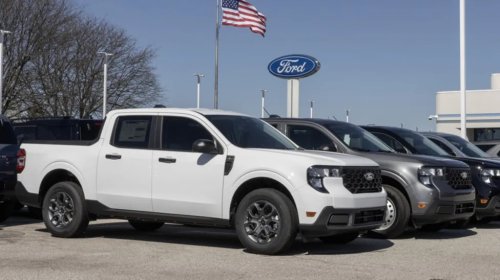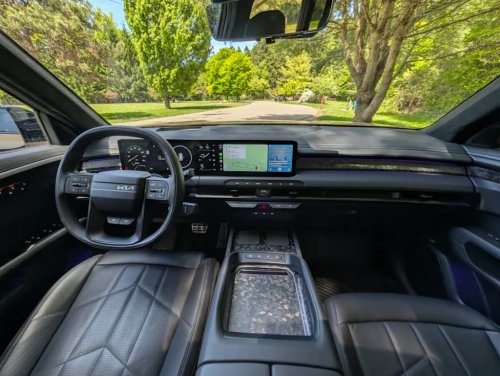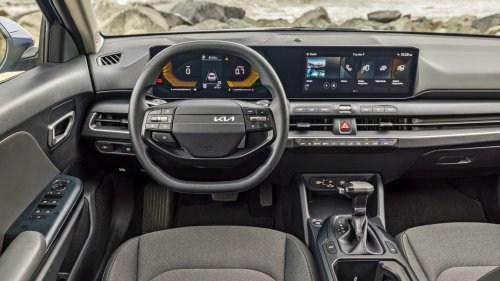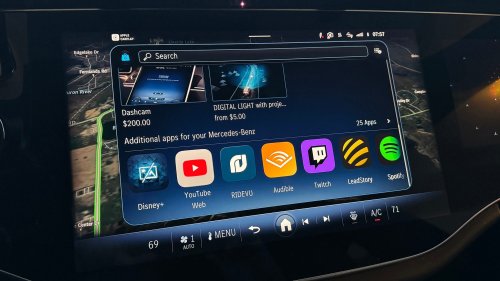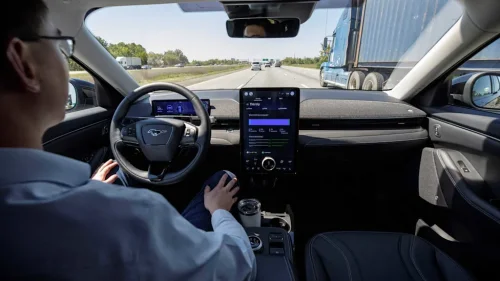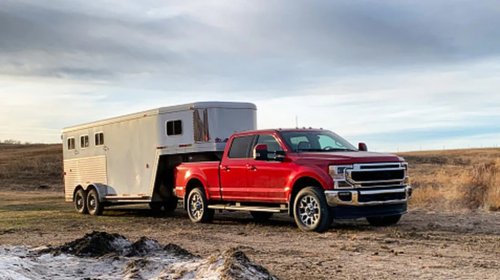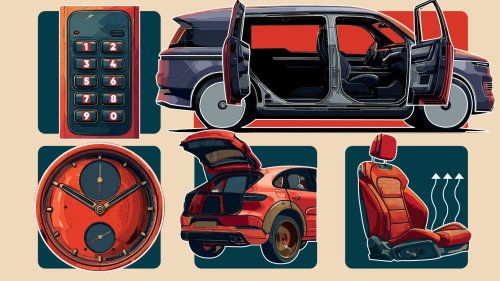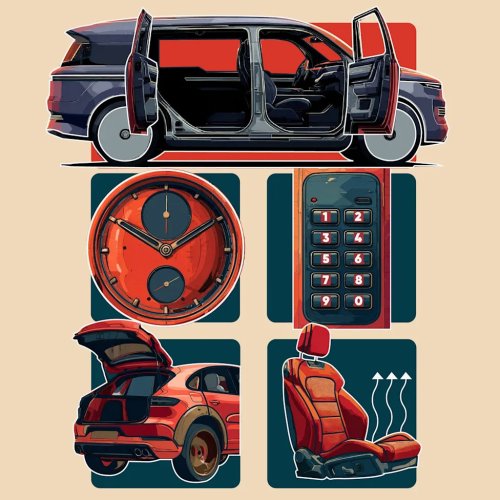
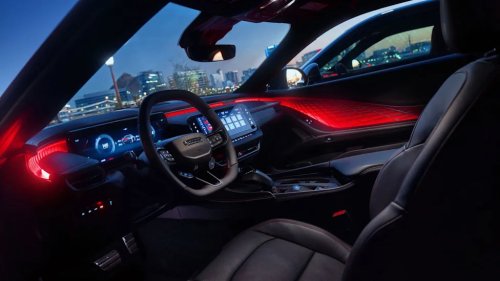
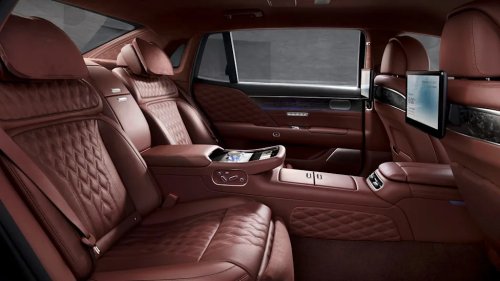
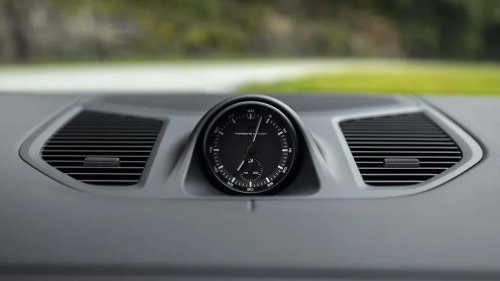























Unnecessary Car Features We Secretly LoveRyan Lugo - MotorTrendModern cars are packed with technology designed to make driving safer, easier, and more efficient. They've also become loaded with gloriously unnecessary features. The automotive industry has spent decades inventing solutions to problems that nobody really asked for, adding layers of theater, convenience, and outright excess to our daily commutes. And despite ourselves, we simply can't get enough of it.Not every automotive innovation needs to change the world. The unnecessary stuff matters because it reminds us that automobiles can still surprise us, amuse us, and occasionally make us feel like that 8-year-old kid seeing a wildly outrageous concept car for the first time. Here are 10 features that aren't essential but have become kind of indispensable.1) Ambient LightingPhoto credit: StellantisMercedes-Benz popularized factory ambient lighting in the luxury segment back in the late '90s and early 2000s, but the feature only got a foothold in the wider automotive industry once LED technology got cheap enough for automakers to add it to mainstream models.AdvertisementAdvertisementAlthough ambient lighting rarely throws out enough lumens to illuminate anything, and a lack of design restraint can end up making a vehicle's interior look like a Tokyo nightclub, it can make us feel like we're piloting something out of Tron. The feature is often customizable, as well, which gives owners another way to personalize their ride without getting their hands dirty.2) Ventilated SeatsPhoto credit: GenesisOn paper, ventilated seats just seem like luxury bloat, a system of fans and perforated leather designed to solve a problem that can also be addressed by simply rolling down a window or turning on the air conditioning. Yet once you've used them on a hot day, it's hard to give them up. It's become a popular feature that's filtered down to even the cheapest cars.The appeal is simple: They target the exact point where your body meets the seat, quietly erasing that slow, sticky discomfort before you even notice it building. Some vehicles will even let you run seat ventilation and seat heating at the same time. Although a polar bear probably sheds a tear every time someone does that, it's about as close as cars get to pure indulgence.3) Analog ClocksPhoto credit: PorscheAnalog clocks largely exist in modern cars because luxury automakers realized that people associate them with craftsmanship and expensive mechanical objects. In other words: vibes.AdvertisementAdvertisementThey became especially popular in luxury cars during the 1990s and 2000s as interiors got more digital. Once screens and LCD displays took over, many high-end brands leaned into analog clocks as a tactile, old-world counterbalance to all the tech.From a functional standpoint, analog clocks have become completely redundant. Every infotainment screen, gauge cluster, and phone displays the time. But that's also precisely why they persist. A digital clock says, "It's 3:42." An analog clock says, "Someone cared enough to make this dashboard feel expensive."4) Powered Trunklids and LiftgatesPhoto credit: HyundaiFor decades, motorists endured the hardship of manually closing the trunks and liftgates of their vehicles, but this collective nightmare started to come to an end in the early 2000s when automakers including Chrysler and Lincoln began offering motorized versions in their high-end models.Essentially an evolution of the power-assisted trunks that Cadillac began offering on some models as early as the 1970s, the feature has become nearly ubiquitous, especially on today's SUVs. Although we've become accustomed to the ceremony, pressing a button and waiting for the liftgate to slowly open or close on its own can be a minor annoyance when you're in a hurry. Yet the alternative—manually forcing the liftgate open or closed—tends to feel like you might be damaging something expensive. At least the hands-free version has some genuine utility (when it actually works).5) Puddle LightsPhoto credit: PorschePuddle lights are one of those features that solve a problem nobody was actually losing any sleep over: the crushing difficulty of locating the ground.AdvertisementAdvertisementThe original intent of puddle lights was to make it easier to see where you're about to step, primarily when exiting a vehicle, by beaming light down from the mirrors or doors. But in practice, these have become less of a practical safety innovation and more of a showcase for corporate logos.Motorists have managed curbs and parking lots for decades without needing a branded spotlight. But then again, there's something about opening the door and seeing that little graphic projected on the asphalt that brings a genuine sense of occasion to the proceedings.6) Hill Start AssistPhoto credit: Renz Dimaandal - MotorTrendHill start assist might seem like another layer of digital babysitting that most experienced drivers don't really need, but it definitely has earned its keep over time.The feature is designed to hold brake pressure for a moment after you lift off the pedal, which gives you time to move to the throttle without the vehicle rolling backward. While it's admittedly more useful in vehicles with manual transmissions, it can be handy even with an automatic when maneuvering into a tight spot in cities like San Francisco, where the hills are steep and the parking is scarce.AdvertisementAdvertisementEven if clutch control is a point of pride for you, the system's ability to smooth out transitions that would otherwise lead to a bit of driveline bucking—regardless of how precise your footwork is—is reason enough to keep it around.7) Coach DoorsPhoto credit: Rolls-RoyceAlso known as suicide doors, coach doors were commonplace on early automobiles. The design was inspired by the horse-drawn carriages that had preceded them, with backward-opening hinges on the rear doors that create a cool-looking "double door" effect when both the front and rear doors are opened. Unfortunately, they also presented a number of significant safety concerns that helped the design earn its unfortunate moniker.Although their main draw is the aesthetic, coach doors also make it easier to get in and out of the back of the vehicle, and modern safety innovations have alleviated a lot of the dangers that were inherent to the original designs. But it's still easier (and cheaper) to develop a vehicle with conventional rear doors, so coach doors generally remain reserved for rare high-end machines.8) KeypadsPhoto credit: FordThis is a feature that seems superfluous at first glance, but once you've found a use case for it, it becomes kind of indispensable.AdvertisementAdvertisementPrimarily offered on Ford vehicles, accessing the vehicle's cabin by way of a keypad might seem archaic in an era of app-based entry systems, but it still has its place. For example, if you're going for a run or headed to the beach and you don't want to bring your keys and other valuables with you, the keypad gives you a means of keeping that stuff locked up without having to bring something with you to get the door opened (provided you can remember a five-digit code). There's also a redundancy backup angle: If the battery in your key fob dies or your phone runs out of charge, the car doesn't care—the keypad will still get the door open.9) Tank TurningPhoto credit: RivianBack in 2019, Rivian set the internet ablaze when it posted a video to its YouTube channel showing off the "Tank Turn" feature that would later become available for its R1T and R1S models with the quad-motor setup. An electric motor outfitted at each corner of the vehicle enabled it to turn the wheels on opposite sides in opposite directions, causing it to spin in place like a gigantic top, and thus turn like a tracked vehicle.Although Rivian put the feature on pause due to safety and environmental concerns, Mercedes-Benz plowed ahead with essentially the same concept for the quad-motor electric G-Class under the G-Turn moniker. Ostensibly designed to make it easier to navigate tight trails, Rivian rightfully recognized that Tank Turn was kind of a gimmick. The automaker continued to refine the concept, however, and introduced a revamped iteration called Kick Turn last year. The new version provides the driver with more control over how quickly the vehicle spins and how much it rotates. While it's still not a must-have feature for off-roading, it's a neat party trick.10) Bounce ModePhoto credit: MotorTrendOffered on the Mercedes-Benz models with E-Active Body Control, Free Driving Assist is a feature that leverages the vehicle's active hydro-pneumatic suspension system to help free it from deep sand, mud, or snow. With the ability to independently control the height of each wheel with hydraulic actuators, the system can apply varying forces at each individual corner to help shimmy the vehicle out of a tough spot.AdvertisementAdvertisementColloquially known as bounce mode, our own Jonny Liebermann also discovered that this feature can also be abused to hilarious effect on pavement, essentially mimicking the gyrations of a low rider on hydraulics. Due to the option's high cost, the automaker ultimately reserved E-Active Body Control for high-end models like the GLS580 and GLS600 Maybach, which is kind of a bummer for luxury vehicle buyers who have a sense of humor.