Xiaomi, the first Chinese Tesla killer after its SU7 sedan outsold Model 3, is now aiming to unseat Model Y, China’s bestselling SUV, with its upgraded YU7 due to its low-cost advantage.
This followed the firm’s first-quarter net profit missing market estimates, as rising memory chip costs continued to drag its smartphone businesses, leaving its electric vehicles (EV) – Xiaomi’s second-largest revenue contributor – to keep growing.
Xiaomi’s shares dived to a 12-month low of HK$28.24 on Wednesday afternoon, before recovering slightly to finish 4.6 per cent lower for the day at HK$28.40. The stock has lost more than 29 per cent this year and stands roughly 54 per cent below its 52-week high.
The Beijing-based tech giant said on Tuesday that it had started deliveries for the standard edition of the Xiaomi YU7, priced from 233,500 yuan (US$34,400), 30,000 yuan lower than the refreshed rear-wheel-drive Tesla Model Y.
“In terms of configuration, driving range and technology, I think we have won (Model Y) across the board,” Lu Weibing, partner and president of Xiaomi, said at an earnings call on Tuesday evening. “Therefore, I also believe that the introduction of this standard version will give us a very significant advantage in competing against the Model Y.”
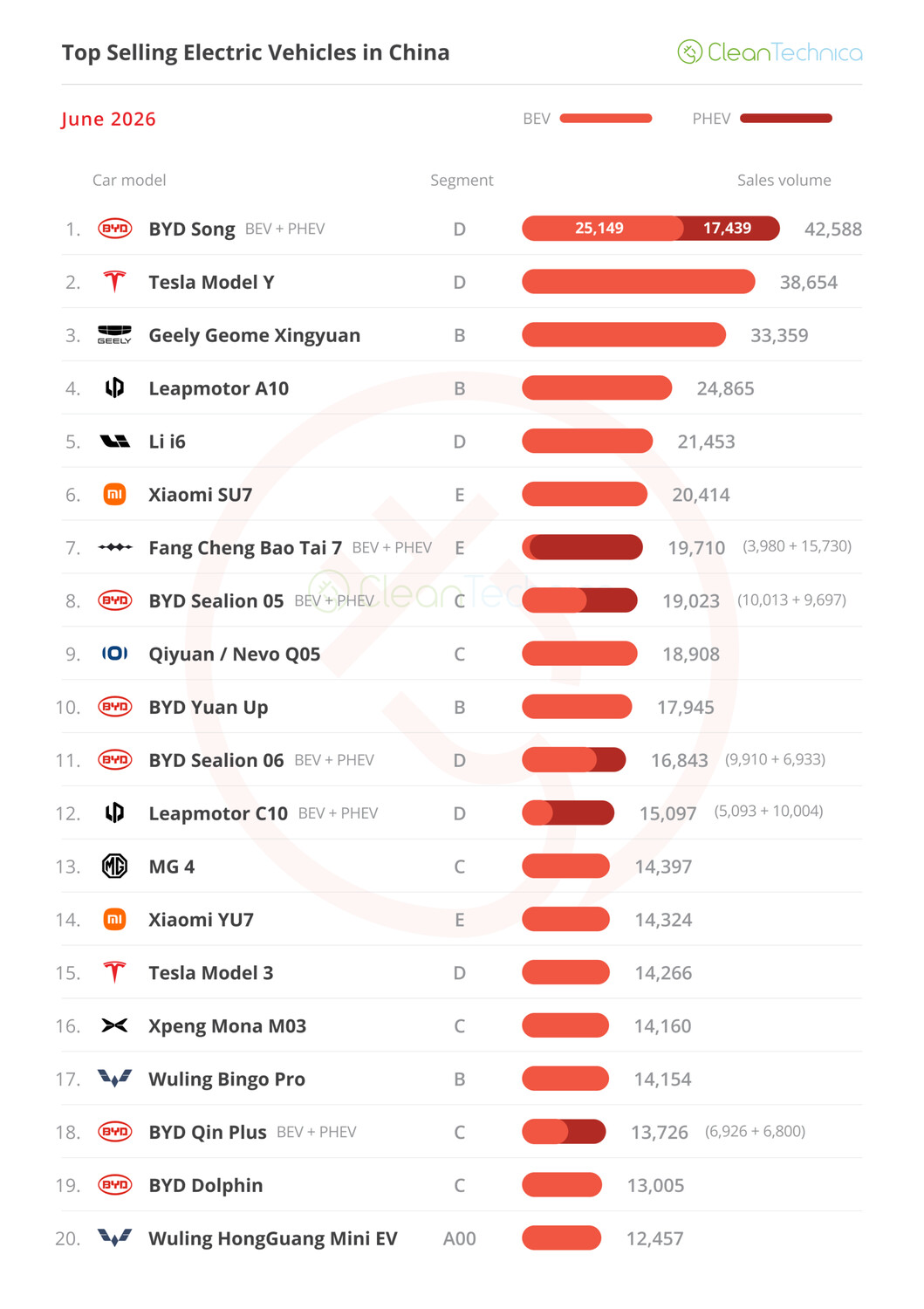
Notably, Xiaomi’s new SU7 recorded April sales of 26,826 units, dragging down Tesla’s Model Y to become the second bestselling model across all power trains, trailing only the Geely Xingyuan at 34,727 units, according to data from automotive content platform Dongchedi. In contrast, Model Y sales for April plunged 42 per cent month-on-month to 22,990 units.
For the first quarter, Xiaomi’s EV deliveries rose 6.6 per cent year-on-year to 80,856 units and the company maintained its full-year delivery target of 550,000 vehicles for 2026.
However, China is facing a slowdown primarily due to subsidy pullback. Despite oil crises bolstering interest in EVs, retail sales in the world’s largest EV market fell 17.2 per cent year-on-year to 2.76 million units in the January-April period, according to data from the China Passenger Car Association (CPCA).
This market pressure dragged profits down by double digits for established domestic giants like BYD and Geely during the first quarter, despite their aggressive overseas expansion.
Xiaomi’s automotive sector was not immune to these headwinds. While its first-quarter EV revenue grew 5.1 per cent year-on-year to 19 billion yuan, the average selling price contracted by 1.3 per cent to 238,301 yuan per unit.
The gross profit margin for the segment – which includes EV, AI and other new initiatives – dropped to 20.1 per cent from 23.2 per cent a year earlier.
The core smartphone division faced stiffer pressures, with first-quarter revenue declining 12.5 per cent year-on-year to 44.3 billion yuan. The smartphone gross profit margin fell to 10.1 per cent in the first quarter from 12.4 per cent one year ago.
In the first quarter, Xiaomi’s total revenue fell 10.9 per cent year-on-year to 99.1 billion yuan, largely in line with market forecasts. Net profit, however, tumbled 56.5 per cent to 4.73 billion yuan, missing consensus estimates.
The company attributed geopolitical uncertainties, significant price spikes in memory and commodities and aggressive domestic competition to the disappointing earnings.
To support its equity value, Xiaomi announced on Tuesday a plan to buy back up to HK$20 billion (US$2.55 billion) worth of its shares over the next 12 months.
Alain Lam Sai-wai, vice-president and chief financial officer of Xiaomi, noted on Tuesday that the new repurchase programme exceeded last year’s full-year buy-back of over HK$6 billion, marking it as the second-highest buy-back programme in the Hong Kong stock market. Lam said the buy-back’s scale reflected management’s long-term confidence in the company’s financial performance despite near-term volatility.