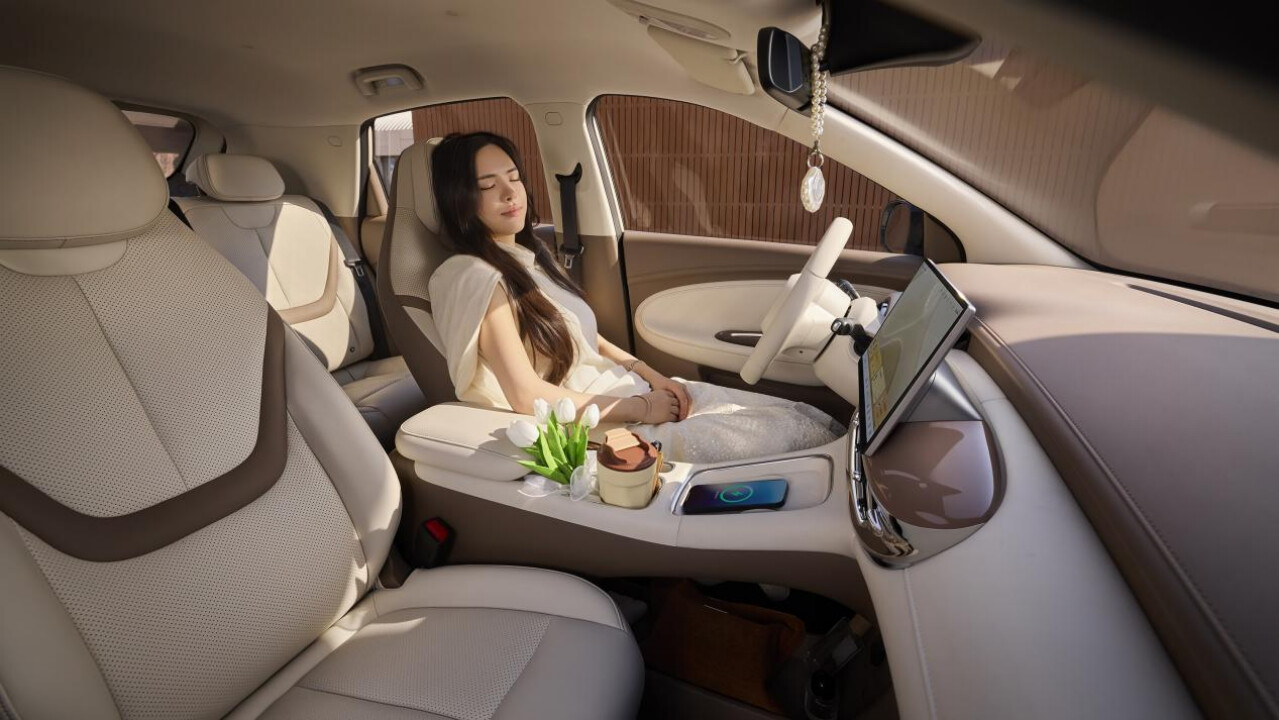
SAIC-GM-Wuling (SGMW) announced on October 28 that cumulative sales of the Wuling Hongguang MINIEV had surpassed 2M units, 76 months after its launch. Launched in July 2020 with a starting price of just RMB 28.8K ($4.3K), the Hongguang MINIEV targeted affordable urban mobility and helped drive rapid growth in China’s A00-class mini EV segment. Wuling Hongguang MINIEV hits 2 million cumulative sales. The model has long dominated its segment, topping China’s A00-class EV sales rankings for 74 consecutive months. Monthly sales peaked at more than 55K units, and the car also topped global monthly sales rankings for individual EV models multiple times. To maintain its competitiveness, Wuling expanded the MINIEV lineup with the Macaron, GAMEBOY, convertible and four-door versions. The family gradually evolved toward more personalized, youth-oriented urban mobility products. According to SGMW, 78% of owners have customized their vehicles. However, China’s mini EV market has come under growing pressure over the past two years. Employees pose with the 2,000,000th Wuling Hongguang MINIEV at a roll-off ceremony. Data from the China Passenger Car Association (CPCA) show that sales of A00-class vehicles peaked at 1.08M units in 2022 before falling to 950.7K in 2023. Full-year sales reached about 1.036M in 2025. The downturn accelerated in the first half of 2026, when retail sales of A00-class vehicles fell 63% YoY to around 240K units. The Hongguang MINIEV has also suffered a sharp sales decline. Deliveries in China totaled 435,588 units in 2025. but fell to 107,920 units in the first nine months of 2026, down more than 60% YoY. Several factors have cooled demand. On January 1, 2026, China reduced its new energy vehicle purchase-tax exemption from a full exemption to a 50% reduction. The additional tax burden has a more noticeable impact on buyers of mini EVs priced at just tens of thousands of RMB. A customized Wuling Hongguang MINIEV featuring a dog-themed wrap on display. China also revised its trade-in subsidies for scrapped and replaced vehicles, calculating support as a proportion of the new car’s price. This further reduced the policy advantages previously enjoyed by low-priced models. Consumers are also demanding more space, driving range and features. More affordable A0-class models are drawing buyers away from entry-level mini EVs, while battery-material price fluctuations and a maturing mini EV market have added to the pressure. As sales of the Hongguang MINIEV weaken, SGMW has continued to expand its new energy vehicle lineup. Recent sales figures suggest that its broader portfolio is helping offset the contraction in the mini EV segment. Wuling Bingo September retail sales ranked Wuling’s top five new energy models as follows: the Bingo Pro with 14,002 units, the Hongguang MINIEV with 13,630, the Starlight L with 6,659, the Bingo S with 6,028, and the Starlight 730 New Energy with 2,875. With the Bingo family taking on a larger role, Wuling is gradually reducing its reliance on the mini EV segment.

 Liked by Amélie Green, Samuel Brown









 Liked by Amélie Green, Samuel Brown