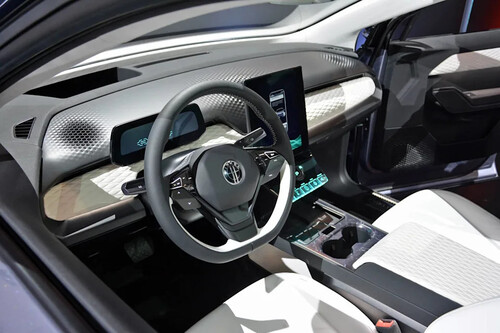
We Tried Hyundai’s New Pleos Connect Infotainment SystemCar and DriverDrew DorianWed, September 9, 2026 at 4:00 PM UTCAdd us on GoogleWe Tried Hyundai's New Pleos Connect InfotainmentHyundaiHyundai is launching a new infotainment system across its lineup called Pleos Connect.It consolidates everything into one large screen with optional gauge cluster and head-up displays.The software is almost fully baked, but the Gleo AI assistant only speaks Korean for now.We're behind the wheel of a Hyundai Grandeur cruising a South Korean interstate, but it's not the road or the foreign-market luxury car that's unfamiliar; it's what's on the 17.0-inch dashboard display that we're unaccustomed to. It's Hyundai's new Pleos Connect infotainment system, and it'll soon spread throughout the brand's lineup.Although the new software uses Google's Android Auto OS architecture, Hyundai has developed the UX in-house. While some physical buttons remain, more vehicle functions will be relegated to the display. Despite this, we found it surprisingly easy to use.The system can be configured to show up to three tiles. The leftmost tile with the critical gauge info is fixed, but the other two can be selected and rearranged using a three-finger gesture.HyundaiThe basic screen layout is somewhat Tesla-like, with an instrument cluster on the left side of the screen with speed, drive-gear indicator, fuel or battery level, and warning lights. A utility widget at the bottom shows contextual icons based on the current driving needs.AdvertisementAdvertisementFrequently used climate controls are fixed at the bottom of the display, but a more comprehensive climate-control screen can be pulled up by swiping up from the bottom of the screen. The driver can also choose to pin certain items in the menu bar for easy access to favorite apps.Swipe up from the bottom of the screen to reveal the full set of climate controls.HyundaiSome vehicles will be offered with a slim secondary display ahead of the steering wheel that displays pertinent info such as speed, fuel level, etc. A large head-up display will also be optional on many models, which provides another redundant place for information to appear.The UX designers chose standardized icon sizes and separate light and dark modes that change based on ambient light brightness. Overall, the way you interact with the system is not unlike a smartphone or tablet, and the longer you use it, the more natural it feels.A dark mode automatically activates at night to reduce glare and eye strain.HyundaiThe physical buttons that remain live in a separate panel on the dashboard. Controls include toggle switches for on-the-fly temperature controls, volume and tuning knobs, hazard lights, fan speed, and driving mode. Still, some drivers may wish for fewer touch-sensitive controls.AdvertisementAdvertisementLuckily, an AI assistant named Gleo is included, and Hyundai says it can understand complex commands, allowing the driver to have a more natural conversational interaction with the machine to adjust settings or ask for directions. For example, you could ask Gleo to turn on your heated seat and add navigation directions to your doctor's office all in one quick command, and it will understand and execute your request.Gleo communicates verbally, but it also appears as a chat in case you need to refer to its answers to your queries later.HyundaiSadly, we weren't able to try this feature during our test drive, as Gleo doesn't yet speak English. Still, we were assured that this capability is coming very soon. Our experience with other AI chatbots that have similar capabilities makes the notion sound promising.Like other automakers' infotainment systems, Pleos Connect will be tweaked and optimized over its lifetime via over-the-air updates. Hyundai is launching an app marketplace which will allow developers an opportunity to create software that can run on the Pleos system. This may grow to include games, lifestyle apps, and productivity tools.The Pleos App Market will allow users to download their favorite apps and run them right on the infotainment display.HyundaiThe platform is an open ecosystem, and developers will have access to a sandbox and vehicle APIs to support their software development. However, apps will need to be reviewed by Hyundai for safety and data security before they can be added to the marketplace. For users who prefer to keep their apps on their phones, Pleos Connect supports both Apple CarPlay and Android Auto via wireless connections.AdvertisementAdvertisementWhile the Korean-market Grandeur sedan we drove comes equipped with Pleos Connect, the first U.S.-bound Hyundais with the new system will be the new Elantra compact sedan and Tucson SUV. Both of those models are expected to make their U.S. debuts by the end of the year and go on sale shortly after.A version of Pleos will find its way into Genesis and—very likely—Kia models as well. During our test drive of the Grandeur, we didn't notice any obvious bugs or usability issues. As long as Gleo finishes up its English-language Duolingo lessons soon, we think it's ready for primetime.➡️ Skip the lot. Let Car and Driver help you find your next car.Shop New Cars Shop Used CarsYou Might Also LikeGift Guide: Best Ride-On Electric Cars for KidsFuture Cars Worth Waiting For: 2025–2029