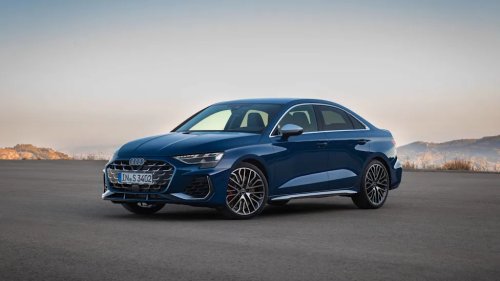
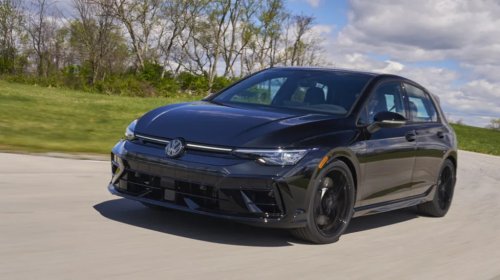
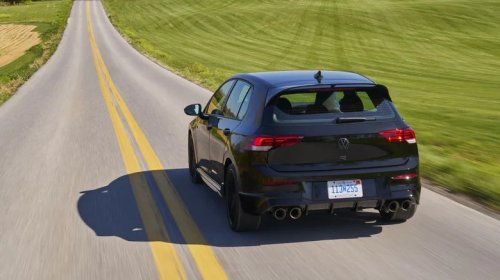
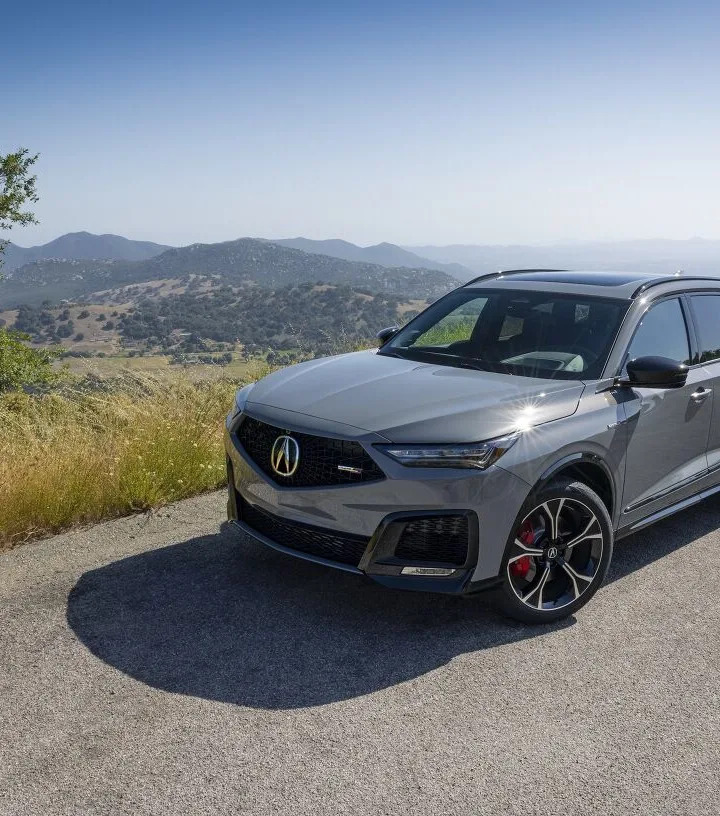
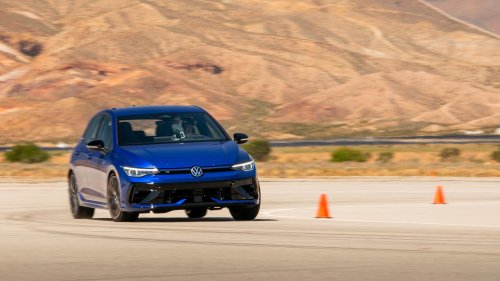
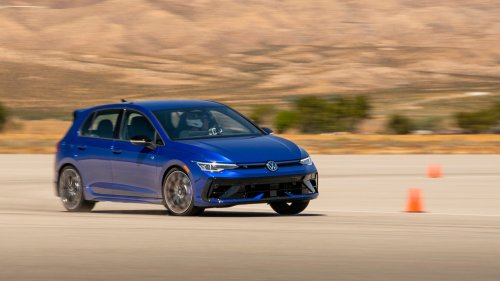
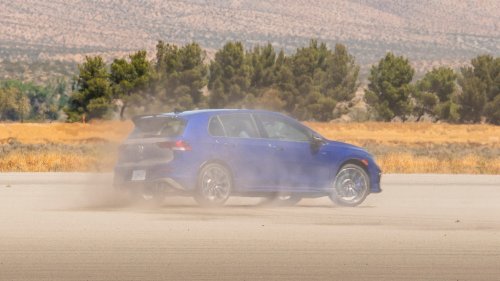
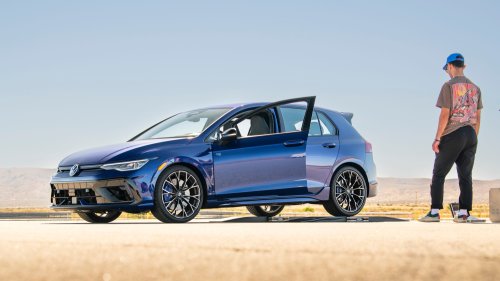
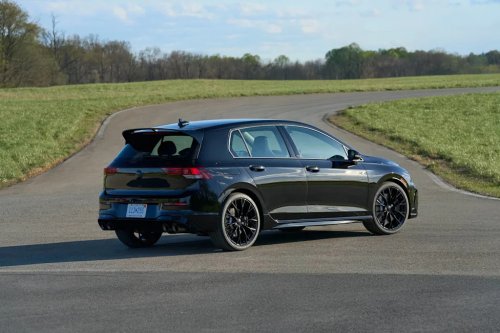
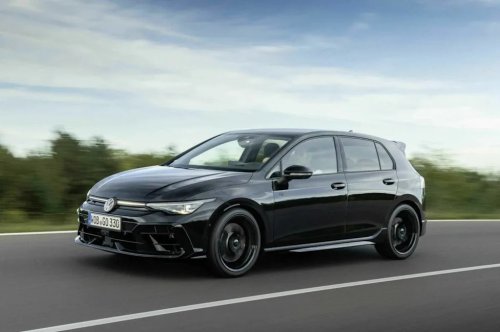
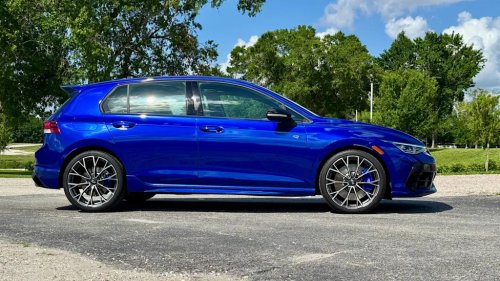
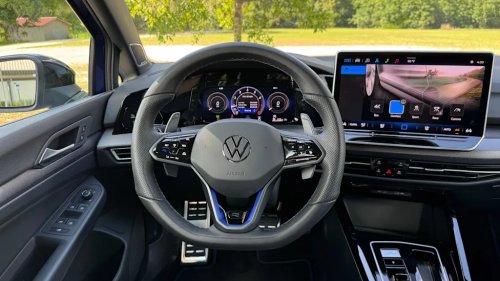
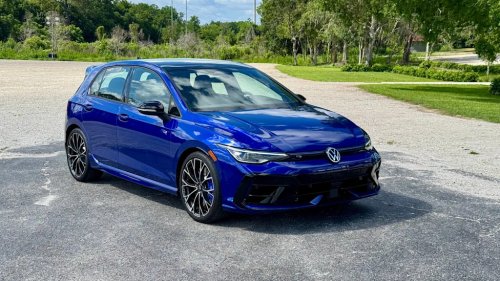
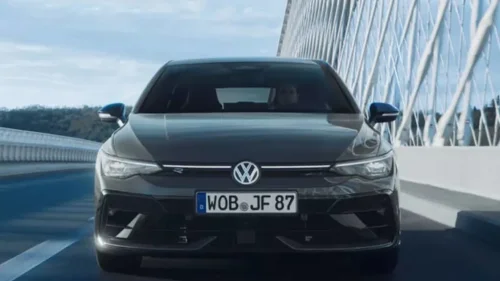
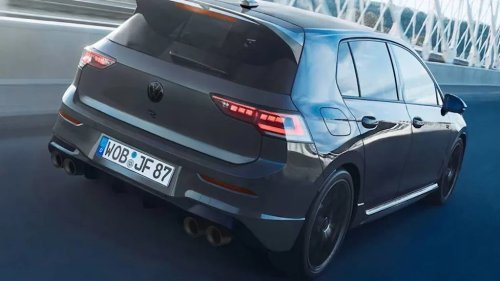
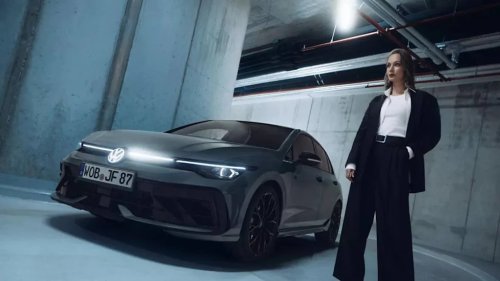
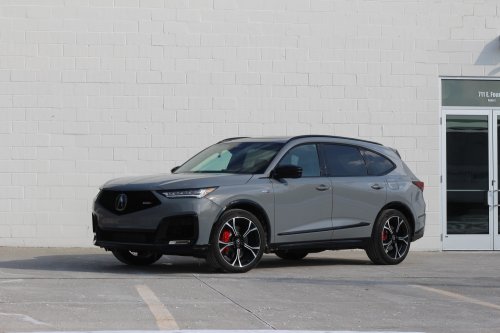
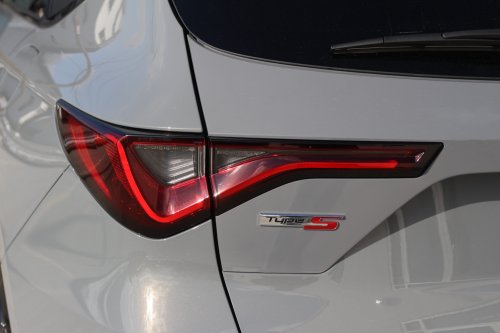
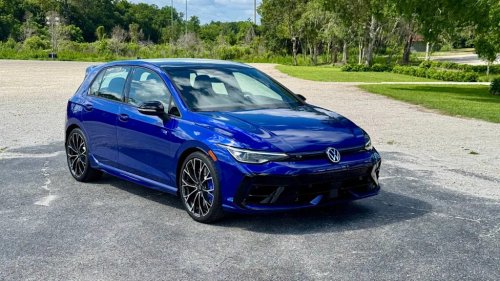
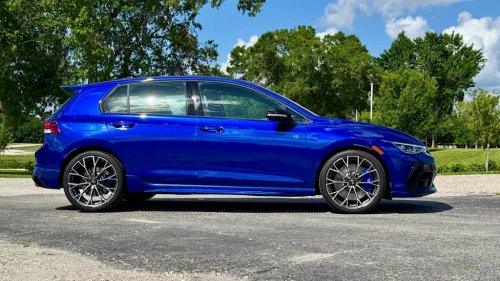
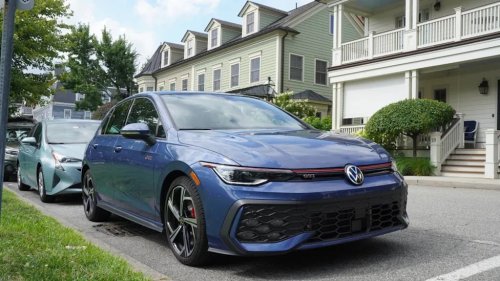
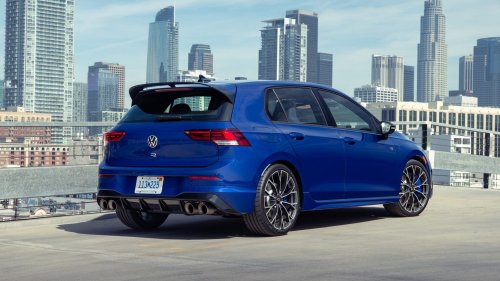
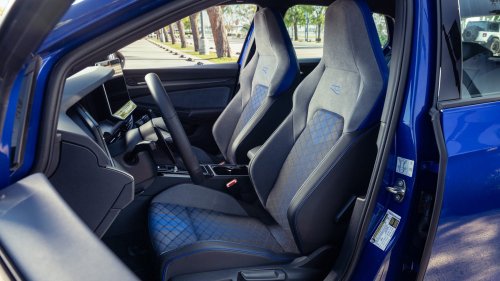
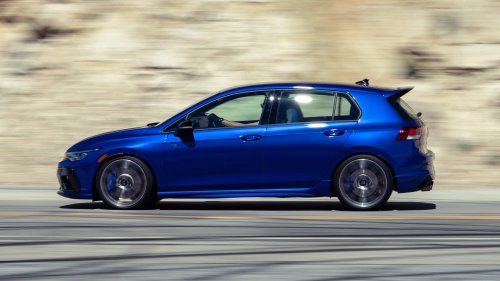
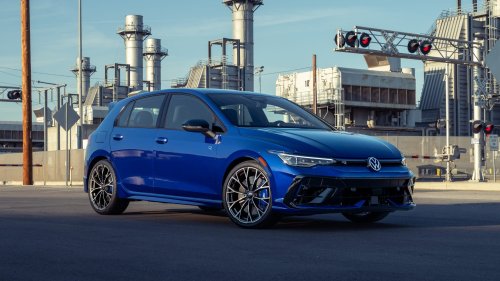
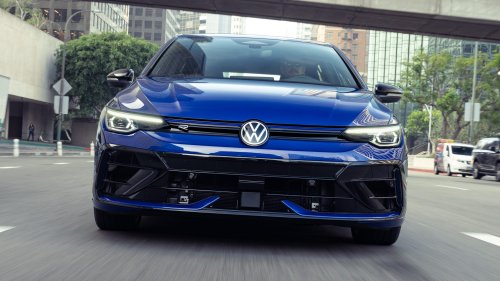
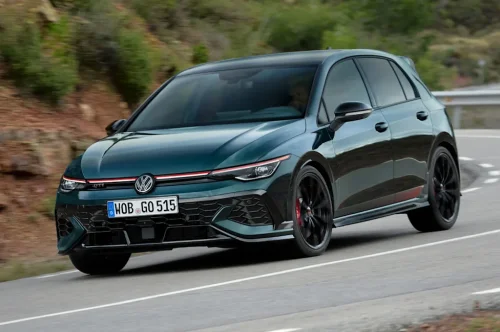
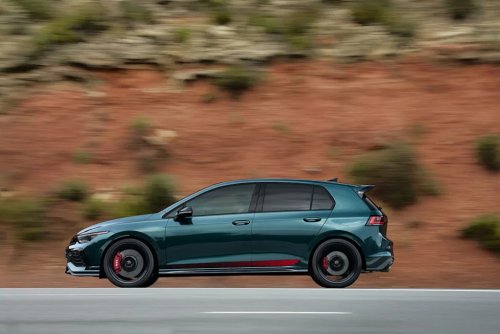
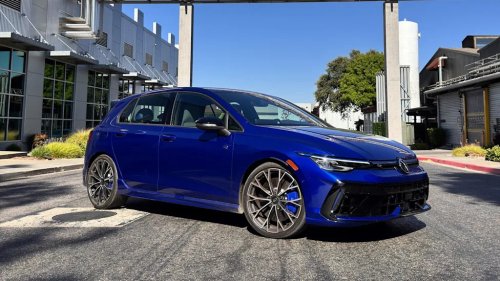
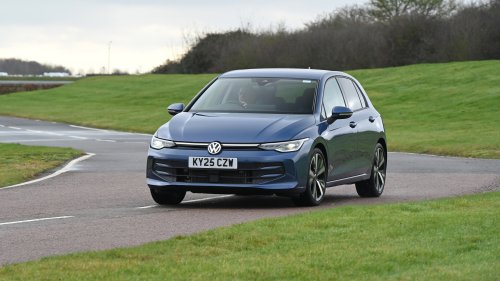
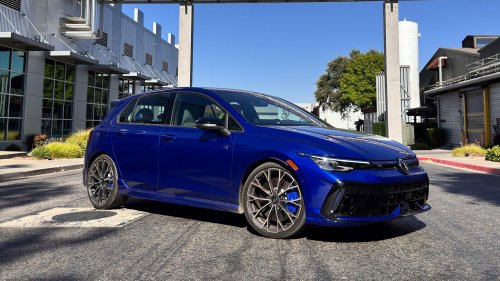
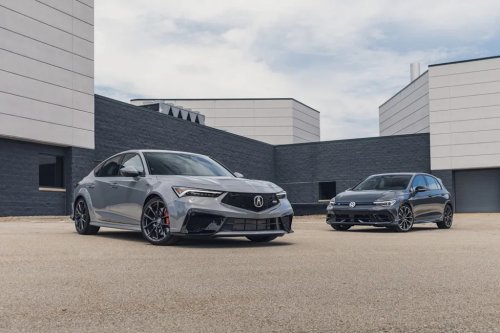
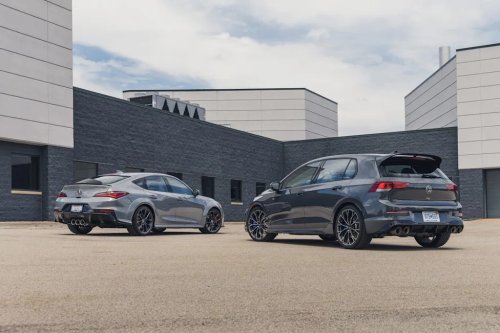
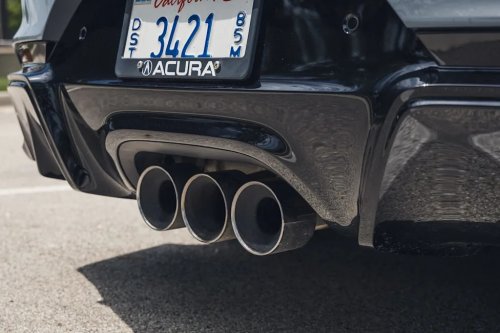
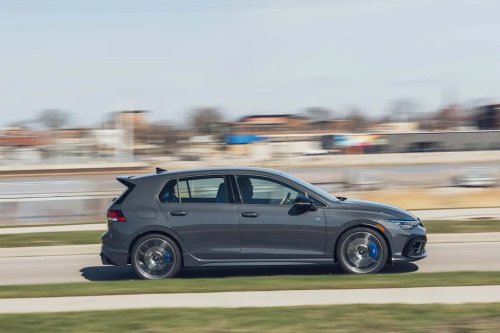
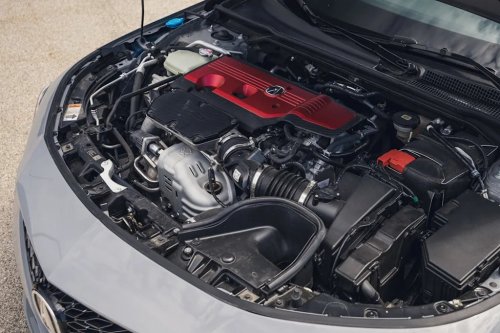
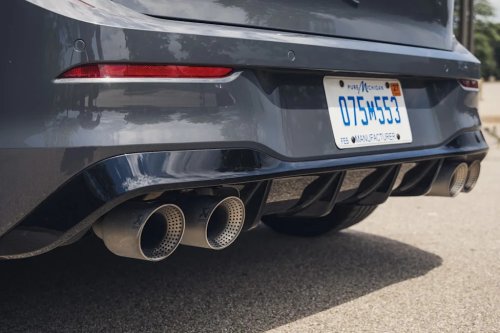
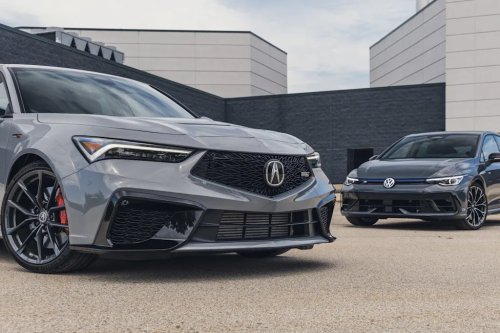
Acura Integra Type S vs. VW Golf R Comparison TestMichael Simari - Car and DriverProgress often comes at a cost. In the quest for ever-quicker acceleration and new Nürburgring lap records, most performance cars have lost their manual transmissions in favor of quick-shifting dual-clutch automatics. The result has been increasingly rapid machines, giving automakers plenty to boast about in press releases and promotional videos. But speed isn't the end-all, be-all of driving enjoyment, and the satisfaction of executing a slick DIY shift is difficult to replicate with a pair of paddles. With the manual-transmission population gradually dwindling, we lined up one of our favorites, the Acura Integra Type S, against a hot-hatch stalwart that recently shed its stick, the DSG-equipped Volkswagen Golf R, to see what truly matters in the world of compact performance cars.What We TestedWhile the more pedestrian versions of the Integra received a slew of updates for 2026—from new interior materials to fresh colors and a new body kit on the A-Spec trim—the performance-focused Type S, which is closely related to the Honda Civic Type R, carried over unchanged. The Type S continues to be sold in what is effectively a single, fully loaded trim. The example we tested had just one option, Urban Gray Pearl paint, which added $600 and brought the price to $55,795.Michael Simari - Car and DriverWe pitted the Integra Type S against our long-term 2026 Volkswagen Golf R, which, similarly, is offered in just one trim. The Golf also charged extra for its paint job, with Graphite Gray requiring $455. Its only other option was the Euro Style package, which saves a claimed 80 pounds by ditching the sunroof, front-seat ventilation, and full power adjustability for the driver's seat (fore-and-aft sliding is manual, but the seatback's tilt is still electric). It also adds a titanium Akrapovič axle-back exhaust, diamond-patterned cloth seats, and padded door panels. The package costs $3795, bringing the Golf R's total as-tested price to $54,980.Exterior and InteriorBoth cars are hatchbacks, although it's not immediately obvious. The Integra's sloping roofline makes it appear more sedanlike, giving it a slightly more mature, upmarket demeanor. The Acura's styling is suave, with crisp lines and a piercing gaze from the LED headlights. Add in bulging wheel arches and a dazzling diamond pattern in the grille, and the Type S certainly looks more distinctive and luxurious than the Golf R, its stance clearly communicating its performance intentions.AdvertisementAdvertisementThe Golf, meanwhile, is a handsome little pod, but not as visually arresting as the Integra. While the more under-the-radar styling might be what its customers seek, the VW still fades into the background next to the Acura.Aesthetic value aside, the Acura's roofline does put it at a slight disadvantage. The roof's slanted angle means the Integra's trunk can't load taller items as easily. Despite that, the Golf R and Type S cargo areas hold an identical five carry-on-sized boxes with the rear seats up. With the rear seats folded, the Acura stows 18 boxes to the Volkswagen's 17. The Type S's hatch provides more versatility than a true sedan. But that silhouette includes a disadvantage; that aggressive roof means the Integra offers 1.7 fewer inches of rear headroom than the Golf R.But the Acura isn't just lower; it's also 16.9 inches longer and has a 4.2-inch-longer wheelbase, bringing substantially better rear legroom than the Golf. There's plenty of kneeroom even when you're sitting behind a taller adult, with enough space under the front seats to slide your feet forward if you want to stretch out even more. In the Golf, passengers around six feet tall might find their knees brushing the front seatbacks.While some may critique the Integra's dashboard for sharing much of its layout with that of a $25K Civic, this commonality is a positive to us. As many cars dive headlong into the trap of ever-growing screens, the Integra remains committed to physical controls. There are three dials for the climate control, a volume knob, and several other buttons on the center console and steering wheel, creating an interface that is straightforward and easy to adjust while driving. And the 9.0-inch central touchscreen still provides plenty of real estate.AdvertisementAdvertisementThe Golf, meanwhile, remains afflicted with touchscreen fever. Most functions are handled through the 12.9-inch display, with many other controls accessed via touch-capacitive buttons, which can be frustrating to use because they provide no tactile feedback. While the Golf GTI recently traded its capacitive steering-wheel controls for real buttons, the Golf R did not.Michael Simari - Car and DriverBoth cars have well-appointed cabins, but our Golf R's Euro Style package is a detriment here. Each car features a driver's seat that is comfy and supportive with plenty of bolstering, but only the Acura's is fully power adjustable. Both cars also have heated but not ventilated seats—an area the Golf could have one-upped the Integra, were it not for that package. The Golf, however, does include three-zone climate control so rear riders can set their own temperature and features heated outboard seats, both of which the Integra does not offer.Powertrain and PerformanceUnder the hood, both the Integra Type S and Golf R are motivated by turbocharged 2.0-liter inline-four engines. The Acura's four-cylinder spits out 320 horsepower and 310 pound-feet of torque, sent exclusively to the front wheels through a limited-slip differential. The Volkswagen churns out 328 horsepower and 295 pound-feet of torque, but distributes it among all four wheels, with a torque-vectoring rear differential thrown in for good measure.Volkswagen used to offer the Golf R with a six-speed manual, but starting in 2025, the automaker nixed the stick, leaving a seven-speed dual-clutch automatic transmission as the sole cog swapper. Acura, meanwhile, remains faithful to the time-honored enthusiast tradition of rowing your own gears and is equipped exclusively with a six-speed manual.Acura Integra Type SHIGHS: Standard six-speed manual gearbox, physical climate controls, stylish exterior.LOWS: Slower than the Golf R, too much highway tire noise, roofline eats into rear headroom.VERDICT: The Integra Type S provides old-school thrills in a sleek, easy-to-live-with package.Michael Simari - Car and DriverWhile the Acura's manual makes for a much more engaging experience (more on that in a sec), the combination of the DIY transmission and front-wheel drive means that the Integra lags behind the Golf R at the test track. The Integra required 5.1 seconds to reach 60 mph, a substantial 1.2 seconds adrift of the Golf. The gap widens by 100 mph, which the Golf R eclipses in 10.1 seconds, the Acura 2.6 seconds behind.AdvertisementAdvertisementThe Golf R completes the quarter-mile in 12.5 seconds at 111 mph, while the Integra triggers the trap at 104 mph as it finishes the run in 13.8 seconds. The 5-to-60-mph test, meant to more accurately reflect what you might experience in the real world, is more forgiving to the Acura, which is only 0.8 second in arrears of the VW.Otherwise, the Golf R and Integra Type S are fairly evenly matched. The VW needs 152 feet to come to a halt from 70 mph, with the Acura one foot behind. When you stand on the brakes from 100 mph, the difference is only six feet. The two hot hatches also posted identical skidpad results of 0.99 g.Driving ExperienceDespite that both vehicles use turbocharged 2.0-liter four-cylinder engines with similar amounts of punch, the Integra Type S and the Golf R feel drastically different from behind the wheel as a result of their differing transmissions and drivetrain layouts.Michael Simari - Car and DriverThe Integra's driving experience revolves around the six-speed manual, which is a joy to operate. The throws are short and crisp, with the lever communicating a satisfying click as you slot into gear. The engine provides peak torque at just 2600 rpm, so you don't necessarily need to downshift to overtake slower cars on the highway, but you'll do it anyway because the shift action is just that sweet. And then there's the exhaust, which in Sport and Sport Plus modes lets out a sinister burble at each downshift, sometimes joined by a delicious crackle.Volkswagen Golf RHIGHS: Dual-clutch gearbox shifts swiftly, all-wheel drive provides plenty of traction, adaptive suspension provides versatility.LOWS: Automatics aren't as fun as manuals, still too reliant on the screen's capacitive buttons, smaller cabin.VERDICT: The Golf R impresses in the corners and has plenty of punch, but the capable dual-clutch gearbox lacks the engagement of a manual.AdvertisementAdvertisementIn the Golf, the dual-clutch automatic provides blistering upshifts and is always eager to downshift in Sport and Race modes. The automatic transmission and two additional driven wheels translate to a notably zippier feel from behind the wheel. Plus, the Golf wins the numbers game. That said, the gearbox lurches when you release the brakes, and shifts can feel clunky at lower speeds; at least in the Integra, clunky shifts are down to user error.Michael Simari - Car and DriverFind a twisty road, and you'll unlock something you might not have expected from the Integra given its from-wheel-drive architecture: superb handling, courtesy of a dual-axis strut front suspension that maximizes grip from the Michelin Pilot Sport 4S tires. The Type S excels in curves, remaining flat and stable, the front end biting as you turn in before the wave of torque propels you out the other side. There's still some fight from the steering wheel, particularly when stabbing the throttle while exiting a tight corner. Otherwise, the steering is weighty and direct, although Sport+ mode sometimes feels overly heavy at lower speeds.The Integra's adaptive dampers also provide versatility. In Sport mode, the Integra feels taut but not punishing, while Sport+ mode is best suited to track driving or states without cold winters, since it feels stiffer and more jittery over pockmarked pavement. Pop it into Comfort mode, and the Integra settles down into a docile daily driver, although there is more tire noise at highway speeds than we'd prefer.Michael Simari - Car and DriverIntriguingly, while the Golf R weighs about 150 pounds more than the Integra, it's the Golf that feels more agile. The steering isn't as heavy as in the Acura, but it is still weighted beautifully, providing plenty of feedback as you turn the wheel while the heft builds progressively. The steering feels natural and fluid, although it isn't the most talkative and feels a bit light and loose on center in Comfort mode.AdvertisementAdvertisementThe VW's great steering pairs well with its agile chassis, the suspension aided by an all-wheel-drive system and torque-vectoring differential that deftly distributes torque among the wheels to help the Golf rotate while maintaining high cornering speeds. Compared with the Acura, the Golf R feels lighter on its feet, likely attributable to the VW's shorter wheelbase. Thanks to the adaptive dampers, the ride is fairly compliant, the vehicle shrugging off rough bumps while still maintaining composure on twisty roads.And the Winner Is . . .Michael Simari - Car and DriverThis is a tough call. Both cars are fun in the twisties while remaining practical enough for daily commutes. The Golf R is certainly quicker on paper and feels lither in the corners, but the Acura is no slouch around a bend, and it delivers a more rewarding experience thanks to the entertainment provided by its excellent manual transmission. The Golf R is an immensely capable pocket rocket, but Acura's commitment to the stick shift distinguishes the Integra as a true driver's car.Speed isn't everything. We've entered an era of insane performance machines—just look at the Porsche Cayenne Turbo Electric, a 6000-pound SUV that blitzes the quarter-mile in just 9.5 seconds. The Integra Type S feels refreshing for the way it provides usable performance that you have to unlock through your own hands and feet. Factor in a stylish exterior and an interior that focuses on usability instead of button reduction and touchscreen fever, and the Integra Type S is the sporty compact car we'd prefer to take home.You Might Also LikeAdvertisementAdvertisementGift Guide: Best Ride-On Electric Cars for KidsFuture Cars Worth Waiting For: 2025–2029



















 +34 others