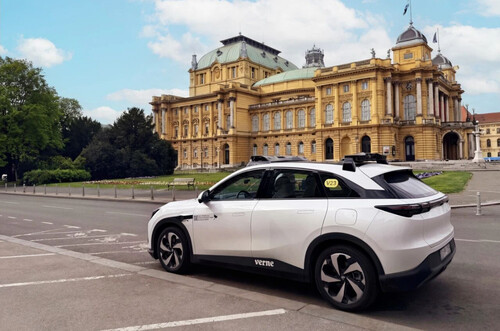
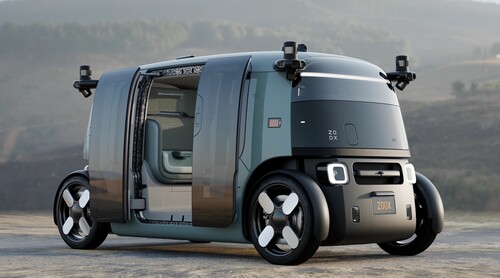
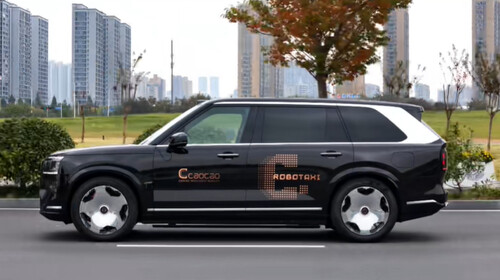
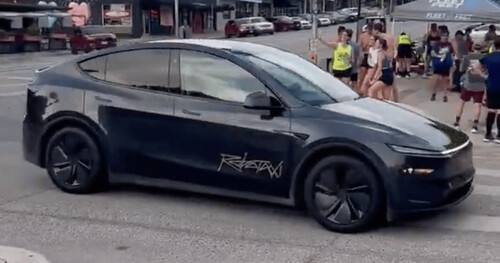
Self-driving taxi operator Waymo is poised to launch a test phase in Toronto, with the goal of carrying its first passengers in 2028 as part of a push to breach the broader Canadian market.
The California-based ride-hailing company says the Ontario government has given it the green light to take part in a provincial pilot program that regulates testing of autonomous cars.
Waymo, owned by Google parent company Alphabet Inc., says the first phase includes high-definition street mapping — starting this year — and test runs of the robotaxis with a driver behind the wheel to follow.
Waymo co-CEO Tekedra Mawakana sought to reassure skeptics who say autonomous vehicles struggle to handle more complicated environments, including bad weather, heavy traffic or unusual situations.
“We’re proud to bring the Waymo Driver to Toronto and to partner with a community that shares our commitment to safer streets and more accessible mobility,” she said in a release.
“Expanding into Canada marks an important milestone in Waymo’s global journey.”
Waymo cites safety
Waymo cars were involved in 95 per cent fewer crashes causing serious injury or death compared to humans in cities where the service operates, the tech firm said, citing internal data from more than 400 million fully autonomous kilometres driven.
Waymo’s arrival could prove an accelerant for a budding cluster of auto-oriented tech companies in Ontario, industry leaders say.
“This is a big victory for some of the untold stories in mobility technology in Canada — the kinds of companies that don’t get the headlines but, in terms of investment value ... are just as material as the ones that bend metal and melt plastics,” said Flavio Volpe, president of the Automotive Parts Manufacturers’ Association.
For its launch north of the border, Waymo is partnering with Toronto-based Element Fleet Management, which will provide maintenance, customer service and other support functions.
Once a purely traditional fleet manager for delivery companies and other outfits, Element has expanded into “intelligent mobility,” drawing on car sensors, charging infrastructure and traffic data to help fleets plan their routes for quicker, more fuel-efficient trips.
It will also take care of more mundane physical tasks — all the more necessary for autonomous taxis.
“There’s no driver in them, so they need to periodically come back to recharge. They need to be cleaned, they need to be maintained, tires need to be changed. If there’s a scratch on the door, that needs to get sorted out,” said Avninder Buttar, who leads electrification and strategy for Element.
Waymo’s distinctive white crossover SUVs will not be the first fully autonomous vehicles to traverse Toronto streets under the provincial pilot program.
Autonomous driving advancements
Last year, California-based Gatik began a rollout of 50 self-driving box trucks across Loblaw’s distribution network in the Greater Toronto Area. Many of those trucks are now cruising the streets and ferrying groceries with no one behind the wheel, relying instead on more than two-dozen cameras, radar and “lidar,” a laser-based measurement of distance.
Waymo cars draw on a broader array of sensors than many autonomous vehicles, including Teslas. The latest Waymo taxis sport 13 cameras, six radar units and four lidar units versus nine cameras and zero radar or lidar on most Tesla models.
“They have way more sensors, which makes the whole system more robust,” said Sidney Givigi, a professor of robotics and machine learning at Queen’s University’s School of Computing.
However, harsh weather remains a real concern.
While Waymo has deployed fully autonomous taxis in more than a dozen U.S. cities, Denver may be the only one that hosts significant snowfall.
“All the sensors can get occluded by snow,” Givigi said, “which is something that they don’t have in California.
“What if there is ice on the road, or you have a very strong blizzard and then you try to stop your car on a hill and it does not stop?”
In more clement conditions, Givigi places at least as much faith in the machine as the human driver.
“The system does not get tired,” he said. “They don’t take risks, which lots of drivers do.”
Job security questioned
The arrival of autonomous ride-hailing could represent a threat to companies with human hands at the wheel, or to the job security of the drivers themselves. But some California companies with a big presence in Canada see Waymo’s Toronto beachhead as a good sign.
“We believe the future of mobility will be hybrid, with human drivers and autonomous vehicles operating side by side,” said Laura Miller, Uber Canada’s head of policy, in a statement.
The ride-hailing company has partnerships with more than 30 autonomous vehicle companies, including Toronto-based Waabi, she said.
With driverless taxis on the road ahead, Miller called on the province, industry and communities to set clear safety standards and “prepare for the impact on workers.”