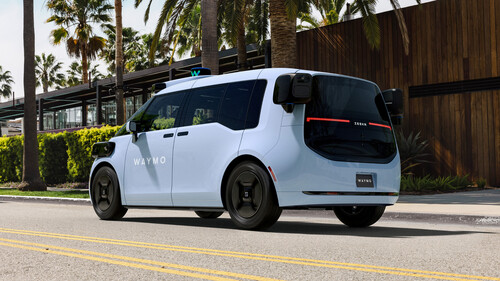
Benjamin Morgan · 2 months ago@benjaminmorgan35Waymo Opens Zeekr Ojai Robotaxi to All US Riders Liked by+19 othersJaguarJaguar I-PaceSelf-drivingPost commentRelated PostsThe Jaguar Type 01 is an Insane Gamble. Here are 4 Modern EVs That Risked and Failed MiserablyHenry Martin · 16 days agoWaymo begins fully autonomous ops with 6th-gen Driver, targets 1M weekly rides | Electrek 51 · Ava Nelson · 6 months agoWaymo Rebrands Zeekr-Built Robotaxi to Ojai Ahead of Commercial Rollout 59 · Aiden Lavoie · 6 months agoPodcast: Tesla goes V2H, Kia EV3 first drive, Jaguar Type 01, and moreVictoria Smith · 16 days agoJaguar Type 01 First Look: Jaguar’s Future Is Here and It’s Sleek and Powerful — and Full of InnovationAdam Pelletier · 19 days agoAugust 2026 Off-Road/High-End/Shooting-Brake Sales Rankings: Tesla Model Y Leads, Fangchengbao Titan 7 Stands Out | Gasgoo Auto Research InstituteAva Turner · 13 days agoFord GT90: The Quad Turbo V12 DreamCaleb Carter · 16 days agoFord's $4,195 Carhartt F-150, Germany's First Driverless Truck, and What Else Moved 88 · Logan Bouchard · 1 months agoSporty Cars Overshadow Subcompacts At Beijing Auto ShowMia Harris · 14 days agoJaguar And Kia Just Proved That Design Matters Just As Much As SpecsCarter King · 16 days agoWhat Can the Racetrack Still Teach Automakers? 75 · Mason Pelletier · 1 months agoAustralian Plugin Vehicle Sales, September Update — Are Mainstream Media Finally Waking Up?Jackson Labelle · 14 days agoJaguar's 1,015-HP Type 01 Is Finally Here, And Orders Open In Early 2027Liam Campbell · 17 days agoPerformance EVs That Have Depreciated Faster Than The Ford Mustang Mach-E Over 5 Years 51 · Nicole Carter · 1 months agoGeely Confirms 2027 Canadian Launch, Offers No DetailsAlexander Tremblay · 16 days agoJaguar Type 01 blends radical styling with potent powertrainLogan Hall · 17 days agoI Drove the Range Rover Electric Luxury SUV and This is What You’ll Love About It 36 · Camille Carter · 1 months agoChina’s Geely to Start Selling Cars in Canada In a Matter of Months, According to the CompanyJenna Brown · 16 days agoJaguar’s Knightsbridge flagship space is finally open — and you can dine there in styleLeo Brown · 17 days agoThe Jaguar I-Pace Has Depreciated Faster Than Any Other Car Over 5 Years 79 · Chloé Smith · 2 months ago


 +19 others+19 others
 +19 others