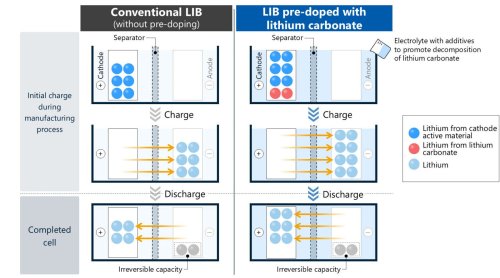
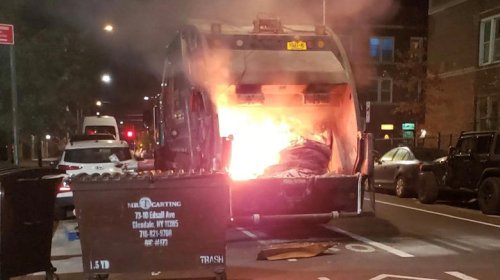
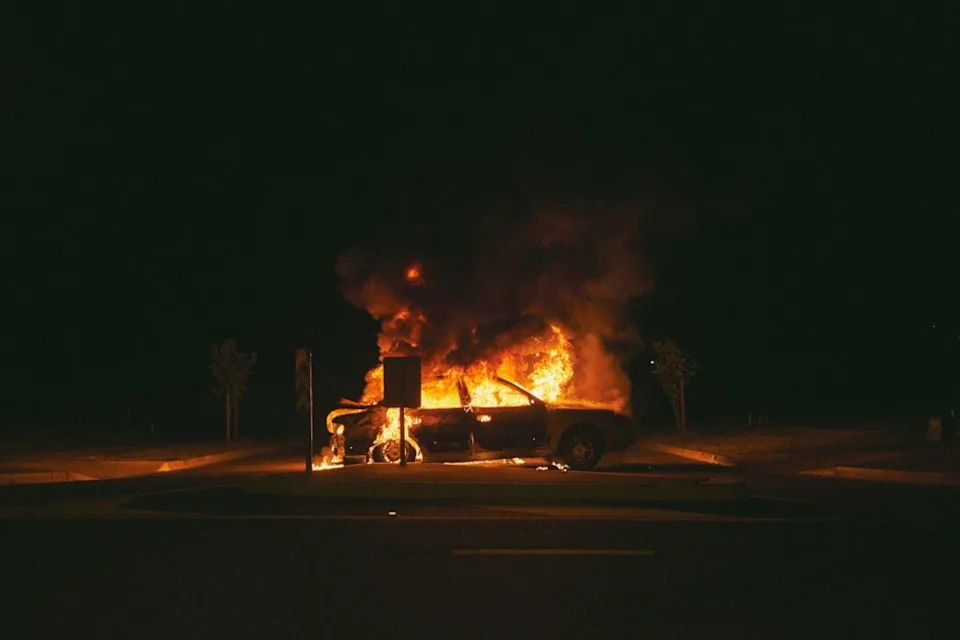
A video circulating on social media shows how difficult it is to contain a fire in a lithium-ion battery of the kind used in electric vehicles. The demonstration appears to have been staged in a controlled environment by professional firefighters, but the scale and intensity of the blaze suggest how much worse the situation could get if a battery pack ignited in an EV parked in a garage or beside other vehicles.Most electric vehicles run on large lithium-ion battery packs made of hundreds or thousands of individual cells. Each cell has a positive electrode (the cathode), typically made from lithium nickel manganese cobalt oxide or lithium iron phosphate, and a negative electrode (the anode) made mainly of graphite. Between them, a flammable liquid electrolyte carries lithium ions. A thin plastic separator keeps the electrodes apart. This design stores a lot of energy in a small space, which is why it suits cars.But the trouble starts when a cell is damaged, overheats, short-circuits, or is overcharged. Heat triggers chemical reactions inside the cell that release more heat, which can rapidly trigger further reactions. This runaway cycle is called thermal runaway, and it can push a cell past several hundred degrees Celsius within seconds.How severe a battery fire becomes also depends on the cell chemistry. Lithium iron phosphate (LFP) batteries are generally more thermally stable than nickel-based chemistries, which makes them generally less prone to thermal runaway. They can still catch fire when damaged or overheated, though.burning grey sedan near trees and signboard at nightIt is this thermal runaway chain reaction that makes EV fires extremely difficult to contain. Heat from one burning cell spreads to its neighbors faster than water can cool them, so as one cell is brought under control, another ignites. A battery fire can continue or reignite even after the initial flames have been suppressed.Also Read: Owner Has a Narrow Escape After Zeekr 7X Electric SUV Bursts Into Flames in SecondsThe video on Instagram demonstrates the problem in practical terms. A battery is placed on open ground, and a fire expert strikes it with a tool, apparently puncturing it and setting off a fire.The battery shoots flames, and the expert tries several ways to contain it, including a fire extinguisher, water, and a thermal blanket. According to the video, none of these conventional methods cooled the battery enough to put out the fire. A very large amount of water may be needed, and even then the hot cells can reignite.This is one reason EV battery fires, though generally reported to be less frequent, are harder to contain than fires in gasoline-powered vehicles. They can burn longer, need far more water, and can release hazardous gases for an extended period.Related: Stellantis Has A Wild Idea For EV Fires: Exploding Bolts That Drop The Battery



















 +18 others