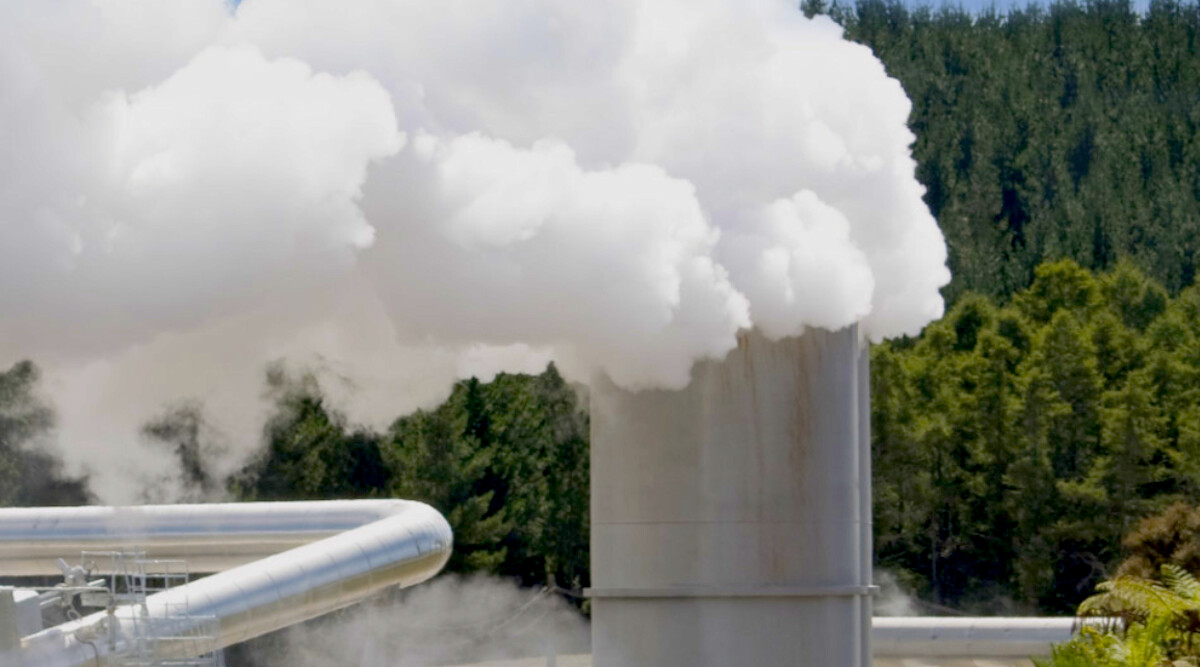
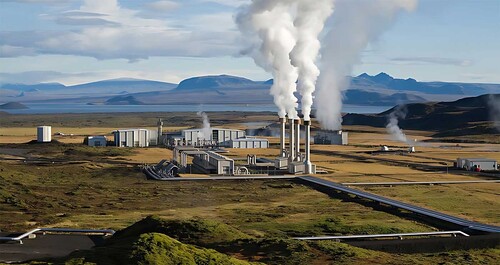
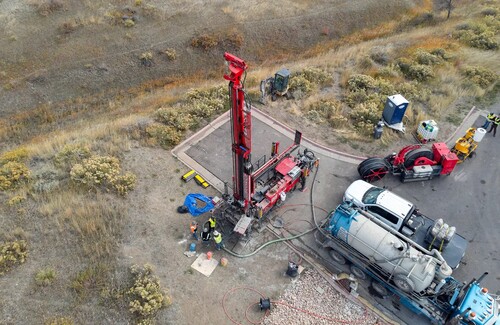
US President Donald Trump has embraced geothermal energy as part of his “American Energy Dominance” policy, and it’s not just lip service. Special attention and funding support are also part of the plan. That’s curious, considering that geothermal currently accounts for a measly 1% of power generation capacity in the US. That hardly seems up to the level dominating anything. So, what gives? The Limits Of Geothermal Energy Are Expanding Trump’s benevolent treatment of the US geothermal industry is of a piece with the rest of his energy policy, which also embraces biomass and hydropower. All three of these domestic energy resources face significant limitations, restricting their ability to compete with fossil fuels for baseload power generation. Still, when Trump tapped Chris Wright for the post of Energy Secretary, he enlisted someone who understands that the US geothermal industry is poised to break through its boundaries. Wright earned his nomination while serving as CEO of the leading oilfield services firm Liberty Energy, which has been eyeballing the geothermal industry as a fresh market for drilling rigs and other applicable systems. In 2022, for example, Liberty invested $10 million in the up-and-coming geothermal energy startup Fervo Energy. Another oilfield services firm, Devon Energy, also contributed to a $462 million Series E raise for the company in 2025. The rise of Fervo suggests that Trump missed the memo about the changing state of play in the US geothermal industry. Historically, the geothermal market has been limited by the natural underground conditions needed to produce steam for power generation. In the US, the optimal combination of heat, rock, and water exists only within a few scattered areas west of the Rocky Mountains, which pretty much kills the idea of posing an existential threat to coal and natural gas for power generation. Or not, as the case may be. Since the early 2000’s, the Energy Department has spent millions in support of new geothermal systems that extend the reach of the geothermal industry far beyond its current boundaries. That includes establishing the FORGE (Frontier Observatory for Research in Geothermal Energy) complex in Utah. As a long term, nation-level R&D project in partnership with the University of Utah, FORGE continues to enjoy support from the Trump administration. It Takes A Village That brings us to the latest news from the Energy Department. On September 3, the agency established the new Geothermal Center of Excellence at the National Laboratory of the Rockies (formerly the National Renewable Energy Laboratory) in Colorado. The lab will lead the effort in partnership with NETL, the Energy Department’s National Energy Technology Laboratory. “The Center will unite expertise and world-class capabilities from across DOE’s National Laboratories to accelerate the discovery and development of gigawatt-scale geothermal energy, resource discovery, and commercial development,” the Energy Department explains. The NETL connection further underscores the technology transfer activity between fossil and renewable energy industries in the geothermal field. With operations spread among several fossil energy key states including Texas and West Virginia, NETL was established as the leader of field operations for the Energy Department’s Hydrocarbons and Geothermal Energy Office. “The Houston, TX office is part of the Laboratory’s Strategic Center for Natural Gas and Oil,” the Energy Department explains. “The Center will support DOE’s goals by driving innovation and serving as industry’s main entry point to the National Laboratories.,” the Energy Department emphasizes. NETL is just one of a whole laundry list of Energy Department facilities supporting the new Geothermal CoE, which includes the Argonne, Brookhaven, Idaho, Lawrence Berkeley, Lawrence Livermore, Los Alamos, Oak Ridge, Pacific Northwest, and Sandia national laboratories. The next steps include forming an invitation-only Advisory Board made up of industry stakeholders, tasked with providing “objective insight into industry-relevant geothermal research needs” while ramping up public-private partnerships. All Of The Above The new CoE is part of a broader strategic plan for the HGEO (Hydrocarbons and Geothermal Energy Office), which seeks to restore the US coal industry as “a cornerstone of the US energy mix.” Good luck with that. Despite Wright’s heroic efforts to keep old coal power plants up and running, the US Energy Information Agency anticipates that demand for coal by power plant operators will continue to decline, while the combination of wind, solar (especially solar) and energy storage continues to beat all other energy resources in the race to add more kilowatts to the nation’s electricity grid. In an apparent contradiction of its goal for coal, the HGEO strategic plan also indicates that coal will fall victim to geothermal energy as well. Among the goals articulated by HGEO is this one: “Accelerate the discovery and development of gigawatt-scale geothermal energy and position geothermal as a competitive domestic source for reliable baseload electricity generation.” Ouch! So much for coal. It will take a while for new geothermal systems to get up to speed, but signs of acceleration are already emerging. On September 1, for example, Fervo announced a 396-megawatt power purchase agreement with Google, which will support the development of enhanced geothermal systems at the firm’s Cape Station project in Utah. If all goes according to plan, the facility will be up and running in 2028. The leading forest products firm Weyerhauser has also caught the geothermal bug. On September 1, the energy developer Hexagon Energy announced a strategic agreement with Weyerhauser to develop geothermal projects on Weyerhauser properties in Washington and Oregon. Completing a trifecta of geothermal news on September 1, the startup Mazama Energy announced a new milestone in the development of a high speed, high efficiency drilling system for engineered geothermal projects that tap into superhot rock formations. Mazama achieved the milestone at its Project Athena demonstration site in Oregon. If all goes according to plan, before the end of this year Mazama will begin drilling on another project in Oregon called Project Ceres, billed as “the first ever commercial-scale superhot rock” geothermal system in the US if not the world. For the record, Mazama is among the geothermal stakeholders supported by the US Department of Energy. Also lending a hand to the technology transfer effort is the US Air Force, which has stepped up to pursue a suite of new geothermal systems in recent years. Notably, USAF played a similar early adopter role to support the solar industry during the Obama years, setting the stage for the fast pace of activity in the solar plus storage field of today. Hold on to your hats… Photo: Geothermal energy has emerged as another up-and-coming existential threat to the US coal industry, with support from the Trump administration (cropped, courtesy of Mazama Energy).