


On Tuesday, Toyota officially confirmed that the Celica will return to the Japanese automaker’s family, but its first appearance seemingly won’t be as a production car. Instead, Toyota’s motorsport outfits—Toyota Racing and Gazoo Racing Toyota—will enter two models in the 2027 World Rally Championship ... and one will be a Toyota GR Celica.
The Celica's return has been rumored for years, but this is the first time Toyota has used the official name. Late last year, Cooper Ericksen, Toyota North America’s senior vice president of product planning and strategy, said a model that could be the Celica was in “pretty advanced development.” Now, Toyota says it will have a Celica WRC car ready by late January, when the Rally Monte Carlo will kick off the season.
Welsh rally driver and 2026 WRC title winner Elfyn Evans will head up Toyota Racing’s WRC effort alongside former Gazoo Racing driver Oliver Solberg. Solberg was the runner-up in the 2026 WRC season, narrowly missing the crown after a crash on the final power stage at the Rally Italia Sardegna. Finnish WRC driver Sami Pajari will also join the team.
“Before now, there was a specific regulation that said that for Rally1 homologation, there’s only one model allowed per manufacturer. That regulation has been changed to say, as long as the main mechanical components remain identical, you can do a variant model of your Rally1,” Tom Fowler, technical director of Toyota Gazoo Racing, said to DirtFish. “We had this opportunity to use this as a marketing tool and as a tool to increase the participation and to make things more interesting. There’s not really a big change; in the past we have run four, five or six cars on an event—but they’ve all been the same. This time, instead of running identical cars, we’re going to run two cars.”
Mechanically, this means the current GR Yaris Rally1 and the incoming GR Celica Rally1 will be largely similar. 2027 WRC Rally1 cars will continue to use a spaceframe chassis with turbocharged 1.6-liter inline-four engines and homologated suspension, running gear, and brakes from the current Rally2 category.
Toyota has yet to provide any other details about the Celica rally car beyond its name, but homologation regulations for the 2027 WRC season require production of at least 10 units within 24 months of the homologation date. Additionally, Toyota must be capable of supplying at least 10 race-ready WRC27-type cars per calendar year to customers.
Both of those regulations pertain to rally-specific models, not road-going models. Hence, the announcement that a Celica is coming to WRC doesn’t necessarily confirm the imminent arrival of a road car. Toyota executives previously confirmed the Celica would likely have an internal combustion engine, but declined to provide specific details, and the Celica’s shape, power figures, drivetrain layout, and number of seats have yet to be announced.
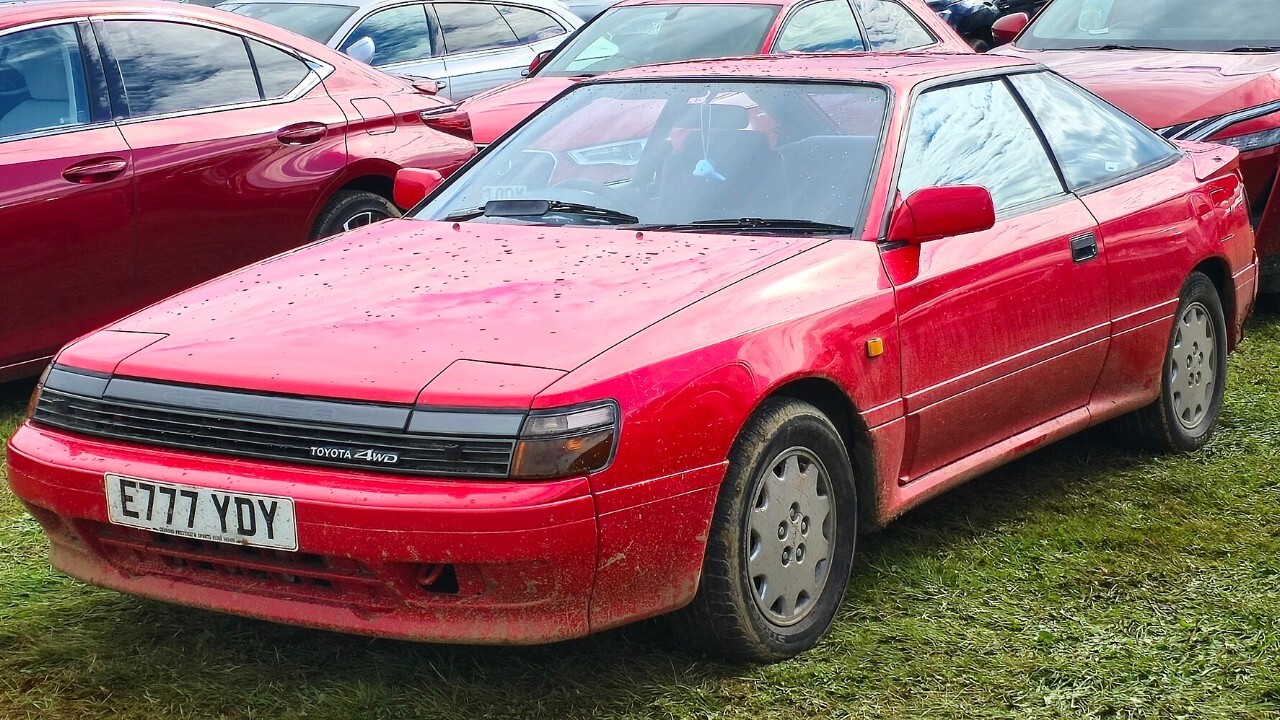
The Celica has a long history in WRC, first competing in 1972. Toyota entered the Celica in WRC through the 1980s and 1990s, with Carlos Sainz Sr. taking the drivers' titles in 1990 and 1992. Juha Kankkunen and Didier Auriol continued the Celica winning streak in 1993 and 1994. Toyota’s factory-supported Celica WRC run ended after the automaker earned a year-long WRC ban in 1995 over an illegal turbo restrictor, though privateers continued racing the model later in the 1990s.
A New York transplant hailing from the Pacific Northwest, Emmet White has a passion for anything that goes: cars, bicycles, planes, and motorcycles. After learning to ride at 17, Emmet worked in the motorcycle industry before joining Autoweek in 2022 and Road & Track in 2024. The woes of alternate side parking have kept his fleet moderate, with a 2014 Volkswagen Jetta GLI and a BMW 318i E30 street parked in his Queens community.










Comments