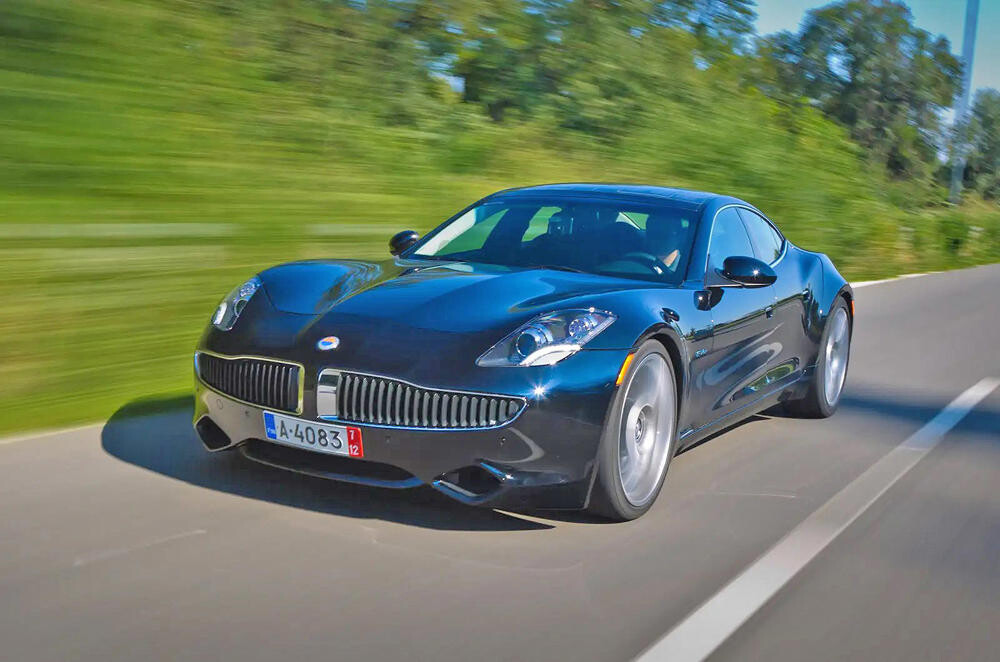
Hopefully, modern cars won't turn into big, expensive paperweights. Today's cars are increasingly becoming what's known as software-defined. But can a car that relies on software to function outlive its software support, like a smartphone? The answer, scarily, is a resounding yes. A car can outlive its software support. It's happened before, and it will likely happen again. Does that mean you'll become the proud owner of a $50,000 driveway ornament in the future? Before you get all upset, there is hope for salvation. But first, what is a software-defined vehicle? A software-defined vehicle is one that is increasingly controlled by and reliant on software to perform its core and augmented feature set. You know your vehicle uses myriad electronic control units, but software-defined vehicles take things to the next level. Interestingly, they feature fewer computing units, but much more powerful ones. Computing power is king here, as are AI processing capabilities, reliability, and, of course, longevity, although not in the traditional sense. In many ways, your car is now like a smartphone. It's got powerful processing units, a robust helping of memory, and enough storage space for current and future needs. It's endowed with speedy internet connectivity, myriad sensors, and versatile control units, enabling it to do wonderful things such as drive and park itself. This is what software dependency can do. In addition to what you get out of the box, automakers can give your car some new and exciting features as time goes by. Software features can go away Of course, this also means that manufacturers can remove or discontinue features, or even dabble in the dreaded "subscription model." In the worst-case scenario, a feature that you've been enjoying could one day become locked behind a paywall. Some automakers tried the subscription model and didn't exactly receive a warm reception from customers — notably, BMW's short-lived attempt to charge a subscription for heated seats. Today, most automaker subscriptions are related to driving assistance products like Ford's BlueCruise, GM's Super Cruise, or Tesla's so-called Full Self-Driving. But just because a feature like that is supported now doesn't mean it will be forever. In fact, it may be discontinued. One major reason is that creating software updates for older vehicles requires resources. Since automakers naturally want to keep developing and endowing their latest models, they don't always have a whole lot of motivation to keep supporting their older models. If an automaker keeps outfitting its older cars with the latest features via software updates, you'd be less motivated to upgrade to their latest models. Sometimes it's the automakers that fail Sometimes support for a software-defined vehicle cannot be provided because a company simply goes bust. A prime example is Fisker Automotive, which entered the market in 2023 with the Ocean Sport model. Just one year later, the company filed for bankruptcy. This created many issues for buyers of its cars, which were increasingly software-reliant. Everything from the brakes to the battery management and even the airbags relied on periodic connections to Fisker's cloud servers, which no longer exist. Renault faced a similar issue with the Fluence Z.E. electric car. It was designed to promote a new EV infrastructure system by a company called Better Place. Established in 2007, Better Place promised centralized servers, subscription models, and, crucially, battery-swapping systems. Battery swapping is a neat technology that, instead of charging the existing battery in your car, replaces it with a fully charged one in a matter of minutes. While the system requires specialized hardware and software for proper functionality, it promises extremely quick energy replenishment times. All must have looked pretty rosy for Fluence Z.E. buyers who were silently cruising on electrons. The system worked well, and everyone was happy for a few years. Then, in 2013, Better Place filed for bankruptcy. This meant that owners of Renault Fluence Z.E. cars found themselves without much of the functionality they had been promised. Battery-swap stations ceased operations, back-end software disappeared as servers shut down, and the cars were severely hamstrung as a result. And then there's Tesla Despite previously promising that owners of Hardware 3-equipped Teslas (cars produced between 2019 and 2023) would one day get access to full self-driving autonomy, it later transpired that customers would have to upgrade their cars if they wanted access. According to Business Insider, CEO Elon Musk said that cars with Hardware 3 would be eligible for a "discounted trade-in" to upgrade their computers to Hardware 4, as well as a camera upgrade to support Full Self-Driving. It's worth asking whether the cost and hassle of upgrading an older Tesla might be better spent on a newer one instead. Sometimes, automakers don't even have a say in this, because a critical piece of public infrastructure for these vehicles might be retired. Take Nissan and early models of its popular Leaf electric car. These cars used 2G mobile networks for features such as scheduled charging. When the United Kingdom discontinued its 2G mobile networks in 2024, users of the Nissan Leaf were left without some features. The same thing happened in the United States around 2022 when we shut off our 3G networks. It turns out many cars from myriad manufacturers used 3G for their SOS and other features, making these features no longer functional. While newer cars use 4G and 5G, we must ask what will happen when our 4G networks are inevitably shut down. In that case, the loss of features and functionality will arguably be greater, because 4G enables more software-reliant features to operate at the required speed and effectiveness. Third-party solutions exist, but not always In most cases, the manufacturer owns the software in a software-defined vehicle. If you need your car to be "reflashed," in tech speak, for a software upgrade or a bug fix, they have to be the ones to do it. Automakers aren't known for sharing their software with third parties. You won't find a copy of your car's software lurking around on the dark web or hiding in torrent spaces waiting for you to download it. If you do, chances are that it's not legit, or worse, it's hiding some dangerous additions that could make your ride a nightmare. This has become a particular risk for amateur coders and tinkerers who attempt to reverse-engineer software for software-defined vehicles. That's because they might inadvertently "break something," so to speak. There are some success stories, however. Remember those Fisker owners we spoke about earlier? Many of them banded together to form the "Fisker Owners Association," hiring independent software engineers to reverse-engineer the tech to keep their cars working. The tech and the industry are still evolving There's no one-size-fits-all answer to the question, but it is a legitimate worry as cars become more software-defined. Driving a software-defined vehicle once software support has ended is much like using Windows 7 (or even Windows XP) in 2026. It opens you up to security vulnerabilities that are no longer being patched by the manufacturer. While we haven't heard of any hostile takeovers of aging software-defined vehicles, such takeovers remain a risk. There's quite a bit that the industry can do, and it's clearly still evolving. One option could be to release the source code to carefully vetted third parties, allowing them to continue the software update regimen that keeps these older vehicles running happily. At that point, the focus would be patching security vulnerabilities rather than new feature development. Additionally, regulators, industry watchdogs, and even entire countries and trade blocs could enact mandatory software support regulations, such as minimum operational lifespans for software-defined vehicles and their software. Until then, stay up to date on when your car's software support ends.

 Liked by Mia Rogers, Sophie Girard













 Liked by Mia Rogers, Sophie Girard


