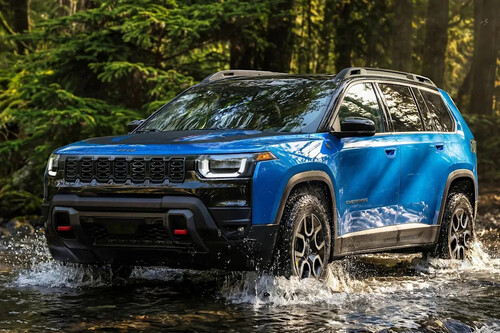
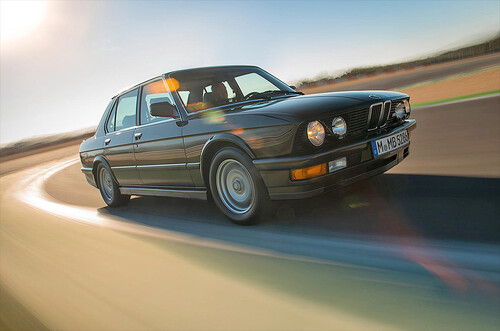
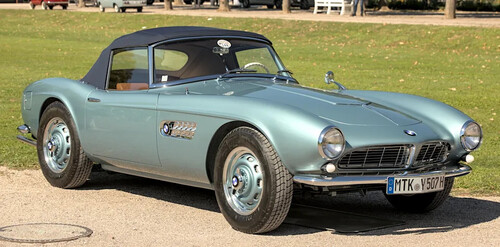
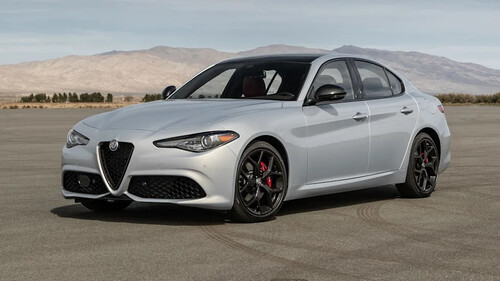
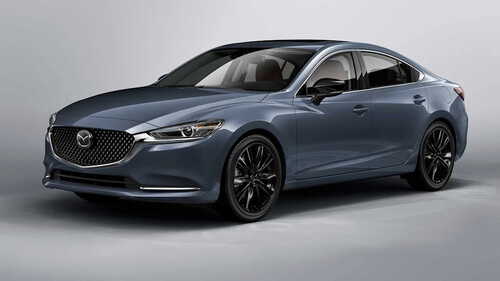
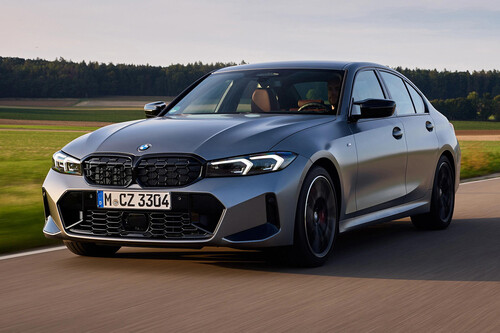
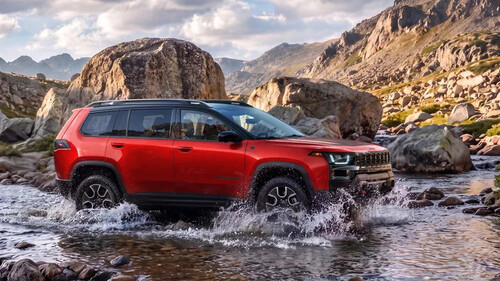
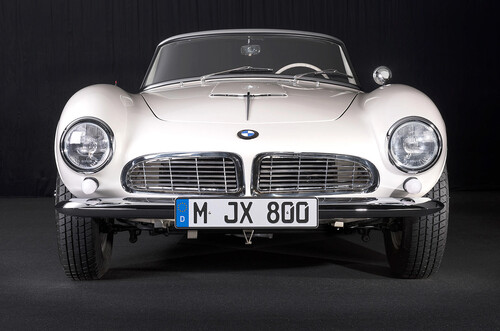
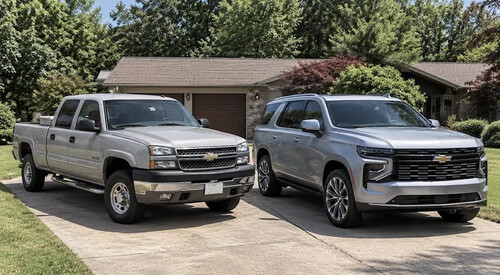
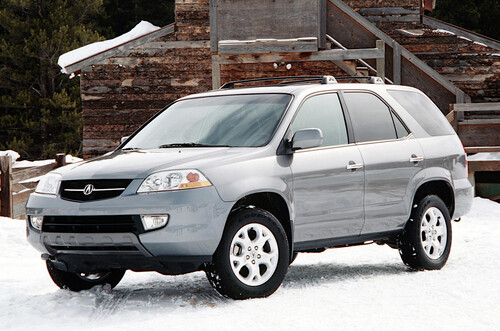
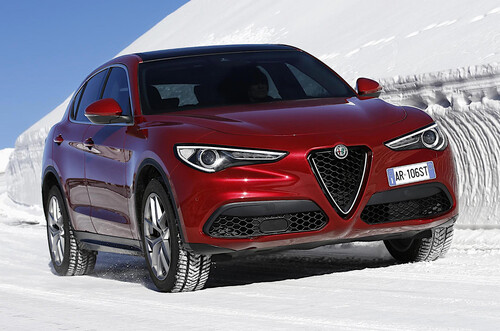
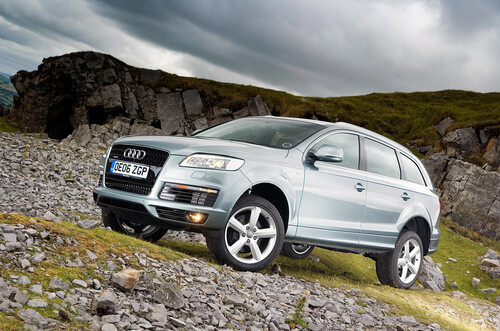
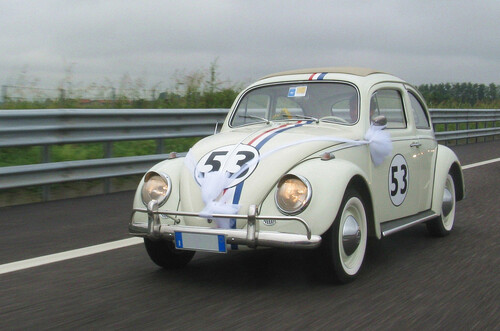
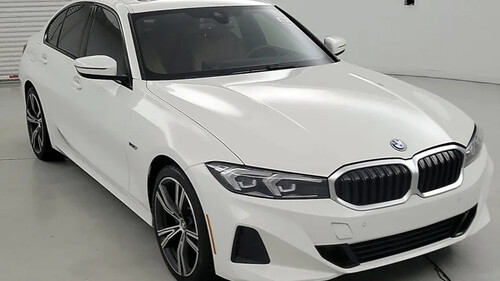
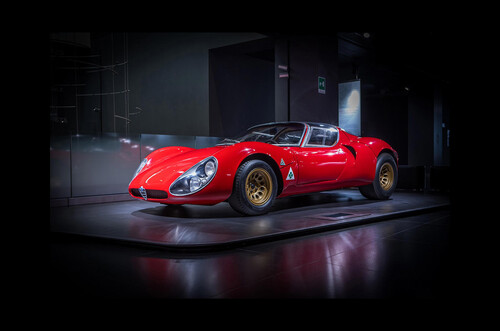
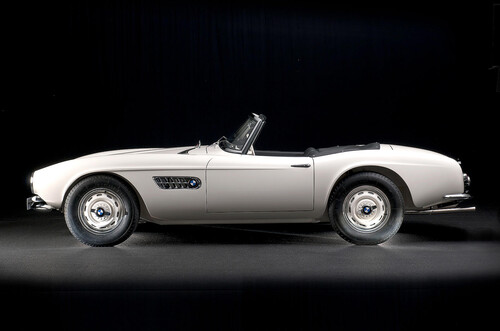
Autoblog and Yahoo may earn commission from links in this article.Something You Notice If You Stare Hard EnoughAs someone from the New York City Metro Area, I learned very young that traffic is an unavoidable fact of life, even if a particular place is supposed to be "15 minutes away." In too many instances before the days of in-navigation systems with live traffic alerts, bridges, tunnels and major highways felt more like parking lots than methods of getting people places. If I wasn't already preoccupied with the music on my iPod myself busy wasn't occupied by music, since I was a kid, I would always play an informal game in the car that I always had a good chance of winning: name the car in the next lane or in the distance before you can read its badges. I used to be really good at it because I noticed some specific details that shout a specific automaker's branding from afar. The kidney grilles tell you it's a BMW before your brain even processes it. The lack of a grille tells me that it might be a Tesla, and a certain hunched, frog-eyed stare suggests that a Porsche is near. It's not an accident. Enthusiasts have a name for it: the corporate grille. Decades of design language, built one facelift and model introduction at a time have engineered a front end to function like a brand's signature, where they intended to create something you'd recognize even with the badge taped over. StellantisWhat Exactly Is a "Corporate Grille"?To put it into very simple terms, a corporate grille is what happens when an automaker's cars feature a front-end design that is so consistent, so deliberately repeated across its whole lineup, that it functions as a logo you don't need to read. It's the difference between a car having a grille and a car having the grille, where the shape, proportions, and detailing become fixed points that carry from the cheapest hatchback to the flagship sedan, showing up whether the car underneath is front-wheel-drive economy transportation or a six-figure halo model. Strip the badge off and the grille still tells you everything.AdvertisementAdvertisementThe interesting part is that almost none of these started as branding exercises. They started as engineering solutions — a vent shaped a certain way because an engine needed to breathe, a grille split into sections because that's how the metal wanted to be stamped — and only became "identity" once a design team noticed people had started recognizing the shape faster than the name. That's the real trick of great front-end design: it starts as a functional decision and graduates into a brand asset, and by the time it's a brand asset, nobody in the building questions why it's shaped that way anymore. It just is, and messing with it becomes almost as risky as messing with the name on the trunk lid.Robert Alexander/Getty ImagesView the 2 images of this gallery on the original articleThe Details Enthusaists Know By HeartThe textbook example of the corporate grille phenomenon is BMW's twin-kidney grille which has been incorporated into nearly every beamer for nearly 90 years. It first showed up on the 303 in 1933, in the form of two vertical vents that were angled backward to feed cooling air to a new six-cylinder engine. It wasn't about brand identity; rather they were thinking about airflow. However, the shape stuck with the brand. Save for the Isetta bubble car, the split grilles became a signature design feature on cars like the 507 roadster, the Neue Klasse, and the M1. Today, the kidneys are the biggest they have ever been, as they remain a central part of the brand's front end design.Jeep's seven-slot grille is actually legally protected. Its parent company Stellantis holds it as registered trade dress, and has gone to court repeatedly to defend it, most notably against Mahindra's Roxor, which the U.S. International Trade Commission blocked from import over its similarity to the Jeep face. Ironically, Jeep wasn't even first to this kind of design; Ford used a nine-slot grille on some of its early military vehicles, and the number seven was chosen partly just to be different. Eighty-some years later, it's one of the most legally defended shapes in the industry, proof that a grille design can become valuable enough to fight for in federal court.However, Alfa Romeo's front end works almost like a coat of arms. Known by Alfa enthusiasts as the 'scudetto' (Italian for "little shield"), was originally penned by Giuseppe Merosi and has been a part of the brand's identity since the mid-1930s. In a 2025 video published by the brand, the brand's design chief Giovanni Ribotta declared that "The Scudetto is the emblem of Alfa Romeo," noting that though its history, it has been "the only thing that has always existed." He added that the grille acts as a tool for the brand's design, acting as an upfront guide for the lines that shape the rest of the car.AdvertisementAdvertisementKia's grille may be the most deliberate, as it struggled with a solid visual brand identity in the past. In 2007, its then-design chief Peter Schreyer introduced what became known as the "tiger nose" grille: a trapezoidal opening that narrowed toward the center, which appeared to resemble a tiger's snout. It spread across its lineup through to the 2010s, appearing on cars ranging from the humble Kia Soul, to posher offerings like the premium K900 sedan. While its newest design head Karim Habib has introduced a much racier, hyper-futristic design language to the brand in recent years, the tiger nose grille still remains a subtle design detail across its lineup; even on its largest electric vehicle, the EV9 SUV.Haruyoshi Yamaguchi/Bloomberg via Getty ImagesView the 2 images of this gallery on the original articleIt Doesn't Always WorkFrom a bean-counter's perspective, the corporate grille is a very smart idea when applied to a major automaker. Whether a particular brand makes high-volume, economical runabouts or expensive, posh luxury vehicles, keeping a consistent, repeatable front end design meant less complicated work for designers and a more recognizable brand image in the eyes of consumers and enthusiasts alike. However, there were some instances where the formula produced something that didn't last for very long. One of the most notorious examples is with Subaru, as before it unveiled the Ascent, it attempted to release one of its own three-row SUVs with a vehicle that became more known for its front-end design than anything else. In 2006, Subaru introduced the B9 Tribeca, a three-row SUV that was its its biggest sport utility at the time. While it gained praise for its capabilities, it largely garnered criticism for its "aviation-inspired" front-end, which featured an Alfa Romeo-esqe snout-like front nose, accompanied by two "wings" on either side. In his review for The Truth About Cars, Robert Farago called it an "irredeemably gruesome beast whose design should have been aborted a femtosecond after conception." During a segment on Top Gear, host Richard Hammond noted that the Subie's design was so polarizing, he had a difficult time trying to get his children into the car.AdvertisementAdvertisementBy the time the B9 was released, Subaru was well-intent on adopting the "wings" as a corporate design, as it had used this design on other vehicles. The first Subaru to adopt this design was the R2 and R1 kei cars for the Japanese market, as well the "Hawkeye" Impreza; which transferred onto the WRX and STI models. However, it wouldn't take long for the wings would fly by the wayside. Both the "Hawkeye" Impreza and the B9 Tribeca lasted two model years (2006-2007) before being replaced with models that ditched the "wings" for something more aesthetically conservative.Bob Henry/UCG/Universal Images Group via Getty ImagesThe Rules Are Changing the GameThough these iconic car design elements have been made for pure function in the beginning of the last century, current-day car design has another influence: safety and emissions regulations. Currently, pedestrian safety has been a particular concern among regulators in major markets like the U.S. According to National Highway Traffic Safety Administration (NHTSA) data published in September 2024, pedestrian fatalities increased by 57% from 4,779 to 7,522 between 2013 and 2022. In response, the NHTSA proposed a new Federal Motor Vehicle Safety Standard aimed at reducing serious and fatal head injuries to pedestrians in crashes involving passenger vehicles up to 10,000 pounds, which would bring the U.S. in line with similar regulations on the books in Europe and Asia.GM design chief Michael Simcoe told Road and Track in 2025 that his team works alongside engineers on emerging pedestrian standards before they actually happen, rather than re-engineering designs afterward. He characterizes rules-influenced design to be similar to racing, noting that "There are different interpretations to get to the same outcome." All in all, it means that there's less room for aggressive, upright grilles, hard edges and sharp brightwork, and more rounded, energy-absorbing surfaces built to be forgiving if they meet a human body instead of another car. However, none of this means we won't have distinctive car design. BMW's kidneys will probably survive and so will Jeep's seven slots. In today's environment, the next generation of corporate grilles will still be recognizable; they'll just be doing their job differently. The face isn't disappearing, it's just learning to smile a little softer.AdvertisementAdvertisementThis story was originally published by Autoblog on Jul 29, 2026, where it first appeared in the Features section. Add Autoblog as a Preferred Source by clicking here.