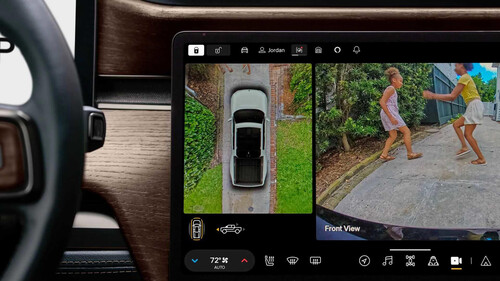
Jenna Anderson · 3 months ago@jennaanderson11This $100,000 MiG-23 Is One of the Most Powerful Civilian-Owned Jets in the World Liked byPost commentRelated PostsTurning millions of Teslas and Mach-Es into V2L power stations: WETOX D2 earns world's first Next-Gen V2X certification from SGS 13 · William Lee · 2 months agoUsed EVs With 100,000 Miles Failed Inspections Less Often Than Gas Cars 15 · Gabriel White · 28 days agoMan Owns 41 Camaros, Including The Most Expensive One Ever Sold — The 1969 Yenko Prototype 56 · Olivia Leblanc · 2 months agoA Land Rover Defender Octa Launched the World’s Fastest Hydrogen-Powered Car on a 406-MPH Record Run 62 · Morgan Labelle · 2 months agoEV driver gets $10,000 home charging quote, then learns a 100-amp panel may be enough 44 · Connor Walker · 29 days agoPorcelain-Trimmed Bugatti W16 Mistral Hits Monaco Streets — What Owning One Really Costs 74 · Justin Fortin · 2 months agoLand Rover Defender Octa Launched World’s Fastest Hydrogen-Powered Car on Its 406-MPH Record Run 84 · Lucas Wilson · 2 months agoRivian’s Rear Camera Can Disappear in Reverse, Triggering Nearly 100,000-Vehicle Recall 38 · Victoria Hill · 29 days agoAston’s New Valen Is The World’s Most Powerful Front-Engined Production Car 66 · Adam King · 2 months agoRivian recalls 100,000 vehicles for the weirdest camera problem ever 58 · Abigail Hall · 1 months agoAmerica’s Police Cars Have Their Own Beauty Contest, And One State Owns It 53 · Evan Wilson · 3 months agoI just saw a hydrogen-powered car set a world record at 400 mph — but can they compete with EVs? 59 · Connor Leblanc · 2 months agoThe Average $10,000-$15,000 Used Car Now Has Almost 100,000 Miles 92 · Adam Gagnon · 1 months agoHydrogen-powered car sets new world land speed record 56 · Carter Clark · 2 months agoMichigan mail carrier eyes $15,000 Bolt EUV, wonders if it can survive a 100-mile postal route 39 · Madeleine Lewis · 1 months agoThis Is The Fastest Hydrogen-Powered Car in the World 35 · Audrey Young · 2 months agoThe 2027 Ram 1500 TRX SRT is $100,000. Here are 3 Things That Make It Worth the Astronomical Price 44 · Nathan Morgan · 1 months agoNissan Qashqai e-Power Sets Guinness World Record By Traveling 1,230 Miles Without Charging Or Refueling 24 · Gabriel Rogers · 2 months agoNearly 100,000 Jeep Wagoneer and Grand Wagoneer SUVs recalled over roof racks that can detach 47 · Henry Roy · 1 months ago275-HP Polaris RZR Pro R Boost Is the World’s Most Powerful Factory Side-by-Side 70 · Zoë Rogers · 2 months ago