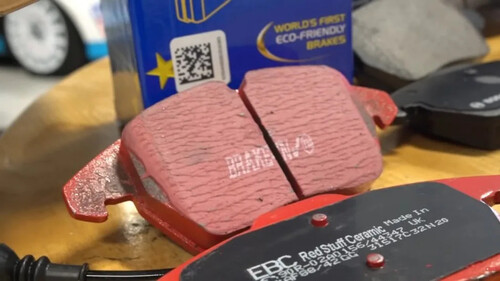
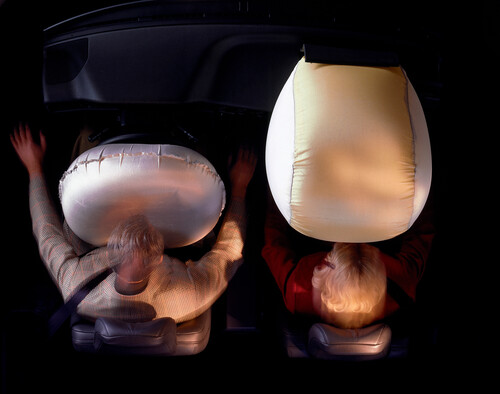
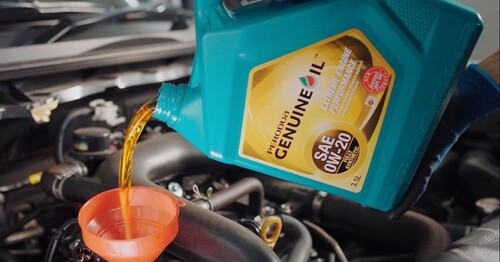
Counterfeit car parts are no longer a problem confined to back-street garages. Increasingly, fakes are finding their way into the mainstream supply chain, leaving drivers facing potentially serious safety risks – and some expensive consequences.The manner in which the modern counterfeit parts trade operates was laid bare last month, when a Halifax businessman was sentenced for selling counterfeit vehicle parts online.The investigation began after Toyota, Mercedes and Kia suspected that Chaudhry Saeed was selling counterfeit car parts through online marketplaces, including eBay, and reported him to the Police Intellectual Property Crime Unit (Pipcu).In January, officers raided the 38-year-old's home and his Halifax-based car dealership, FZ Automotives Group, seizing 2,074 counterfeit car parts. The seized parts had an estimated value of £830,000 to legitimate manufacturers.Counterfeit parts seizedThe haul included pyroswitches, which cut electrical power in the event of a crash or serious fault; pyrotechnic inflator filters used in airbags; spark plugs; tyre pressure sensors; and other components critical to the safe operation of a vehicle. The counterfeit parts were intended for a wide range of makes and models.Investigators established that the parts had been air-freighted from Hong Kong before being repackaged and fitted with counterfeit holograms to make them appear genuine.On August 6, Saeed was found guilty of three counts of deceptive fraud, possessing scam equipment and holding illicitly acquired assets. He was handed a 12-month prison sentence, suspended for 18 months, and ordered to complete 200 hours of unpaid work.The case offers a glimpse into how the modern counterfeit parts trade works: goods arriving from overseas, being repackaged to appear genuine and then sold directly to consumers through a mainstream online marketplace.The investigator's viewThe Pipcu investigating officer Daryl Fryatt tells The Telegraph that the case highlights the growing challenge posed by online marketplaces."We can deal with people such as Chaudhry Saeed, but there is more work to be done to prevent counterfeit car parts being sold online," he says. "We'd prefer to see car parts being sold only by manufacturers or their authorised dealers."The problem extends far beyond one Halifax businessman. Helen Barnham, the head of enforcement at the Intellectual Property Office (IPO), points to Organisation of Economic Co-operation and Development research estimating that in 2021 alone counterfeit vehicle and motorcycle sector goods imported into the UK were worth almost £2.2bn."That figure underlines the scale of the criminal activity behind these goods – one that puts public safety at risk, undermines legitimate traders and ultimately risks eroding consumer confidence," she warns.The scale of the problemIn October 2024 the IPO published research based on a survey of 1,394 UK drivers in which one in six said they had knowingly or unknowingly bought a counterfeit vehicle component within the previous 12 months.A lower price was the main reason given for purchasing fake or replica vehicle parts (49 per cent), followed by believing the quality was similar or the same (34 per cent), good reviews (25 per cent) and the design looking similar or the same (21 per cent).The parts being targeted are not simply cosmetic accessories. According to the IPO, the most commonly counterfeited vehicle parts include filters of all types, brake pads and discs, spark plugs, lighting, alloy wheels, suspension components and airbags.Airbags deploy with little margin for error, making them among the components where counterfeiting can prove especially dangerous - Amir MukhtarThe danger behind the bargainPaul Foster, a corporate and brand protection investigations manager at the car-making conglomerate Stellantis, explains that accident-repair parts such as grilles and bumpers are also being counterfeited. When genuine, they are designed to absorb the energy of an impact and break in a predetermined way to minimise damage. "We see counterfeit car grilles made of poor-quality plastics that will shatter and explode on impact," he says.Foster is particularly concerned by the dangers of so-called Frankenstein airbags, which may be assembled from a mixture of reused, counterfeit or incompatible components.These can feature counterfeit airbag covers designed to make them look new, while containing second hand airbag cushions, detonators and other internal parts.The consequences of fitting one of these can be catastrophic. Genuine airbags are single-use components and are not designed to be repaired or reused. A video from Honda demonstrates the violent forces involved when an airbag deploys, showing just how little margin for error there is when the device is protecting a human head.Nor are the risks of using fake parts confined to what happens in a crash.Financial implicationsBeyond the obvious safety risks, counterfeit parts may leave motorists facing serious financial consequences.Foster says that if a counterfeit part fails and it can subsequently be shown that it was not genuine and caused damage, the resulting situation would not be covered by the vehicle warranty.A cheap oil filter, for example, could fail and lead to engine damage. "It could cost you a replacement engine and labour charges," says Foster.Counterfeit components can also cause premature wear to other vehicle parts and reduce a car's reliability.They can create further problems during diagnosis and repair. "When you have the engine management light appear and it's diagnosed by a technician, it will often show multiple error codes. This is due to additional components trying to compensate for the failing part, although those additional parts may not be failing," explains Foster."This can lead to additional diagnostic costs, repeated workshop visits and eventually purchasing a genuine part to rectify the fault."Doug Woodley, the head of insurance at Thatcham Research, also points out that counterfeit vehicle parts can create insurance risks. "If a driver knowingly uses counterfeit components and those parts contribute to a claim, it could affect how that claim is assessed." He adds, however: "Where a policyholder had no reasonable way of knowing counterfeit parts had been fitted, insurers would typically take that into account."What is being done to tackle the problem?The IPO's Barnham says the agency is taking steps to address both the supply of and demand for fake parts."The IPO works with partners across industry, government and law enforcement to intercept illegal goods and disrupt those who profit from them. At the same time, we aim to increase public awareness through campaigns like 'Fake Always Breaks'."The Halifax case demonstrates how manufacturers and law enforcement agencies are working together to disrupt the trade.Foster also says Stellantis trains law-enforcement agencies globally to authenticate its products. It works overseas too with customs authorities to detain counterfeit products primarily from China, but also Turkey and eastern Europe, destined for western Europe and the UK.Counterfeit car parts discovered during an enforcement operation in TurkeyIn Britain, it works with Border Force, Trading Standards and the City of London's Pipcu, while also supporting the IPO's public-awareness campaigns.National Trading Standards told The Telegraph that "this topic does not fall within National Trading Standards' current priority work areas".Some local councils and their Trading Standards services, however, are tackling the problem. Last October, the IPO said South Gloucestershire Council had seized more than 3,600 "potentially dangerous fake vehicle parts" worth more than £100,000 in a raid on a self-storage facility.The council's Trading Standards service has prepared a case for prosecution, and a man suspected of offences under the Trade Marks Act and the Companies Act will appear before Bristol Magistrates Court on October 26.How can you spot a fake?The problem for motorists is that counterfeiters are becoming more accomplished at making their products look genuine."Increasingly, the effort is going into packaging and labels to make counterfeit products appear more credible at first glance," says Barnham. "This makes spotting the difference between fake and genuine products challenging for consumers and even experienced mechanics."Nor is price necessarily a reliable guide. "A suspiciously low price can still be a warning sign, but it is no longer enough on its own: Counterfeit parts are increasingly priced to look credible," she says. "It's more important than ever to check the seller and source before making a purchase."Jonathan Douglass, the director of the Independent Garage Association (IGA), advises drivers to leave the sourcing of replacement parts to their garage. "Consumers should not attempt to purchase parts themselves and should only ever request that replacement parts for their vehicle are purchased directly through the garage," he says.The IGA also works with its 4,500 member garages and with the IPO to raise awareness of the risks associated with fitting customer-supplied parts. "We advise all our members to source parts only from reputable suppliers and through trusted supply chains," says Douglass.Manufacturers are also developing ways for end users to authenticate their products. Genuine Stellantis products, for example, carry a secure label that allows them to be authenticated by scanning a QR code.The IPO also offers guidance to help motorists make safer, more informed choices and support garages to avoid installing counterfeit parts and report suspicious sellers.But the Halifax case shows just how difficult the problem has become. The parts were not simply being sold from a backstreet business. They had been shipped thousands of miles, repackaged with counterfeit security markings and offered for sale through a mainstream online marketplace.For drivers, the lesson is simple: When it comes to the parts keeping you safe, the cheapest option isn't always a bargain.Try full access to The Telegraph free today. Unlock their award-winning website and essential news app, plus useful tools and expert guides for your money, health and holidays.