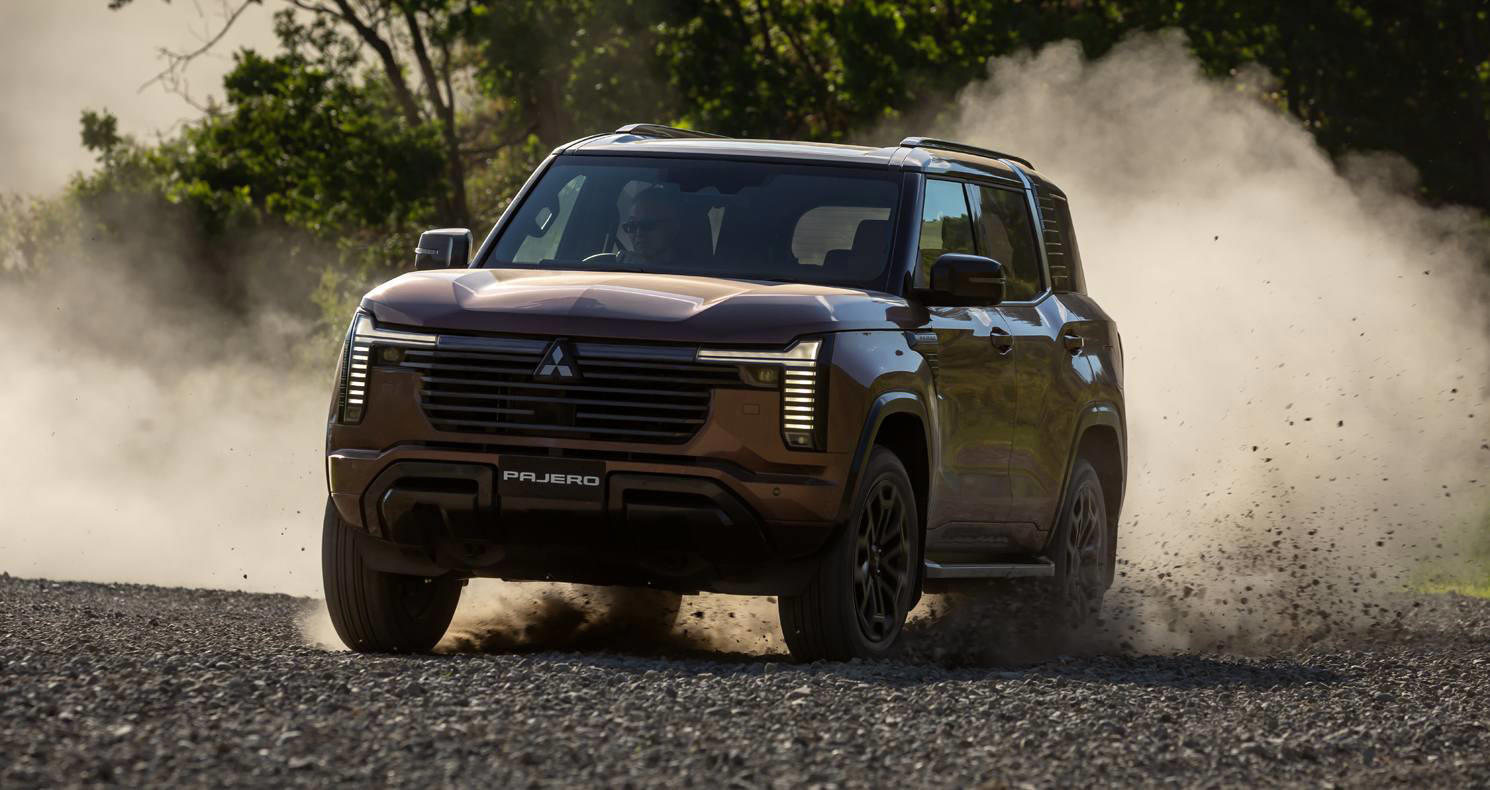
Key takeaways ・Dropping tyre pressures will help to prevent your vehicle getting bogged in the sand ・Tyre pressures directly affect a vehicle’s safety, performance, comfort and fuel use ・There is no one psi tyre pressure figure that you can apply every time to every different type of tyre or terrain Tyre pressures matter. They directly affect a vehicle’s safety, performance, comfort and fuel use. Tyre pressures can mean the difference between a safe trip and increased potential for vehicular-based strife. If tyre pressures are too low they will affect the vehicle’s ride and handling and how safe the vehicle is while in motion and the risk of a tyre rolling off its rim will increase; too high and the tyre may be inclined to lose traction thus impacting ride and handling and how safe the vehicle is while in motion. If you’re thinking about going off-road this summer, it’s important to take note: dropping tyre pressures is crucial for safe and sensible 4WDing; tyre pressures are often the difference between your vehicle getting stuck/bogged and you driving on without a hassle in the world. The golden rule is: if you are 4WDing, always drop your tyre pressures from the tyre-placard-recommended daily driving pressure (which they should be set at) to a tyre pressure best suited to the terrain you’re about to drive. For the purpose of this yarn we’ll refer to the volume of air in a tyre in terms of a PSI (pounds per square inch) measurement, but some people prefer kilopascals (kPa). PSI is more often used in Australia but each to their own. Variables Affecting Optimum Tyre Pressure There is no one magical PSI tyre pressure figure that you can apply every time to every different type of terrain or situation. Your optimum tyre pressure will change according to the vehicle, its weight, the load it is carrying at the time, the terrain your vehicle is traversing, the time of day, the amount of time you've been driving on those tyres that day, the size and type of tyres you're using and myriad other variables. Isuzu MU-X Next up We’ll get to some PSI ranges that you can use as guidelines for 4WDing on different terrain soon but first a quick lesson in what dropping air pressure in a tyre actually does to it. When you reduce the air pressure in a tyre, the tyre flattens lengthways (front to back) increasing its footprint, which: Spreads the vehicle’s weight over a greater surface area thus improving the vehicle’s flotation on sand so it’s less likely to sink in/bog down; Makes the tyres softer and more pliable giving them enhanced grip and traction, so they can better climb over rocks, ruts and corrugations with reduced bouncing and there’s a decreased risk of damage or puncture as the tyre rubber will mould to the terrain or obstacle; and Benefits and Risks of Airing Down Allows the tyres to better soak up lumps, bumps and corrugations on dirt tracks. But, also worth remembering, there are some risks and trade-offs when you ‘air down’ a tyre for 4WDing. If you drop tyre pressures below 10 psi there’s a risk you’ll roll the tyre off the rim, especially if you try to do any TV ad-style hard-turn rooster tails in the sand. ARB analog tyre pressure gauge Risks of Under-Inflated Tyres The bulging sidewalls in an aired-down tyre may be vulnerable to damage from sharp objects on the track. Driving on hard surfaces with low-pressure tyres is unsafe and may lead to damage of your rims, among other things. At the very least, driving on under-inflated tyres on sealed surfaces will increase the tyres’ risk of excessive flexing, overheating, and potential tyre failure. To avoid any under-inflated strife, always – I repeat, always – re-inflate your tyres to the blacktop pressure recommended on the vehicle’s tyre placard (usually located on the driver-side door pillar) BEFORE you return to driving on a sealed surface (i.e. bitumen). Worth noting is the fact tyres on a 17-,18- or 19-inch rim are generally better suited to 4WDing than anything on wheels sized above that. More sidewall on the tyre itself gives the driver more flexibility in terms of how much air they can drop out of the tyre in order to perform better on the terrain they’re traversing. Most showroom-standard 4WDs are sold riding on tyres that are not suited to off-roading and don’t offer enough – if any – protection against off-road damage. Mitsubishi Pajero Sport Choosing the Right Tyres for Off-Roading A set of decent All Terrain (AT) tyres will save you a lot of stress on the beach or in the bush. They are tough, less susceptible to sticks-and-stones damage than Highway Terrain (HT) rubber and provide plenty of off-road grip. Light Truck (LT) tyres are stronger than passenger car tyres, have thick sidewalls and are built to carry loads and run at high pressures. They can be noisy on-road, but perform well off-road. Mud Terrain (MT) tyres are big, knobbly and as the name implies, made for getting through mud. But, remember, ‘muddies’ can be noisy on-road and will add to your fuel bills if you do a lot of highway driving. A set of good ATs will set you back between $250 and $450 per tyre. As for PHEV or EV-specific tyres, well, they’re designed, as standard, to cope with enormous amounts of torque (delivered at a moment’s notice) and to carry the weight of a hybrid or electric vehicle; they’re not engineered to cope with the particular stresses of off-road driving. Ford Everest Sport What PSI should 4WD tyres be on the highway? Some people don't ever bother checking their tyre pressure and that can result in greater tyre wear and tear, less-than-ideal fuel consumption and, worse still, unsafe driving. On bitumen, recommended tyre pressures on an AWD or 4WD will be from around 30 psi and up but, as always, check the tyre placard on your vehicle. Always check tyre pressure when your tyres are cold (i.e. the vehicle hasn't been driven for about three hours) and only use a tyre-pressure gauge from a reputable company, such as ARB or Ironman 4x4, to get an accurate reading to make sure you're running at the recommended pressure. Uneven tyre pressures can severely affect a vehicle's handling, especially under braking and cornering, so check that all five tyres – never forget your spare – are at the recommended pressure. Yokohama Geolandar AT tyre on Nissan Patrol Warrior What PSI should 4WD tyres be on dirt tracks? A lot of drivers set and forget a bitumen-suited pressure, don't bother ever checking and hope for the best. For firm, well-maintained dirt tracks or gravel roads, aim for between 28 and 36 psi to yield better ride and handling than would be achieved if your tyres were simply set at bitumen pressure. For lumpy, bumpy gravel tracks – say, for instance, a chopped-up Birdsville Track – set tyre pressure from 26 to 32 psi. Because you may be forced to travel at lower speeds and over bigger, sharper rocks, deeper potholed or corrugated sections, tyres will need a little bit more give than if they were set at bitumen pressures. A great general approach on any terrain is: deflate your tyres, drive, and see how you go; then adjust your tyre pressures as needed. 2026 Mitsubishi Pajero What PSI should 4WD tyres be on rocks? Aim for a tyre pressure between 22 and 28 psi when driving on rocks, or even lower if the situation calls for it. You generally don't have to drop too far down from highway pressures but every now and again you may have to drop even lower those pressures mentioned above. By dropping your tyre pressure you'll reduce the risk of punctures, improve traction and make the ride more comfortable for everyone inside. 2026 Mitsubishi Pajero What PSI should 4WD tyres be on sand and mud? Drop tyre pressure to between 15 and 20 psi – 18 psi is a good start – before you drive onto sand and you'll make off-roading much easier for yourself. At 20 psi this nice general-purpose pressure allows you to drive along firm, hard-packed sand and then, if you have to, do short stretches of bitumen – at low speeds – in between beach runs, without the need to inflate your tyres back to road-going pressure every time. If you become bogged or have driven onto a patch of very soft sand then you may have to drop as low as 8 psi (on tyres with no beadlocks) or 5 psi (on tyres with beadlocks) to help get you out. Remember you always have to adjust your driving style to suit lower tyre pressure: no hard braking or accelerating, and no erratic steering, only slow gradual turns. Driving in this dirty slop requires laser focus on tyre pressure at all times and may require you to go as low as 8 psi (no beadlocks) or 5 psi (with beadlocks) in order to help you get out of any particularly tricky patches of it. Deflate your tyres, drive, and see how you go, then adjust tyre pressures to suit. 2025 Toyota LandCruiser Prado Altitude What PSI should 4WD tyres be on snow and when towing? As well as using snow chains (if required by law), maintain uniform tyre pressure, as advised by your vehicle owner's manual, to suit the conditions. NSW Transport advises that: 'Tyre pressure should be 25 PSI or higher when using chains. Tyre manufactures recommend that cars with radial tyres shouldn't travel faster than 40 km/h when fitted with chains. Regularly check all of the tyre pressures on the tow vehicle – including the spare – and check those on the caravan. Checking for wear and tear on all tyres – including your caravan's and your tow vehicle's – before you travel is crucial. Also monitor all tyre pressures during your trip. A good guide is highway pressures of between 38 and 44 psi for the tow vehicle, and between 45 and 65 psi for the trailer or caravan. Maintain uniform tyre pressures, as advised by your owner's manual, to suit the conditions. Uneven tyre pressures can affect a vehicle's handling, especially under braking and cornering, so check that all tyres are at the recommended pressure. Check tyre pressures on both the tow vehicle and the trailer/caravan prior to setting off each day during a trip, and when you've pulled up for fuel or a break walk around and check them for obvious loss of inflation or damage. 2027 Nissan Patrol

 Liked by William Hill, Amélie Pelletier
 Liked by William Hill, Amélie Pelletier