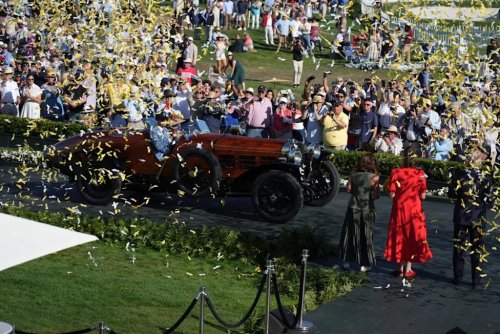
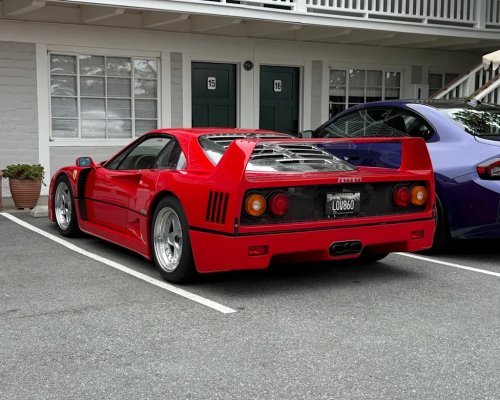
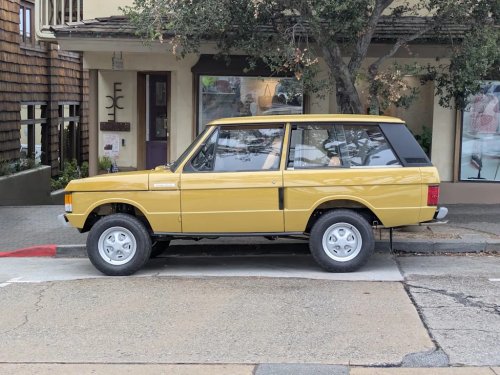
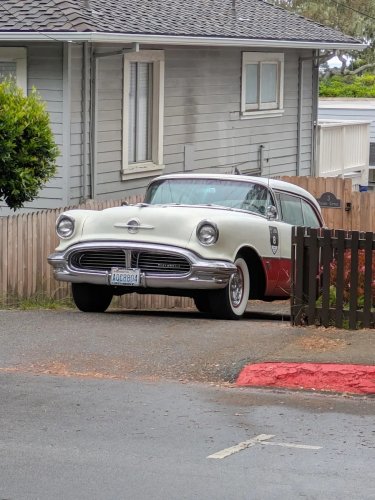
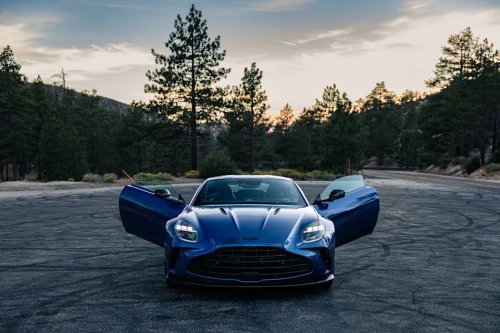
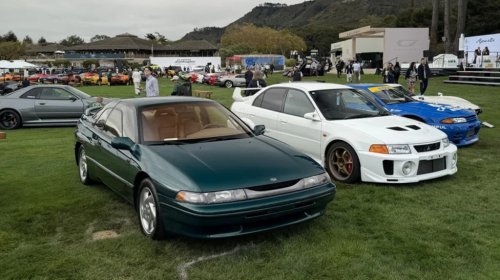
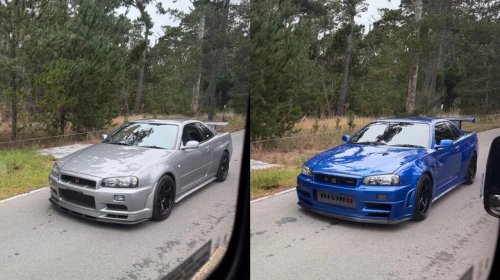
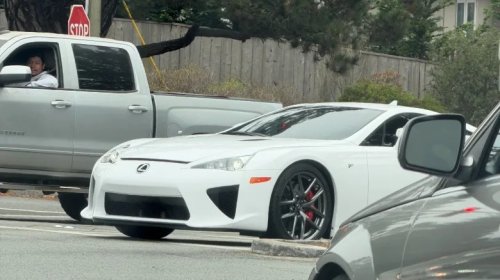
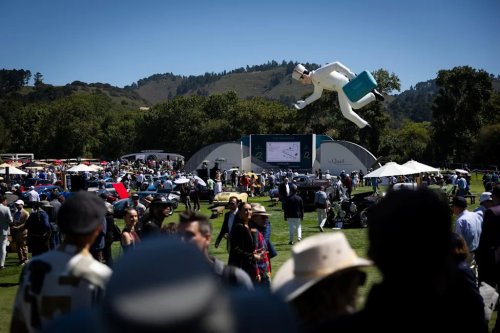
The Real Story of Car Week 2026 Isn't a Car. It's a Fence.In the week before this year's 75th Pebble Beach Concours d'Elegance, the most talked-about addition to the Monterey Peninsula wasn't a barn-find Bugatti or a freshly restored coachbuilt Alfa. It was a temporary metal fence, installed around the parking lot of a Seaside hotel to keep it from becoming an unofficial gathering ground once the cars arrive.Up the coast in Carmel, the changes are just as telling. Speed bumps are going in at locations residents flagged directly to police. Ocean Avenue will close to public parking during scheduled showcase events. A park-and-ride lot has opened at Larson Field, and Monterey-Salinas Transit is running free trolleys to keep traffic, and tempers, out of neighborhoods that can no longer absorb the crowds.None of this is happening because Pebble Beach Concours attendees have become unruly. It is happening because Car Week's popularity has outrun the infrastructure of the towns that host it, and because a second, unofficial economy has grown up around the sanctioned events: pop-up gatherings, impromptu parking-lot meets, and a driving culture built more for a phone camera than a concours lawn. That friction, not any single car crossing an auction stage, is the real Car Week story this year.AdvertisementAdvertisementPebble Beach Concours marks its 75th anniversary in 2026, a run dating to 1950 that has made it the standard against which every other concours in the world measures itself. This year's featured display honors the 60th anniversary of the Lamborghini Miura. Around it sits the week's serious business: marque auctions such as the Bentley and Mercedes-Benz offerings anchoring this year's Pebble Beach sales, sanctioned driving events like Exotics on Broadway in Seaside and the Porsche Monterey Classic on Del Monte Boulevard, and manufacturer showcases, including the concepts BMW is bringing to Monterey this year, all scheduled, permitted, and built around genuine automotive merit.It's the unsanctioned periphery that has forced the change. Last year, regional law enforcement dealt with a string of illegal pop-up gatherings across the Peninsula, at an In-N-Out and a Home Depot in Seaside, along Cannery Row, and on 17-Mile Drive, drawing crowds large enough that police needed to call in mutual aid to manage them. Carmel Police Chief Paul Trayer says resident complaints in the aftermath centered overwhelmingly on speeding and reckless driving, concerns significant enough that his department met with residents directly to pinpoint where new speed bumps and restrictions were needed. Ahead of this year's event, Trayer offered a simple assessment: "We're more prepared this year than we have ever been."The clearest illustration of the new mood arrived this week at, of all places, an In-N-Out drive-through. A driver in a McLaren was stopped at the entrance to the Seaside restaurant's parking lot and turned away, with his brother alleging the car itself was the reason. In-N-Out has not confirmed what policy, if any, was being enforced, and the footage circulating online doesn't settle the question either way. But the incident lands as a small, uncomfortable symbol of a larger shift: a car worthy of a concours lawn is now, in some parking lots on the Peninsula, treated as a liability before it's recognized as a legitimate piece of engineering.This is where the story becomes relevant well beyond Seaside city limits. Car Week's value to collectors has never rested solely on the concours lawn or the auction tent. Part of what has made Monterey singular for seventy-five years is the ability to see extraordinary cars in an ordinary setting, parked outside a hotel, idling at a stoplight, pulling into a burger stand. That informality has always been part of the romance. What's changing is who that informality now attracts. Car Week's growth has been driven as much by short-form video and spectator culture as by genuine collector interest, and the two audiences increasingly compete for the same streets, the same parking lots, and, this year, the same scrutiny from law enforcement.AdvertisementAdvertisementFor collectors actually attending with cars worth defending, the practical takeaway is straightforward. Treat public parking and casual street meets as unpredictable this week; the fences and speed bumps exist precisely because those spaces stopped being safe defaults. Favor credentialed, access-controlled venues, the Concours itself, marque corrals, auction house preview tents, over anything public and unplanned. Build in extra time around road closures on Ocean Avenue and Del Monte Boulevard, which now interrupt travel between hotels and the week's sanctioned events. None of this diminishes what Pebble Beach and its surrounding auctions represent. It simply means the logistics of attending safely, and reputably, have gotten more complicated, in direct proportion to Car Week's own popularity.There's a broader lesson here for collector-car culture, one that extends well past Monterey. Enthusiasm without the connoisseurship, provenance, and taste that anchor genuine collecting doesn't add value to an event, or a market. It adds volume. Pebble Beach's 75th anniversary is worth celebrating precisely because the Concours has spent three-quarters of a century building a reputation for judgment and standards, earned one car length at a time. The fences going up around it this week are a reminder that reputation, once built, still has to be actively protected, not just from bad actors, but from being swallowed by its own popularity.Concours judges grade cars to the tenth of a point. This year, the Monterey Peninsula is grading behavior, and the results are showing up as steel fencing and speed bumps rather than trophies. That's not a footnote to Car Week 2026. For anyone serious about where this market and this culture are headed, it may be the most important story of the week.Join our Newsletter, follow our Instagram page, and follow us on Facebook.


















 +49 others