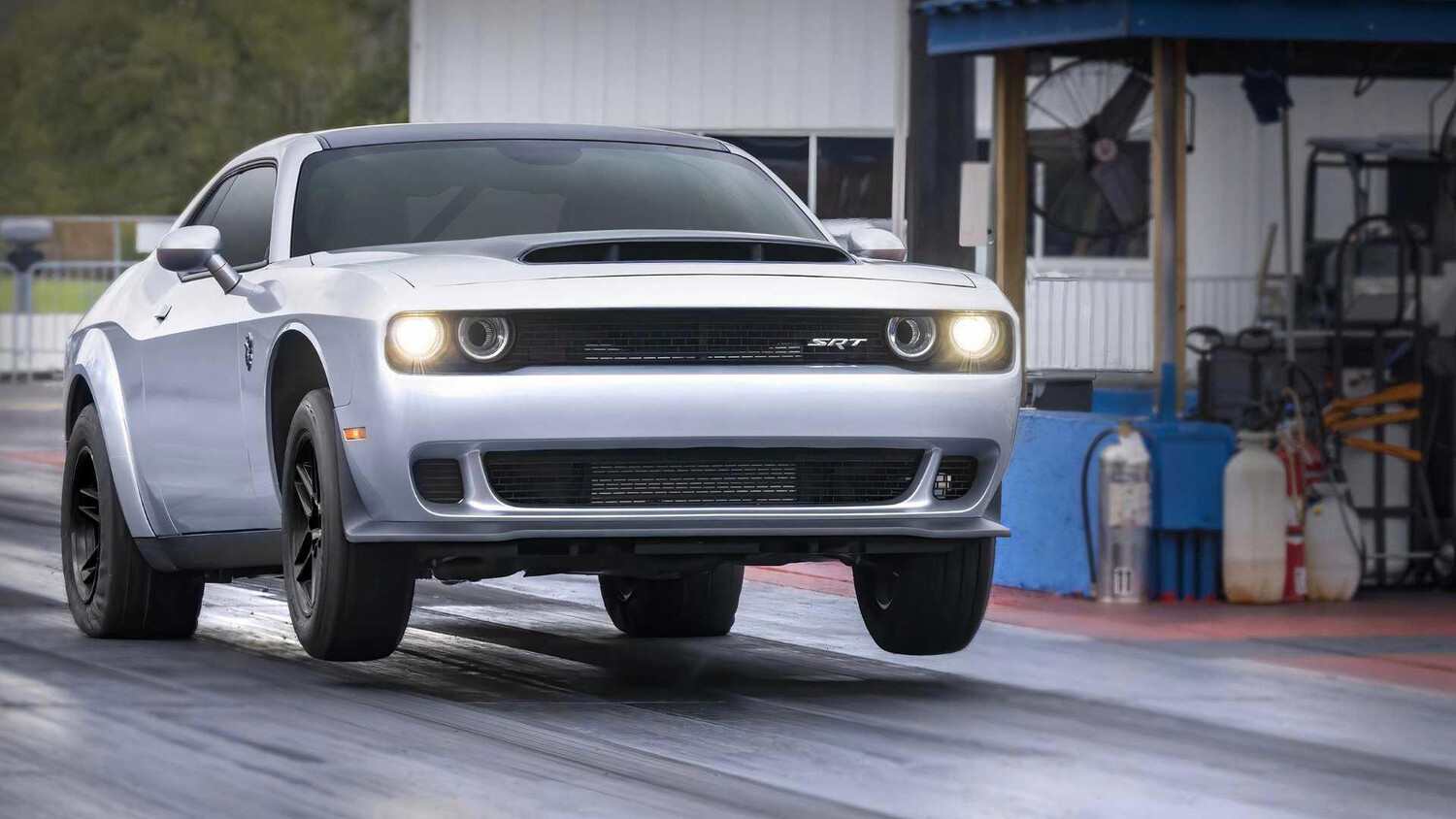
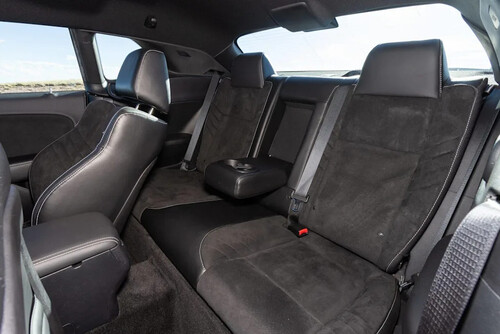
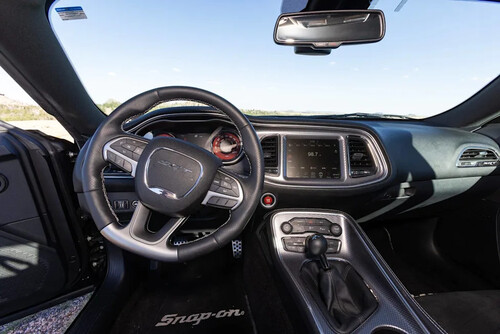
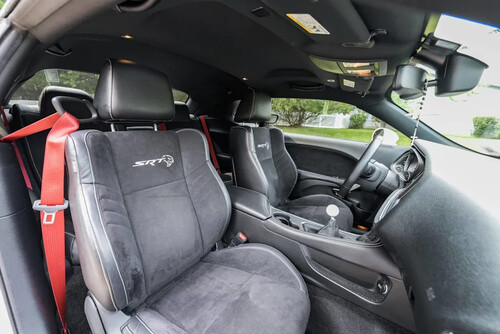
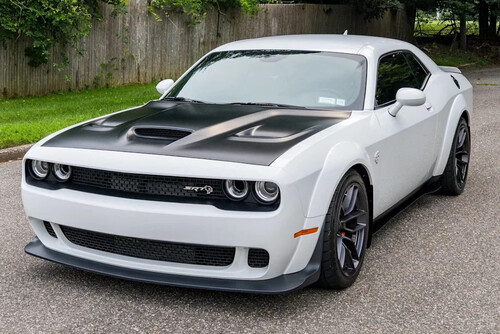
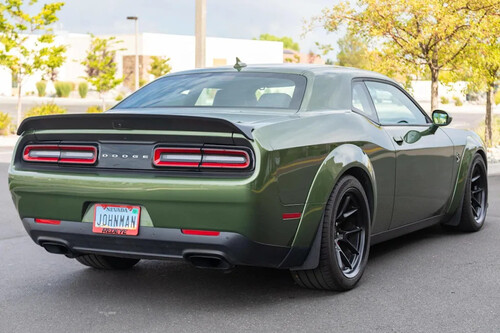
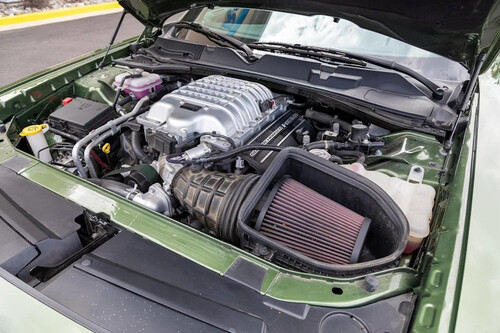
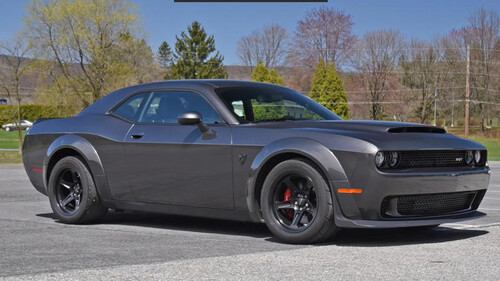
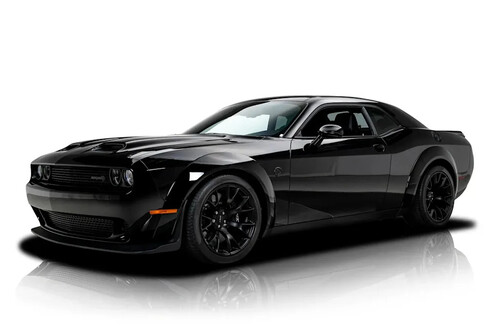
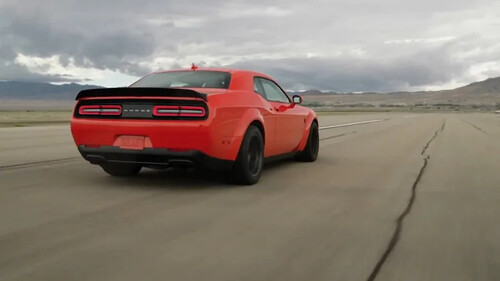
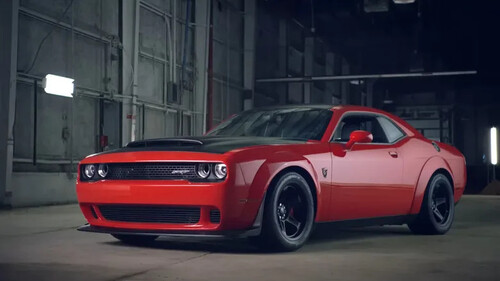
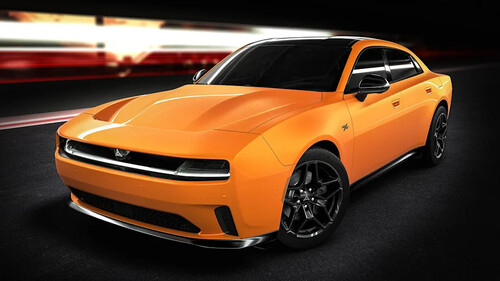
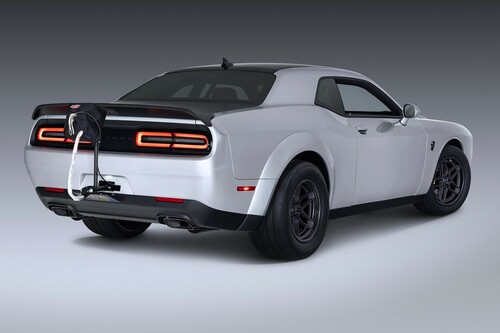
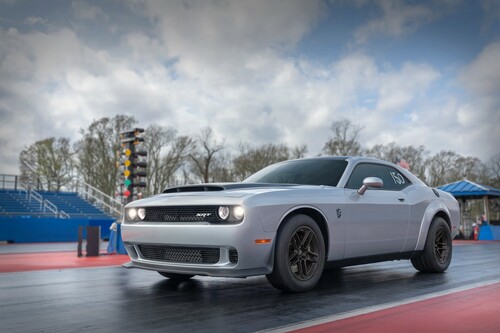
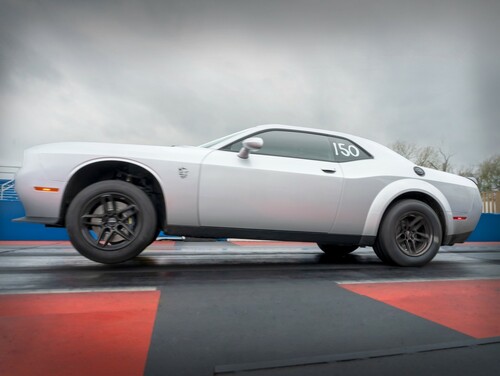
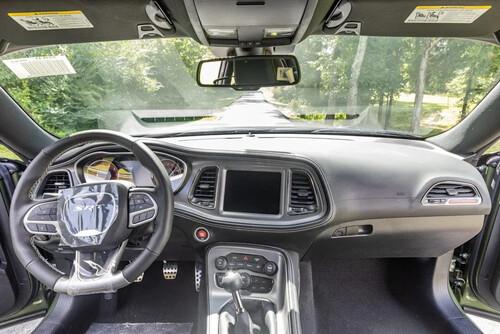
For decades, the quickest production cars followed a familiar pattern. The closer they came to drag-strip dominance, the further they drifted from everyday life. Stiff suspensions, specialized tires, race-focused setups, and constant compromises often turned astonishing acceleration into something best enjoyed occasionally rather than lived with daily. Building a truly practical car that could also terrorize the quarter mile remained one of the industry's toughest engineering challenges. Quarter-Mile Performance Usually Comes At A Cost Stellantis Straight-line speed looks deceptively simple. A muscle car overing 1,320 feet as quickly as possible sounds like little more than an exercise in adding horsepower, but engineers know the stopwatch rewards an entire ecosystem of decisions working together. Chassis tuning, weight transfer, driveline durability, thermal management, tire compound, transmission calibration, and electronic controls all influence how effectively power reaches the pavement. Overlooking any one of those areas can leave enormous performance untapped.Those priorities rarely align with the expectations of everyday drivers. Comfortable suspensions reduce fatigue but often limit rearward weight transfer during hard launches. Conventional street tires last longer and perform better in varying weather, yet surrender valuable traction at the starting line. Reinforcing driveline components improves reliability under extreme loads, although it frequently adds mass that engineers spend years trying to eliminate elsewhere. Every solution introduces another compromise.Manufacturers also face constraints that builders largely avoid. A factory vehicle must satisfy emissions regulations, crash standards, warranty obligations, noise requirements, and long-term durability targets before customers ever receive the keys. Building a car capable of repeated drag-strip launches while meeting those responsibilities demands far more than simply increasing engine output. Carmakers Rarely Try To Solve Both Problems Stellantis Because those competing objectives pull engineering teams in different directions, manufacturers have traditionally accepted that customers must choose between outright performance and genuine practicality. Dedicated drag specials often become weekend toys, while everyday performance cars sacrifice ultimate acceleration in favor of comfort, refinement, and predictable road manners.That left an intriguing gap in the market. What if a manufacturer engineered every major system around quarter-mile performance without abandoning the qualities that made the car enjoyable Monday through Friday? Solving that problem required more than a powerful engine—it demanded an integrated approach where the powertrain, suspension, transmission, electronics, cooling system, and even the tires were designed to function as one cohesive package. Few companies possessed both the engineering confidence and the willingness to pursue that philosophy. The Dodge Challenger SRT Demon 170 Finally Bridged That Divide Stellantis When Dodge unveiled the 2023 Challenger SRT Demon 170, it wasn't simply introducing another high-horsepower muscle car. It was presenting the ultimate evolution of a platform that had spent more than a decade proving traditional American V8 performance could still evolve in increasingly sophisticated ways. More importantly, it represented Dodge's attempt to answer a question the industry had largely avoided: could a factory-built production car genuinely compete with dedicated drag machinery without surrendering its usefulness everywhere else?The answer began with a heavily reworked version of the supercharged 6.2-liter High-Output HEMI V8. Rather than chasing impressive numbers for marketing purposes alone, Dodge engineered the powertrain to exploit the higher octane rating and cooling properties of E85 ethanol fuel. With revised calibration, strengthened internal components, higher-capacity fuel injectors, and a larger 3.0-liter supercharger working together, the Demon 170 produced 1,025 horsepower and 945 lb-ft of torque on E85 while channeling that output through an eight-speed TorqueFlite automatic transmission. Using Dodge's official testing methodology on a prepared drag surface, the company recorded a 1.66-second 0–60 mph time, while the NHRA certified an 8.91-second quarter mile at 151.17 mph.Unlike many headline-grabbing performance cars, however, those figures were only part of the story. The engineering decisions that enabled them revealed why the Demon 170 stood apart from virtually every other factory muscle car that came before it. Dodge Engineered Every System Around Repeatable Performance Stellantis Reaching four-digit horsepower was only one piece of the equation. Dodge's engineers knew that producing enormous power meant little if the rest of the car couldn't consistently translate it into acceleration. The Demon 170 was therefore engineered as a complete system, with every major component developed to withstand repeated high-load launches instead of chasing a single headline-making run.The engine received far more than a larger supercharger. Higher-flow fuel injectors supported ethanol's increased fuel demand, while strengthened connecting rods, revised pistons, upgraded valve-train components, and a recalibrated engine management system allowed the supercharged HEMI to safely exploit E85's greater knock resistance. Ethanol's cooling properties also reduced combustion temperatures under extreme load, enabling Dodge to extract substantially more performance without relying on race-only hardware or sacrificing factory durability standards.Stellantis That philosophy extended beyond the engine. The TorqueFlite eight-speed automatic was recalibrated to withstand repeated hard launches, while TransBrake 2.0 allowed drivers to preload the drivetrain before releasing maximum torque almost instantaneously. Revised launch control software continuously balanced engine output against available grip, helping the car produce consistent acceleration instead of relying on perfect conditions or driver skill alone.Even the suspension and tires formed part of the same engineering strategy. Dodge retuned the adaptive suspension to encourage rearward weight transfer under acceleration, maximizing the traction available from the factory-fitted Mickey Thompson ET Street R drag radials. Rather than treating the tires as optional accessories, the company integrated them into the Demon 170's overall development program, ensuring every chassis calibration reflected the grip they could deliver. The Biggest Achievement Was What Dodge Didn't Sacrifice Stellantis Many manufacturers have built exceptionally fast cars, but relatively few have managed to preserve everyday usability while doing so. The Demon 170 never abandoned the qualities that had made the Challenger a practical grand touring muscle car in the first place. It remained spacious enough for adults, offered a usable trunk, retained modern infotainment and climate-control systems, and complied with the regulations expected of a production vehicle sold through dealerships across North America.That distinction separated it from the majority of eight-second street cars. Comparable aftermarket builds frequently require custom tuning, specialist maintenance, trailers, or race fuel to deliver their advertised performance. Owners often accept reduced reliability and greater inconvenience as the price of extreme acceleration. Dodge instead assumed responsibility for integrating those capabilities into a complete factory-developed package, allowing customers to experience extraordinary performance without assembling it themselves.Factory validation also carried practical benefits beyond convenience. Every calibration—from engine management to transmission logic—was designed to work together under a manufacturer's durability program rather than through trial and error. Owners could drive to a drag strip, make competitive passes, and return home in the same car without fundamentally changing how they used it. That everyday usability, rather than the horsepower figure alone, represented the Demon 170's most significant engineering accomplishment. A Fitting Farewell To The Supercharged HEMI Era Stellantis The Demon 170 arrived as Dodge prepared to close one of the most celebrated chapters in modern American performance. Tightening emissions standards and the industry's broader transition toward electrified powertrains meant the supercharged HEMI V8 was approaching the end of its production journey. Instead of allowing that era to fade quietly, Dodge chose to showcase the platform's ultimate potential before moving in a different technological direction.Its significance therefore extends beyond certified performance numbers. The Demon 170 demonstrated how far a traditional front-engine, rear-wheel-drive muscle car could be developed when engineers pursued quarter-mile capability without abandoning production-car refinement. It wasn't simply the fastest Challenger ever built—it became the final expression of decades of HEMI development, combining factory reliability, road legality, and drag-strip performance in a way few production vehicles have attempted.Future performance Dodges will almost certainly achieve even quicker acceleration through electrification or hybrid technology. Yet they will do so using fundamentally different engineering principles. The Demon 170's place in automotive history comes from proving that the classic American muscle-car formula still had one extraordinary chapter left to write before the curtain fell.Sources: Dodge,