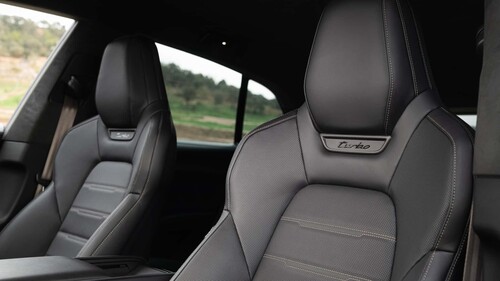
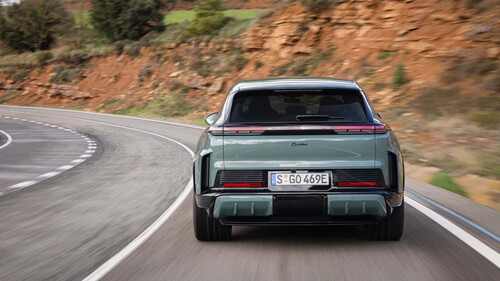
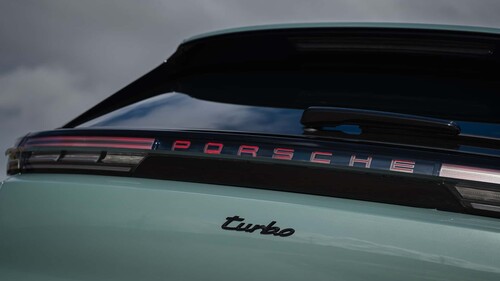
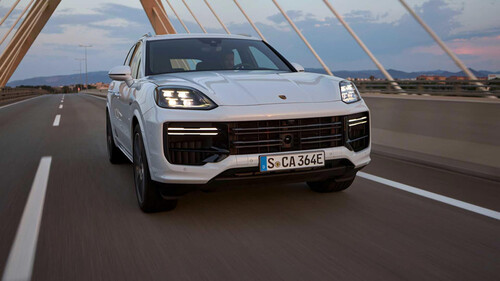
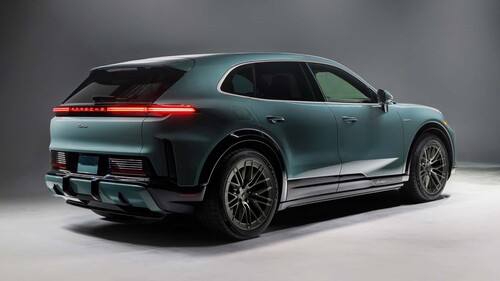
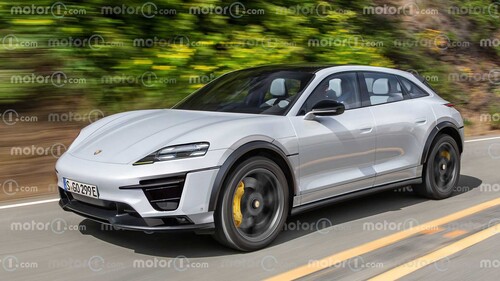
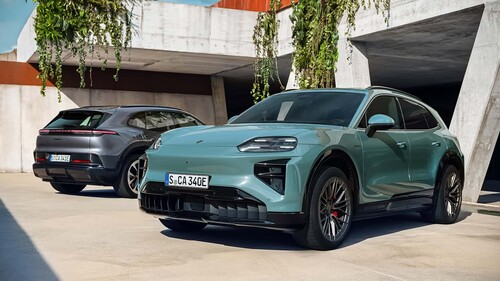
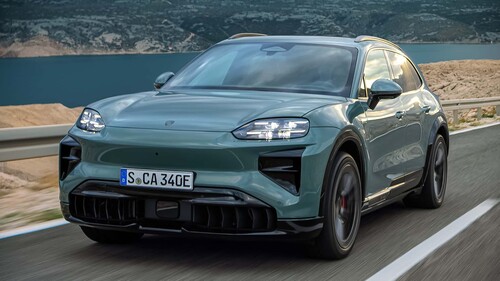
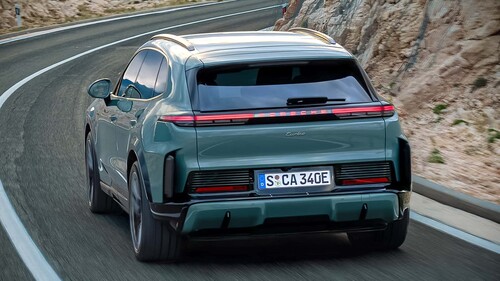
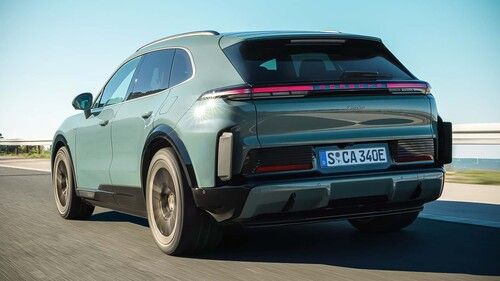
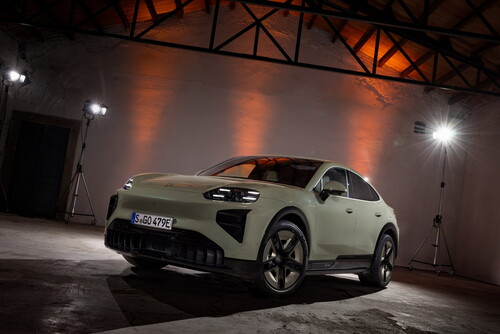
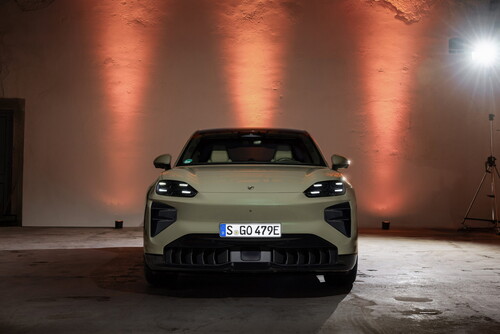
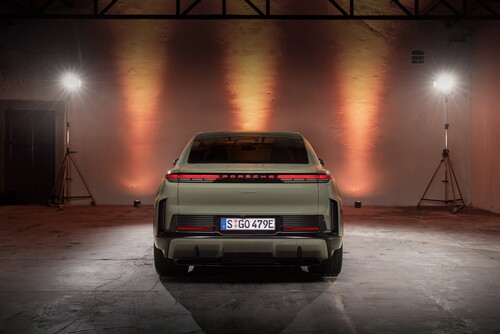
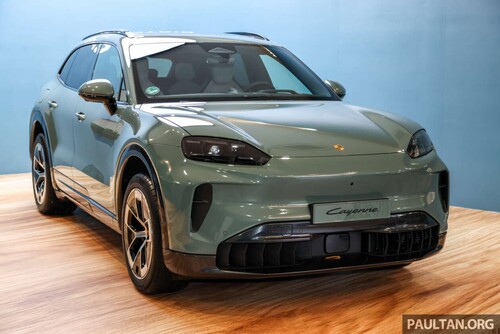
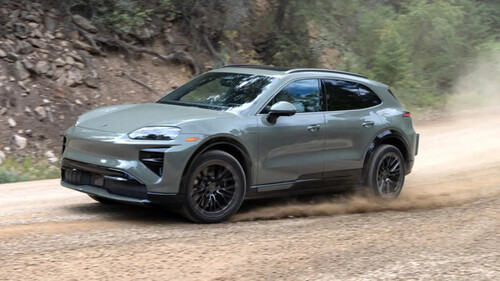
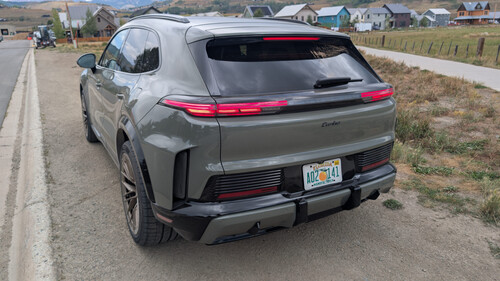
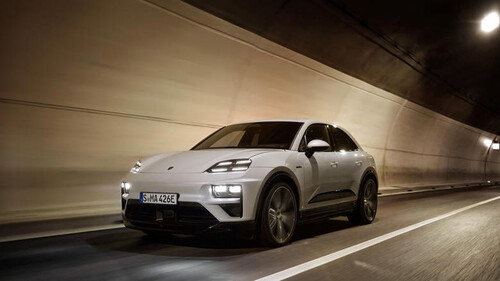
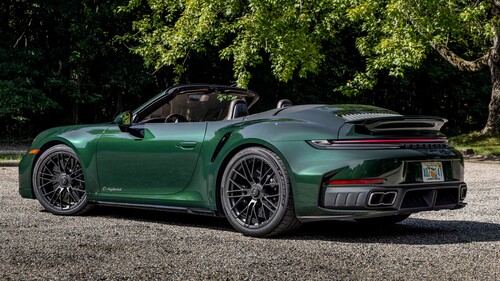
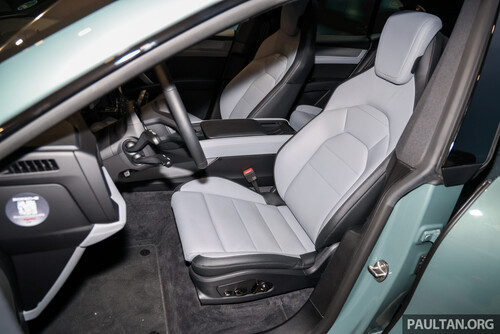
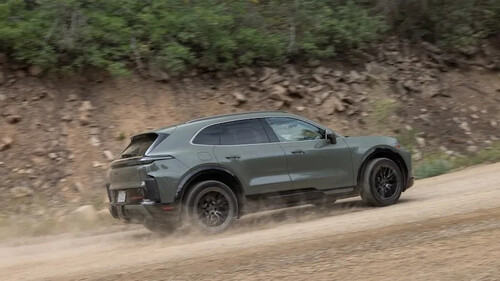
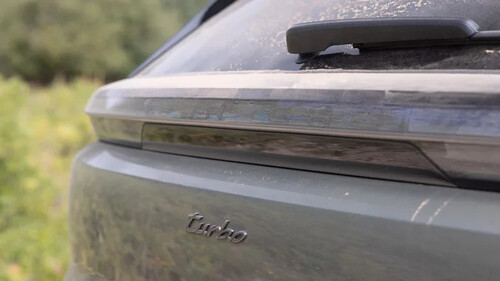
The EV SUV Where Supercar Performance Is a Side Feature: We Test the 2026 Porsche Cayenne Turbo ElectricCar and DriverThe EditorsFri, September 11, 2026 at 5:00 PM UTCAdd us on GoogleTested: 2026 Porsche Cayenne Turbo ElectricMichael Simari - Car and DriverSomewhere in Weissach, Germany, a Porsche product planner asked whether a 5960-pound SUV should be able to reach 160 mph in 11.7 seconds. The engineering department saw no reason why it shouldn't.On its way to that result, the Porsche Cayenne Turbo Electric ran the quarter-mile in 9.5 seconds at 146 mph. It also circled the skidpad at 1.05 g's and stopped from 70 mph in a scant 140 feet. Each of those results is a new SUV record in Car and Driver testing, but that wasn't enough: This Cayenne also beat the 911 Turbo S in both the quarter-mile and our 0–150–0 test. Enthusiasts have long suspected Porsche of hobbling the Cayman to prevent exactly this sort of fratricide. Porsche has since committed it twice: first with the Taycan, now with a family bus.Michael Simari - Car and DriverWhat's more alarming is how the Cayenne Turbo Electric treats supercar performance as just another feature, along with, among others, motorized rear-window privacy shades, a luxury-car ride, and a 7716-pound tow rating.844 Horsepower to StartConsistent with Porsche tradition, the start button sits to the left of the steering wheel, though in this car it's vestigial twice over. There is no engine to start and no need to press said button anyway—we spent two days behind the wheel before noticing it was even there.Michael Simari - Car and DriverHowever you turn it on, the Cayenne's dual-motor, all-wheel-drive powertrain produces a combined 844 horsepower—the lowest of its three outputs, yet more than any other Porsche model currently makes in its default setting. Should 844 horses prove insufficient, the push-to-pass button on the steering wheel permits 1018 horsepower for 10 seconds, cutting 30-to-50-mph acceleration from 1.1 seconds to 0.9 and shrinking the 50-to-70-mph run from 1.4 seconds to 1.1. We struggle to think of a passing maneuver that is impossible with 844 horsepower but somehow prudent with 1018, though we attempted several just to make sure.Michael Simari - Car and DriverLaunch control releases the system's full 1139 horsepower, and the sensation should be familiar to anyone who's been rear-ended at a red light. In 2.1 seconds you're at 60 mph. In 4.5, you're cresting triple digits. The 911 Turbo S is 0.1 second quicker to 60, but by 100 the Cayenne has passed it. The SUV finishes the quarter mile 0.2 second sooner and 4 mph faster.AdvertisementAdvertisementStrapping JATO rockets to a fridge would produce a similar effect, but such a rocket-powered fridge would neither decelerate with confidence nor be coaxed easily into a throttle-steered slide. The Cayenne does both. Its stop from 70 mph matched both the last 911 Carrera GTS coupe and Chevrolet Corvette ZR1 we tested. From 100 mph, the Cayenne's 282-foot stop trailed those sports cars by only about half the overall length of the Cayenne itself. Credit the Pirelli P Zero R summer tires wrapped around the 22-inch forged-aluminum wheels, as well as an ABS calibration that makes full use of the optional 17.3-inch front and 16.1-inch rear carbon-ceramic rotors, clamped by 10- and four-piston calipers, respectively.Michael Simari - Car and DriverWhile the Pirellis make the 1.05-g skidpad result possible, the chassis makes it approachable. A modest 52.9 percent rear weight bias helps those tires deploy the Cayenne's enormous output, while the electronically controlled limited-slip differential makes the rear axle a handling tool. The chassis defaults to polite understeer, but nudge the accelerator (well, at this kind of power nothing is a nudge) and the rear axle joins in, rotating the SUV in carefully metered, predictable increments. The controllable oversteer is useful in corners on a racetrack, wholly unnecessary at the roundabout on the way to day care, and entertaining in both scenarios.Speed Is EasyOur car's $194,600 build sheet showed just over $20,000 in performance options, including rear-axle steering, Porsche Active Ride, carbon-ceramic brakes, and summer tires. Absent were luxuries like a sunroof, four-zone climate control, and thermally and acoustically insulated glass. The priorities were then clear, which made the refinement more surprising.Michael Simari - Car and DriverComfort mode delivers the plush composure of a luxury car. Porsche's Active Ride uses electrically driven hydraulic pumps that act on the dampers to control pitch and roll. The system mutes body motion without making the chassis feel artificially flat, and broken pavement arrives as texture instead of impact. The steering is accurate and expertly weighted, and the brake pedal is easy to modulate, with the handoff between regenerative and friction braking nearly imperceptible. The blending almost makes you forget Porsche's stubborn refusal to offer true one-pedal driving; its sole brake-regen setting feels largely ceremonial.AdvertisementAdvertisementIts overall composure keeps the Cayenne from becoming yet another one-note EV once the novelty of its speed feels commonplace. By day three, the acceleration had become the least interesting part of the driving experience, which says as much about the quality of everything else as it does about hedonic adaptation.Consider how fast it is while sitting still. Connected to a 400-kW NACS charger, the Cayenne's 108-kWh, 800-volt battery peaked at 383 kilowatts and averaged 239 kilowatts while charging from 15 to 90 percent in 24 minutes. That's the fastest we've seen yet from an EV, and combined with 300 miles of range in our 75-mph highway test, our fast-charge experience amounted to replacing about 225 miles of real-world highway range in under half an hour.Michael Simari - Car and DriverFamily FeudThe highest-performing version of the Porsche Taycan—the Turbo GT with the Weissach package—is a four-door without rear seats. The electric Cayenne keeps its rear bench and, thanks in part to a roughly five-inch longer wheelbase than the gas version, gives its rear passengers enormous stretch-out space. We fit a rear-facing child seat behind the front seat positioned for a tall driver with room to spare. We also fit 10 carry-ons in the cargo area behind the rear seats and 26 with them stowed, two more in each configuration than the last Cayenne Turbo we tested. The 10-bag result also tops the BMW iX and Mercedes-AMG EQE SUV.Up front is just as pleasant, with excellent outward visibility and seats that are comfortable on long drives. The curved lower part of the OLED infotainment display looks stranger than it operates, though adjusting air-vent direction requires a tedious touchscreen interface.Michael Simari - Car and DriverWe have one other mundane ergonomic complaint. Porsche engineered a dual-visor system that provides L-shaped coverage from the driver's window to the windshield, then forgot to make the side visor telescope. It's a blinding omission, literally.AdvertisementAdvertisementThese gripes vanish when put against the Cayenne's comical range of abilities, which is best illustrated by two infotainment functions. The base Bose stereo has an Eco mode that shuts off the rear speakers to conserve energy. A few swipes away is a "Prepare Vehicle" function that preconditions the battery for racetrack use. Porsche imagined an owner concerned about the electrical draw of tweeters in an SUV with four-digit horsepower and then gave that same owner the means to prepare a three-ton, boat-towing family vehicle for a track day. What a world.Dynamic RangeFour-digit-horsepower EVs are the new loudness war. Manufacturers chase larger numbers because smaller ones look weak, long after additional output has stopped improving the driving experience. Increasingly, these absurd power figures belong to vehicles designed to carry children, dogs, or plywood, often simultaneously.Michael Simari - Car and DriverThis Cayenne is one of these vehicles, so on paper it's easy to hate. It's heavy and expensive. It wears a Turbo badge despite having precisely zero turbochargers. It embodies nearly every grievance enthusiasts hold against the modern performance vehicle.And then you drive it.AdvertisementAdvertisementLike the best Porsches, the Cayenne Turbo Electric puts its power in service of the driving experience rather than substituting it. It's beyond super-SUV. It's post-supercar: a vehicle whose performance isn't the sole reason for existence but rather one feature among many, each executed to the same standard.About the only thing it can't do is get a compliment at a Saturday morning car meet.➡️ Skip the lot. Let Car and Driver help you find your next car.Shop New Cars Shop Used CarsYou Might Also LikeGift Guide: Best Ride-On Electric Cars for KidsFuture Cars Worth Waiting For: 2025–2029