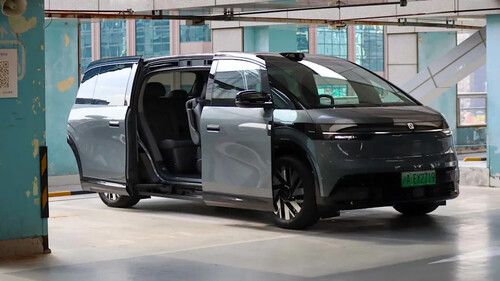
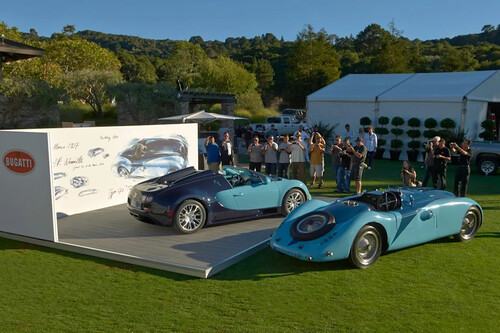
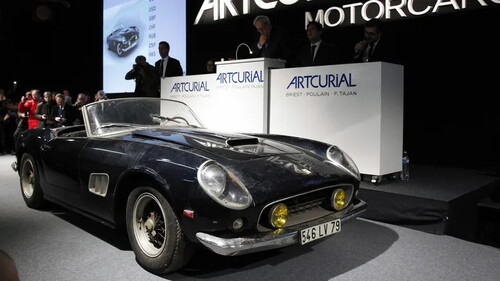
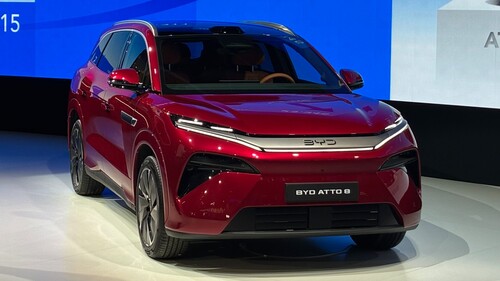
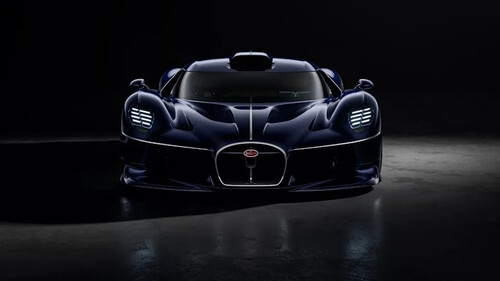
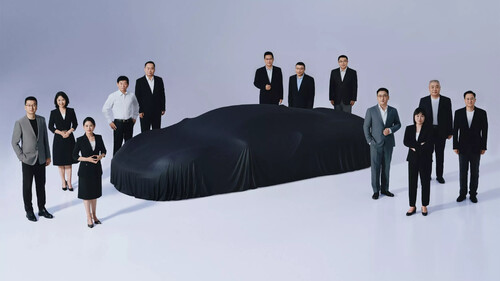
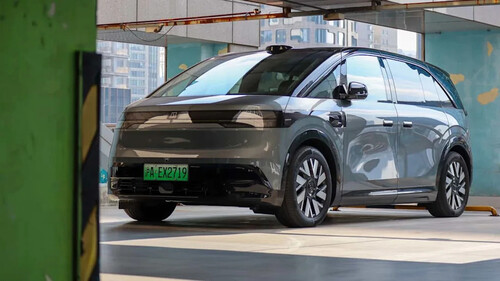
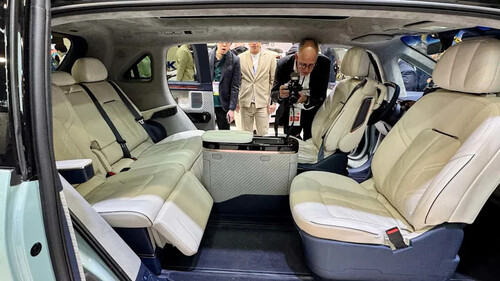
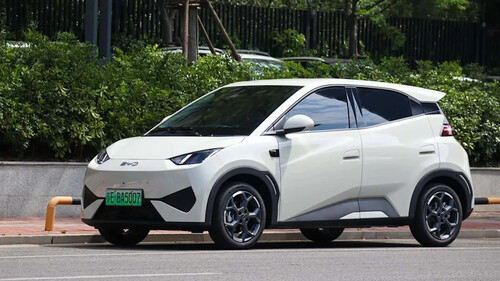
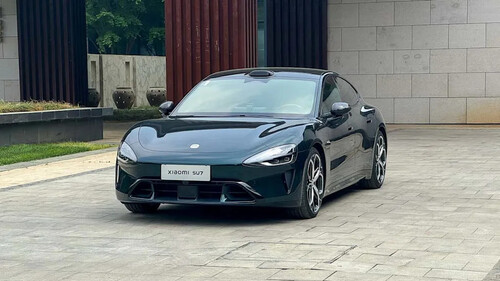
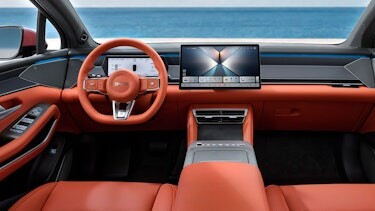
The Denza Z Has 1,582 Horsepower. Horsepower Isn't the Story Anymore.Modern Car CollectorJohn LloydSat, September 12, 2026 at 2:00 AM UTCAdd us on GoogleThe Denza Z Has 1,582 Horsepower. Horsepower Isn't the Story Anymore.The Denza Z has started showing up on dealership floors in China, weeks ahead of a fourth-quarter 2026 launch, and the spec sheet reads like a challenge to the entire supercar establishment. A tri-motor electric powertrain sends a claimed 1,582 horsepower and 915 lb-ft of torque to all four wheels, enough for a 0-to-62-mph run of 2.25 seconds. A track-oriented variant adds a more aggressive splitter, retractable door handles and a rear wing built for real downforce, not showroom drama.None of this is happening in isolation. The Denza Z is the newest entry in a lineup of Chinese performance EVs built explicitly to embarrass the establishment on paper. BYD's Yangwang U9 already turned heads by leaping over obstacles and posting Nurburgring-adjacent top speeds before it eventually arrived in Miami for a U.S. unveiling, and BYD's own 1,287-horsepower Yangwang U7 sedan undercut the price of far less powerful supercars by a wide margin. Even Dreame, a Chinese vacuum-cleaner manufacturer, has shown a Bugatti-referencing electric concept with numbers built for headlines. The pattern is now well established: eye-watering output, aggressive pricing, and a rollout strategy aimed at China first.Here is the part worth sitting with. Horsepower used to be a reliable proxy for engineering ambition, and ambition used to be a reasonable predictor of future collectibility. That relationship is breaking down. A tri-motor layout, a 2.25-second sprint to 62 mph, and a carbon-fiber wing are no longer scarce achievements reserved for a handful of storied marques. They are increasingly table stakes, purchasable by any manufacturer with enough battery capacity and motor controllers. When performance becomes a commodity, it stops doing the job collectors have always asked it to do: separate the significant from the merely fast.AdvertisementAdvertisementDenza itself illustrates the problem. The brand launched in 2010 as a joint venture between BYD and Mercedes-Benz, which has since scaled back to a minority stake as BYD took control of the business. That history gives Denza a passing connection to a storied German marque, but not the kind of singular design-house lineage or motorsport record that tends to anchor long-term collector demand. Compare that to what actually moves the collector market: T-Pain's Koenigsegg Regera drew attention less for its output than for what it signaled about who is buying hypercars now, and Ferrari's Luce became a talking point not because of its sales figures but because of what it revealed about who Ferrari believes its next generation of collectors will be. Provenance and narrative did the work in both cases. Horsepower was almost beside the point.There is also a structural reality that Denza, and every Chinese performance EV before it, has to contend with. Collector markets require liquidity: the ability to buy, sell, insure, register and eventually export a car across borders with confidence in its documentation. A car built and sold exclusively for the Chinese domestic market carries none of that in the United States or Europe. Under current National Highway Traffic Safety Administration rules, a foreign-market vehicle generally cannot be legally imported into the U.S. until it is 25 years old, unless it is federalized through a costly and limited exemption process. That is not a technicality. It is the reason a car can be objectively faster than a Ferrari and still be functionally invisible to the market that ultimately decides what becomes collectible.It is worth contrasting China's approach with how the established hypercar makers still build value. Bugatti's Tourbillon sold out before a single customer car had rolled down the production line, not because of any single spec, but because Bugatti controlled the number of cars, the story attached to each one, and the order in which the market learned about it. Scarcity, in that world, is engineered on purpose. China's performance EVs, by contrast, are chasing volume and market share domestically, with spec-sheet supremacy as the marketing tool. Both strategies can produce a fast car. Only one of them is currently designed to produce a collectible one.So why should serious collectors pay any attention to a Chinese sedan they will likely never be able to register? Because the Denza Z is a preview of a pressure that is about to hit the entire industry. When any manufacturer can buy its way to supercar-beating acceleration with a large enough battery and three motors, the marques that have historically justified premium pricing on engineering bragging rights alone will need a new argument. Expect Ferrari, Porsche, McLaren and Bugatti to lean even harder on heritage, motorsport pedigree, matching-numbers documentation and limited allocations, because the one thing they can no longer claim exclusively is being the fastest thing on the road.AdvertisementAdvertisementThe Denza Z will very likely be forgotten by collectors within a decade. Not because it isn't fast, but because being fast has stopped being rare. Horsepower has become the one thing money can no longer buy exclusivity with, and the cars that matter next will be the ones that never needed a spec sheet to make their case in the first place.Join our Newsletter, follow our Instagram page, and follow us on Facebook.