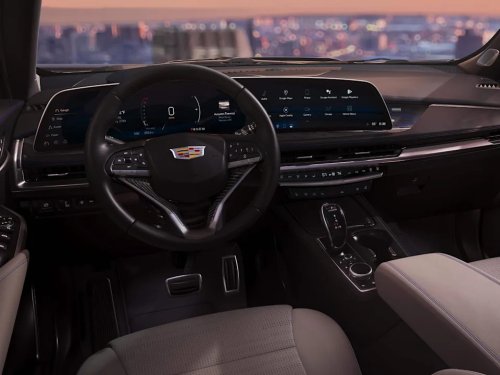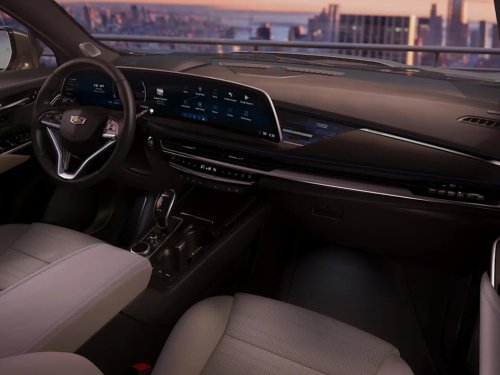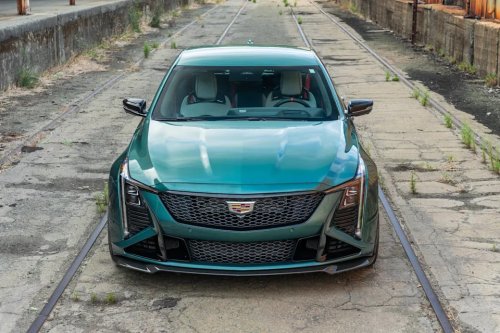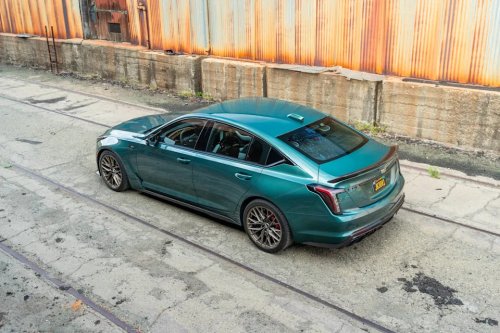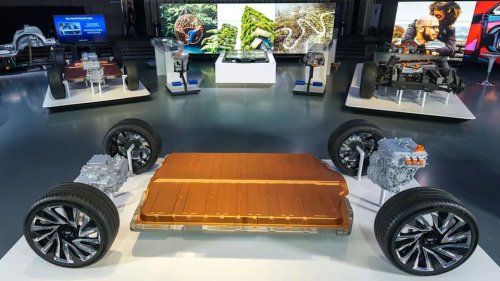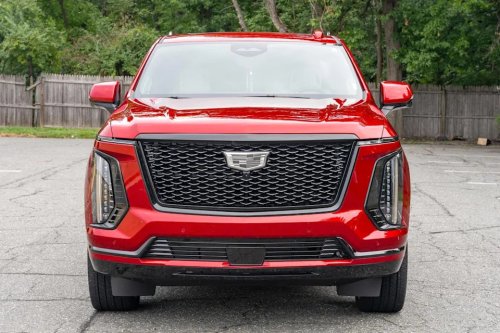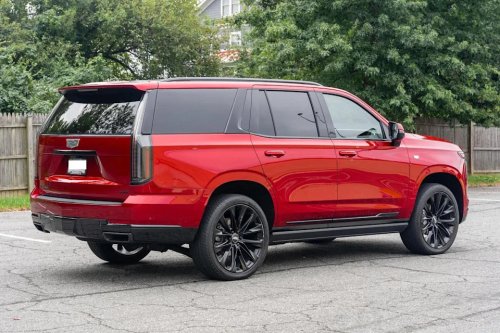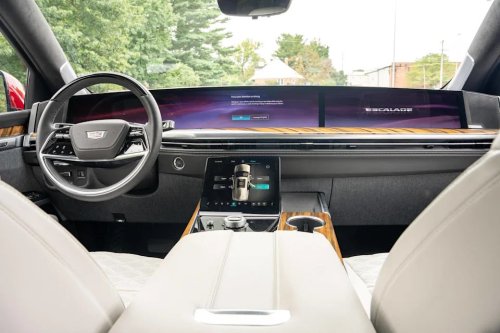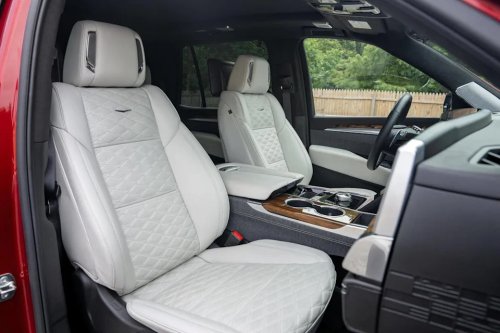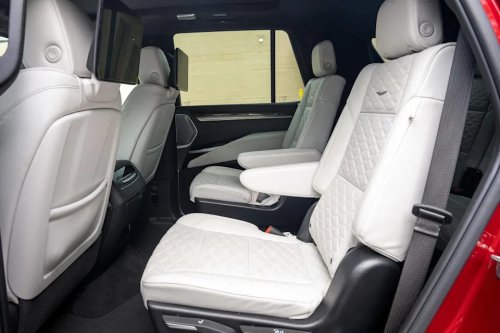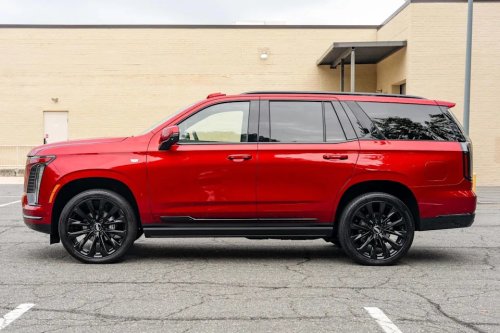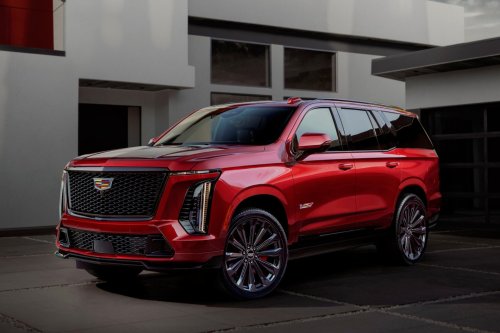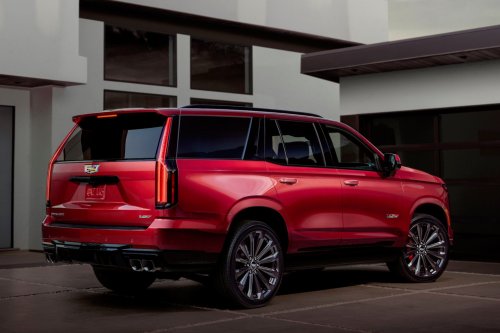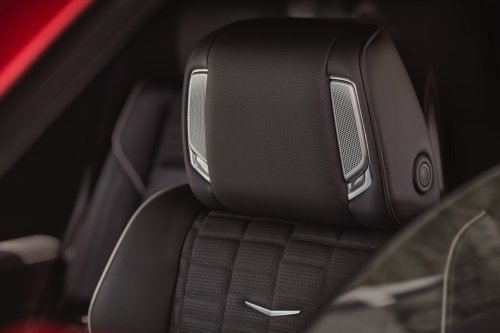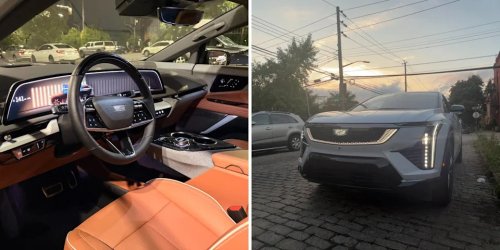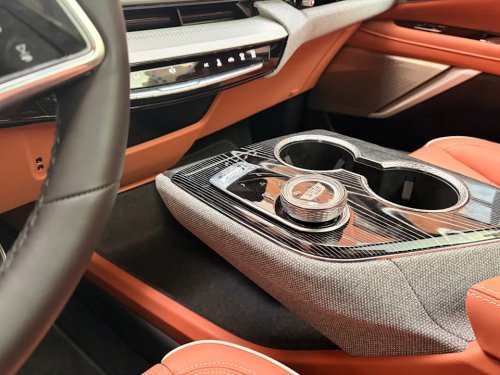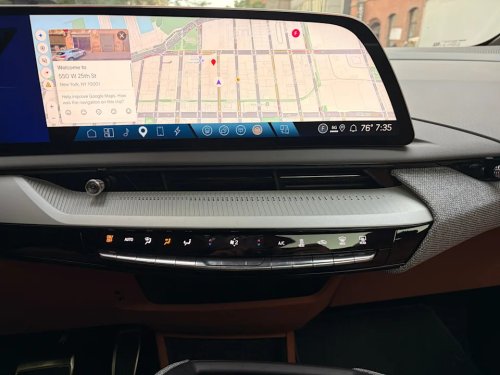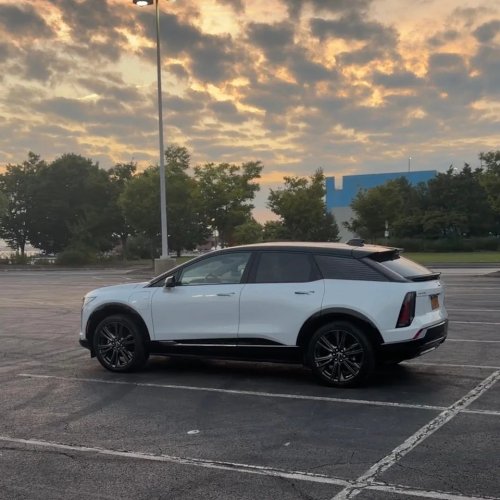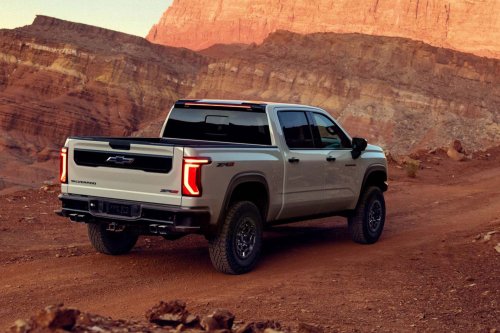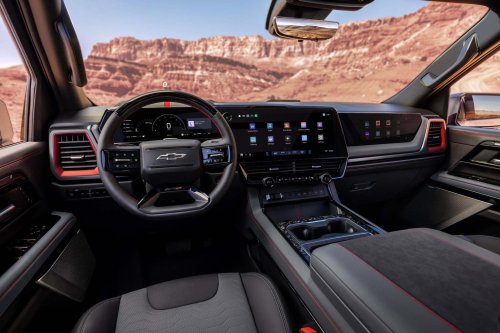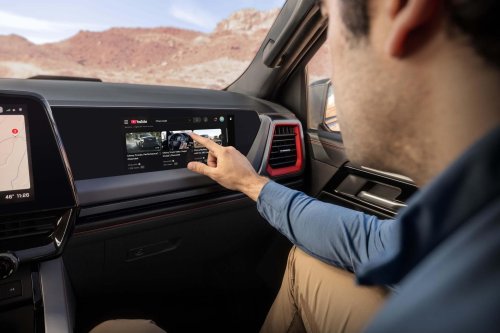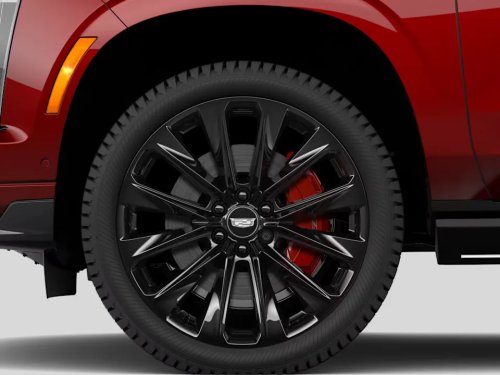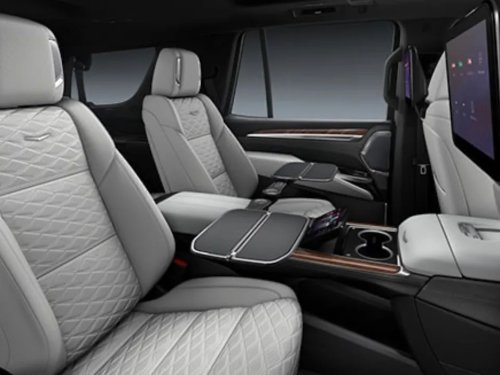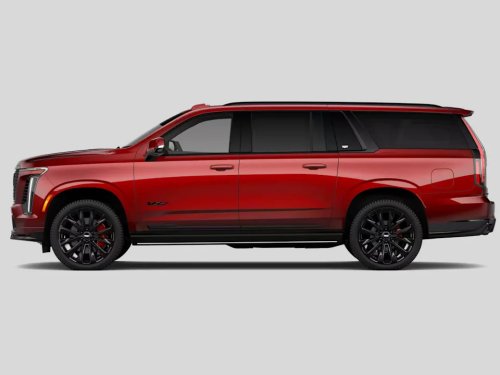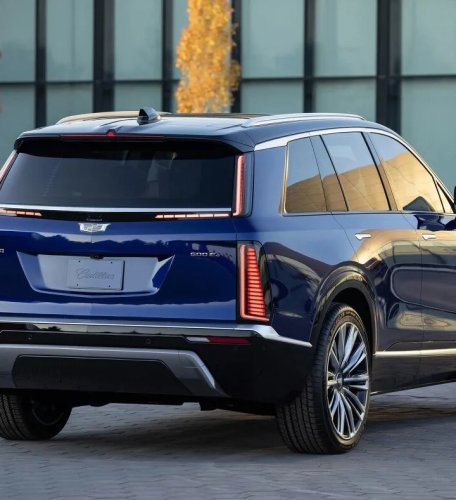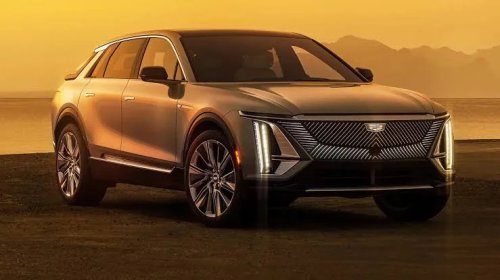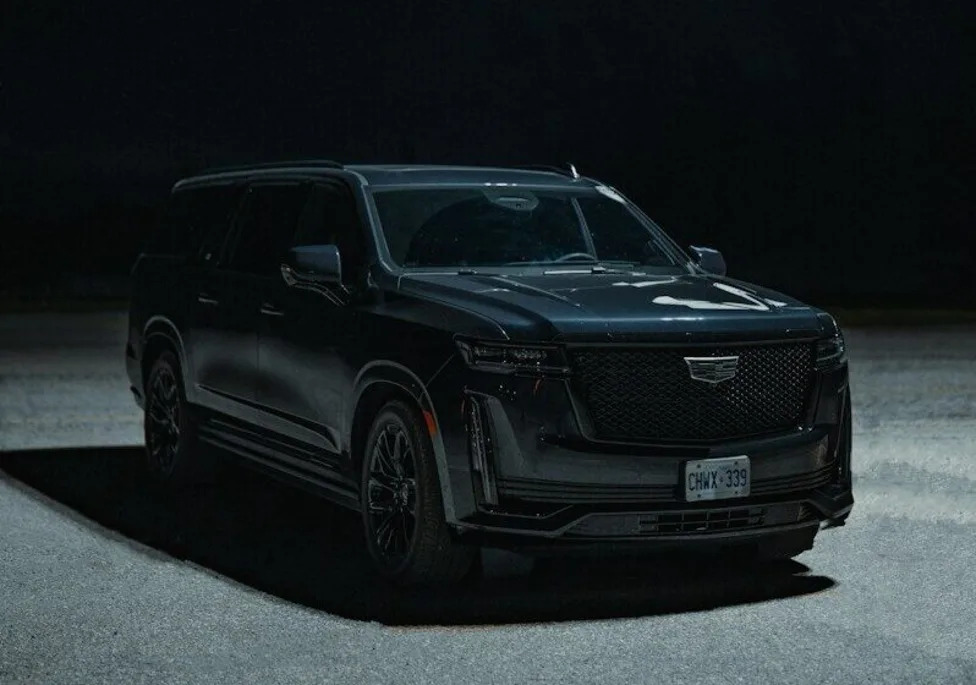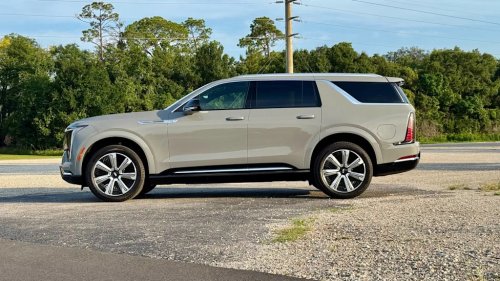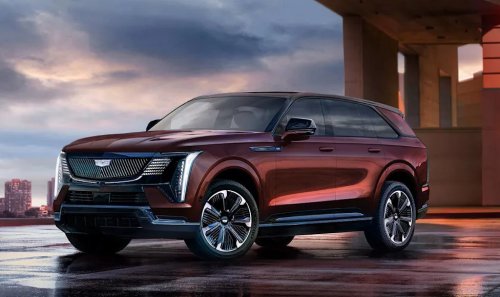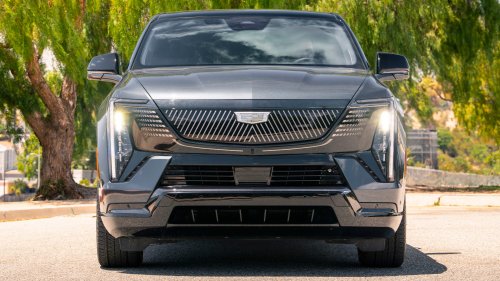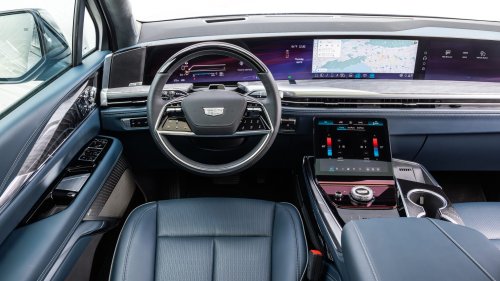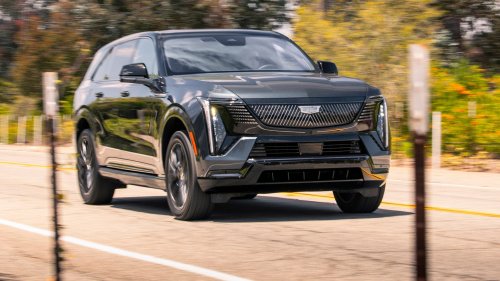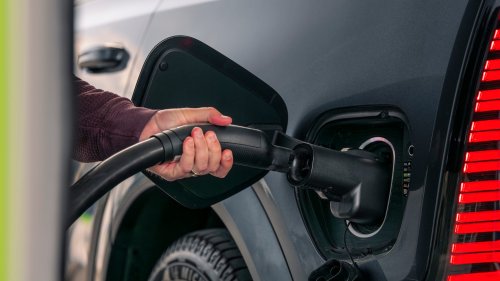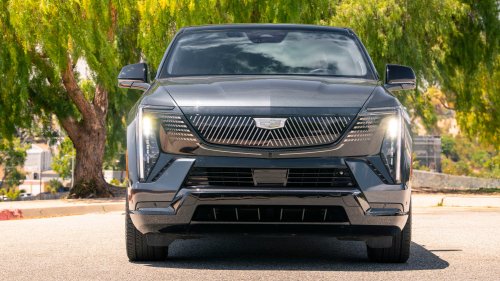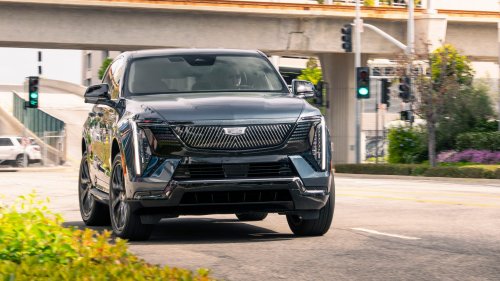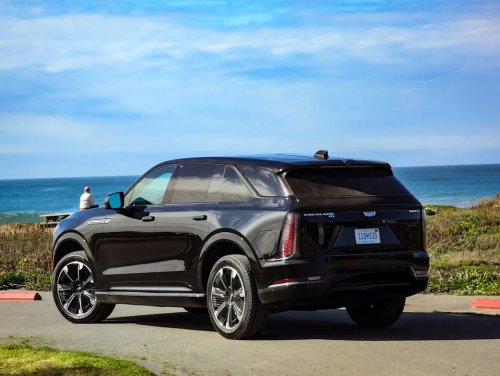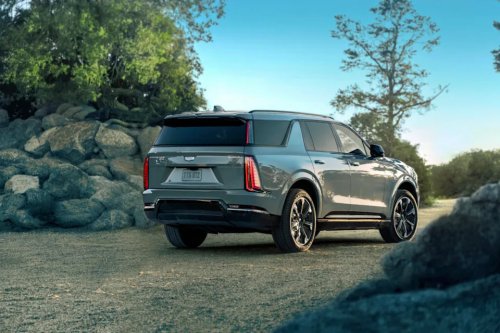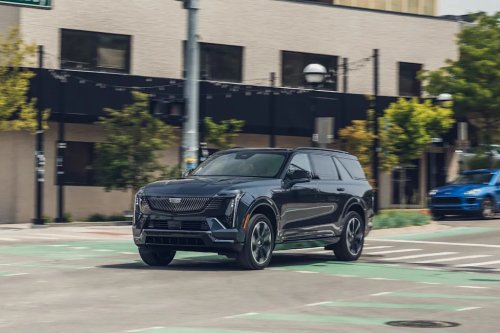
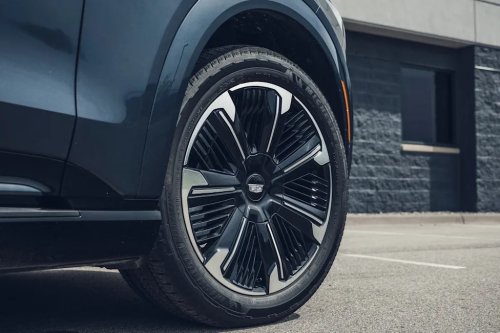
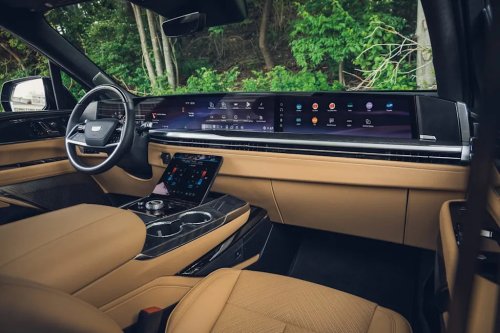
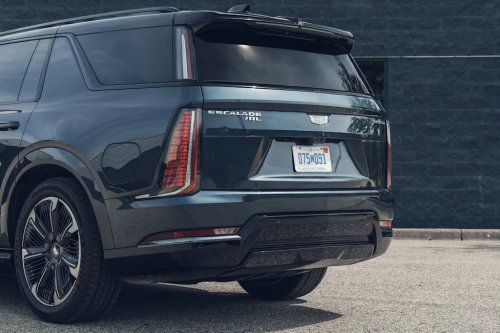
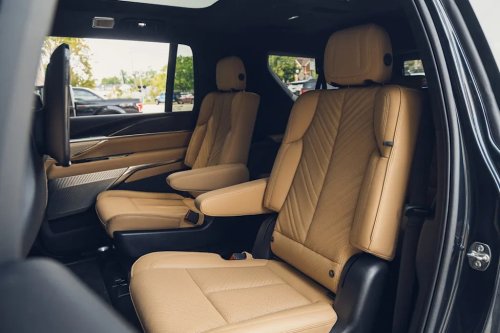
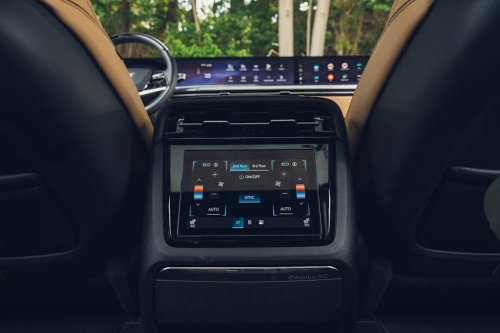
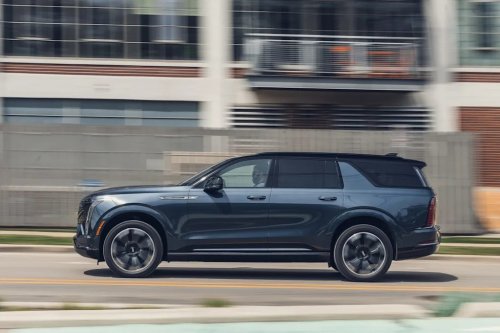
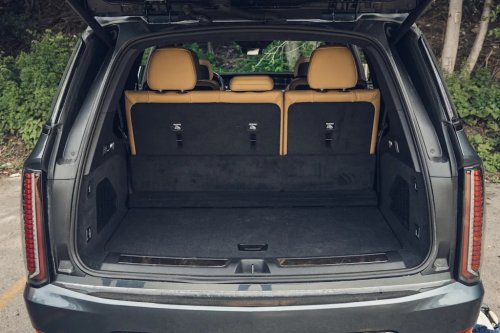
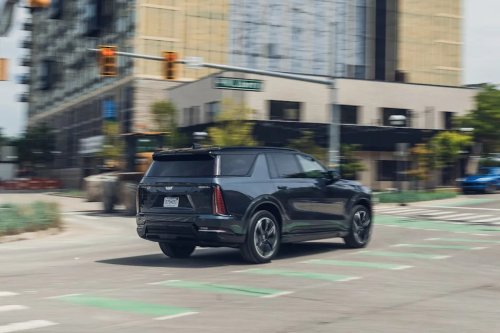



















Tested: Road Tripping a 2026 Cadillac Escalade IQLMichael Simari - Car and DriverIf you want a three-row electric luxury SUV with at least 400 miles of EPA or manufacturer estimated range, you have three choices: the Cadillac Escalade IQ, the Lucid Gravity, or the Rivian R1S. In April, I drove the largest electric Escalade, the IQL, 1600 miles in nine days through five states and one province. I recharged it six times, using a mix of DC fast-charging—which the EV routed me to—and slower overnight charging at home and at a hotel.The trip taught me that an electric Escalade is a superb road-trip vehicle, perfectly suited to interstate highways. It's possibly the smoothest, quietest, and most comfortable way I've traveled. GM's Super Cruise remains among my favorite hands-off adaptive cruise control systems, with some new features recently added. On the other hand, despite truly fast DC fast-charging, the IQL is the least energy-efficient EV I've ever driven, and its heft and girth made it a handful to park in my little village, which was laid out well before automobiles existed.Michael Simari - Car and DriverIQL vs IQThe gasoline Escalade comes in two sizes: regular and ESV. Correspondingly, the electric Escalade IQ has a longer version, called the IQL. The EV is wider and, in the case of the IQL, taller than the blocky gasoline Escalades, but it appears sleeker, if still substantial. The two EV versions share a 136.2-inch wheelbase, but the IQL is 4.2 inches longer than the 224.3-inch IQ. (The gasoline ESV has a wheelbase that is 13.2 inches longer than its standard-size counterpart, as well as 15.1 inches more overall length.) The IQL's extra length goes toward better legroom and headroom for the third row and greater cargo volume.AdvertisementAdvertisementIt also seems to appeal to certain U.S. travelers, perhaps due to its stance on massive 24-inch, eight-lug wheels. I got several thumbs-ups on the highway, and one couple driving a top-spec Ford Expedition quizzed me intensively over the IQL's specs, cost, and many luxury features. Cadillac sold 5781 Escalade IQs from last July through March of this year, or about 17 percent of the number of gasoline Escalades sold (34,053), so the model seems to be finding its market—and if New York City is any indication, it appeals to black-car fleets, as well as retail buyers.Michael Simari - Car and DriverOur $160,000-and-change test example had two dozen listed luxury and convenience features alone. Once inside, most notable were the 55.0-inch horizontal display and the 16-way front-seat adjustment. It took a few minutes to get it just right, but I was utterly comfortable over all those miles once it was set.On-Road Charging: Largely PositiveThe big question among first-time EV shoppers is always charging. Most owners can recharge at home overnight, but what happens on the road? The Escalade IQL trip gave me a chance to assess the latest in high-speed EV charging along travel routes—and the results were largely positive.I ended up using three different EV charging networks in three different states. Once I'd entered my destination, the Cadillac simply mapped a route that included a stop at each. And, half an hour before arrival, a notice flashed up saying it had started to "precondition" the battery, which means using a small amount of energy to heat or cool it to the optimal temperature for the fastest charging. Teslas have done that for years; GM's EVs now do the same. In each case, I used my credit card to pay for the charge, so I didn't have to download yet another phone app.AdvertisementAdvertisementMy first stop was at an Ionna "rechargery" in Brattleboro, Vermont. Jointly founded by seven car brands (an eighth later joined), Ionna's goal is to offer "a better EV charging experience," with at least as many amenities as a gas station, including bathrooms and a place to get a drink or a snack, and power that always works at the fastest possible speeds. With eight charging stations, alternating among CCS and NACS (Tesla style) plugs, I plugged in with 13 percent left on the battery and watched the charge rate soar to 356 kilowatts, the fastest I've ever seen while charging an EV. At a reasonable 35 cents/kilowatt-hour, my 117.0 kWh took 23 minutes to get me to 61 percent charge and cost $43.91. Ionna was a solid win.Michael Simari - Car and DriverThe next day, the IQL guided me to a GM Energy fast-charging stop sited at a Flying J station in Pembroke, New York. This one had chargers arranged so vehicles towing trailers could pull through and charge—though on the downside, the 20-mph winds off Lake Erie took the temperature in the flat, exposed station right down to freezing. Here, we started with just 8 percent left (the car faced headwinds for hours) and saw a rate of 345 kilowatts, which fell to a still-respectable 147 kilowatts once the battery neared the 80 percent cap.Four days later, the last fast-charging stop was at an Electrify America station in Binghamton, New York. We got our charge, but a few factors made this the least pleasant of the three stops: A couple of people with bicycles were sheltering from the sun on the other side of the chargers, we only hit 241 kilowatts despite preconditioning, and the cost was higher: 47 cents/kWh, or $41.83 for 93.6 kWh.Michael Simari - Car and DriverSuper Cruising the InterstatesMy trip from New Hampshire through upstate New York to Canada included some two-lane country roads, but much of it was along interstate highways and their Canadian equivalent. On those roads, GM's superb Super Cruise system rarely put a foot wrong while covering hundreds of miles at a stretch—with me watching but hands off. That applied especially to the 290 miles from Albany to Buffalo, a westward stretch through half a dozen counties that remain perpetually gray and cloudy due to the lake effect off Lake Ontario. It's a dull and not terribly pretty drive, and Super Cruise made it more tolerable than my previous journeys.AdvertisementAdvertisementOn highways, the system now handles automatic tolling areas without a hitch, whereas it previously required the driver to take control—even where toll booths had been entirely replaced by overhead gantries. It also dealt well with some construction zones but handed control back to me in others. The automatic lane-change function was inconsistent: Sometimes it changed lanes to pass and then returned to the right lane automatically, other times I had to tap the turn-signal lever to initiate the lane change. A minor quibble at best, admittedly.Michael Simari - Car and DriverThe system was less good on two-lane country roads. It handled straighter parts with aplomb but relinquished control often enough when curves approached that I turned it off and simply drove. What made all types of roads relaxing to cover was the combination of adaptive air springs with magnetorheological dampers. Even with the Escalade's huge wheels, the ride was smoother than I'd expected.Along with its supremely hushed cabin—with the accelerator to the floor, we measured interior sound at a low 72 decibels—when optioned as a Premium Luxury or Premium Sport, the IQL's audio system claims 38 AKG speakers (entry trims feature 21; opting for the Executive Second Row Seating package brings the total to 42). With thick, well-bolstered, infinitely adjustable seats, I'd hazard a guess this was one of the two or three most relaxing, soothing cars in which I've ever covered hundreds of miles on multiple days.Michael Simari - Car and DriverMoving 4.5 Tons Suitably QuickIt's worth noting that due to its vehicle weight classification, the IQL isn't subjected to an official EPA range rating. Cadillac estimates range at 460 miles. The IQL shares its gigantic 205-kWh battery pack with the Chevy Silverado EV and GMC Sierra EV, the GMC Hummer EV pickup and SUV, and the now-discontinued Chevrolet Zevo commercial delivery vans. Its front and rear motors produce a combined 750 horsepower when Velocity Max mode is active.AdvertisementAdvertisementClearly, the effort that went into making it a Cadillac paid off. Whereas I found the pickup trucks surprisingly harsh inside for EVs, the Cadillac is absolutely at the other end of the spectrum. There's plenty of power to move the thing off the line at a remarkably rapid pace; our 60-mph acceleration time was 4.7 seconds. As noted, the suspension delivers a magically smooth and comfortable ride, but during hard acceleration its nose points to the sky like a ski boat below slowly getting on plane. At modest corner speeds, I could feel it working hard to manage the momentum of almost five tons. The IQL we weighed came in at 9220 pounds.Michael Simari - Car and DriverStill, there were some annoyances on the Premium trim. I found myself fighting with the electrically opening and closing doors—a needless feature if I've ever seen one—not to mention I had to throw myself against a door a few times to prevent it from opening directly into a car parked closely alongside.My biggest challenge with the Caddy was simply navigating roads, villages, and lanes not designed along the lines of a new Dallas subdivision. My town was founded in 1811, and while the main streets are fine, side streets are tight—and the parking lots are even tighter. Parking a 19-foot-long, almost-8-foot-wide vehicle was a challenge every single time, never mind how good the multi-view cameras were. What saved it was the rear-wheel steering, which allowed the IQL to turn some remarkably sharp corners neatly.Oh, and then there's efficiency, or the lack thereof. We weren't able to conduct our 75-mph highway range test on the IQL, but the IQ traveled 380 miles on a charge, so expect that as a best case scenario. The IQL's energy-usage screen consistently showed an indicated 1.9 miles per kilowatt-hour, roughly half the rate of certain mid-size or compact electric SUVs from Tesla or Lucid. If you're spending over $130,000 for a luxury electric SUV, you probably won't care—and it's still cheaper per mile than the gasoline Escalade, presuming you charge mostly at home—but it's breathtakingly low.AdvertisementAdvertisementThe Escalade IQs play to the brand's traditional strengths: high levels of luxury, smooth and comfortable travel, and heft to convey presence and prestige. Overall, the Escalade IQL met its promise. EVs now make up roughly one-third of Cadillac's U.S. sales, by far the highest proportion of any maker selling both EVs and ICE vehicles. This one showed why; I wouldn't want to use it daily, but it delivered a more relaxing long road trip than any gasoline vehicle I can think of.Michael Simari - Car and Driver➡️ Skip the lot. Let Car and Driver help you find your next car.Shop New Cars Shop Used CarsYou Might Also LikeGift Guide: Best Ride-On Electric Cars for KidsFuture Cars Worth Waiting For: 2025–2029