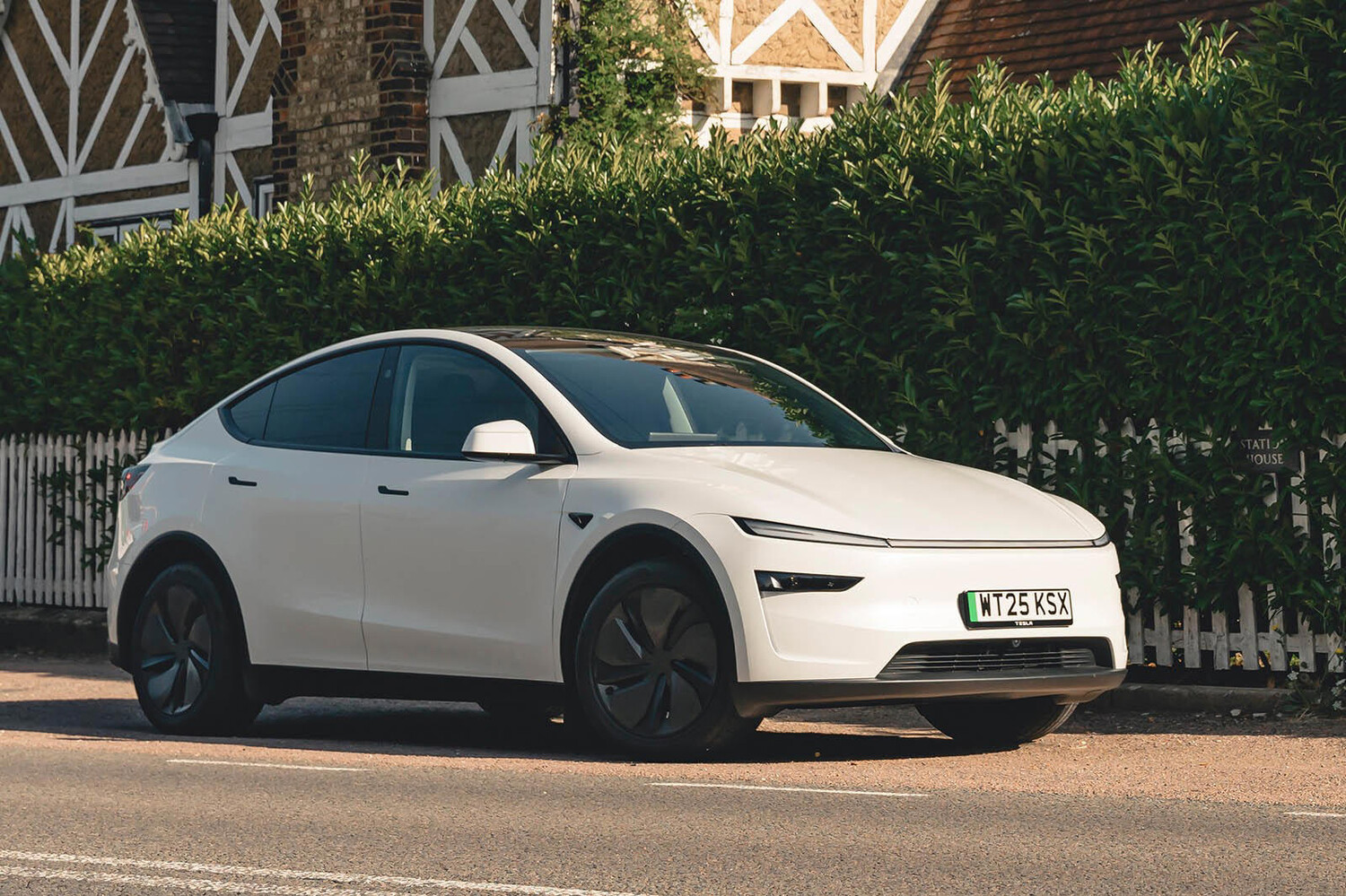
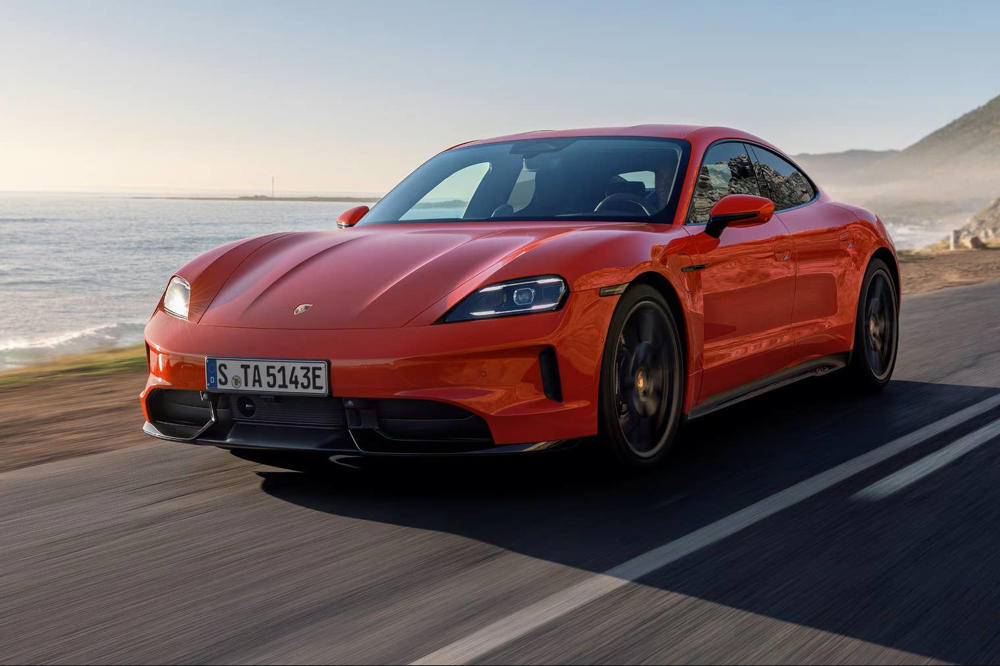
Tesla had a clear head start as EVs became mainstream, but now, with new competition arriving with each passing year, that lead is waning. Established manufacturers are bringing decades of engineering experience to the segment, and new automakers are challenging Tesla in innovative ways. Competition may be on the rise, but three vehicles in particular could present a true challenge to Tesla, both in the present and future. 1. Hyundai Ioniq 5 N Hyundai isn’t exactly known for its performance cars, but that slowly began to change as electrification took the industry by storm. The standard 2026 Ioniq 5 is no slowpoke, racing to 60 mph in as little as 4.4 seconds, but the brand’s N performance division ups the ante. The Ioniq 5 N taps 60 mph in as little as three seconds, putting it on par with high-performance sports cars. Priced from $59,900, the 2026 Hyundai Ioniq 5 N features an all-wheel drivetrain that’s good for up to 641 horsepower and 568 lb-ft of torque. It comes paired with an 84-kWh battery that’s good for 221 miles on a single charge. In terms of charging speed, the Ioniq 5 N goes from 10% to 80% in just 18 minutes when connected to a DC fast charger. The Hyundai Ioniq 5 N isn’t necessarily a major threat to Tesla’s sales. It’s a specialized performance model that can’t quite match the driving range offered by Tesla’s mainstream vehicles. On the flipside, it does prove that competitors can put a different spin on electrified performance. Hyundai also isn’t a small automaker, either. The Korean marque not only has a global manufacturing operation behind it, but an extensive dealer network as well. 2. Lucid Air Tesla built its success by engineering better EVs than established automakers, prioritizing impressive range, thrilling performance, and streamlined software. Lucid might be relatively new, but the manufacturer is already challenging Tesla’s dominance. From efficiency to powertrain integration, Lucid Motors has made an incredible amount of progress in a rather short amount of time. Lucid has made strides in several crucial areas in the world of vehicular electrification. The automaker’s electric motors are compact and lightweight, yet capable of delivering incredible power. The battery systems maximize usable energy and driving range, a factor that pairs well with the Air sedan’s low drag coefficient. To top it all off, Lucid developed its electric drive technology in-house. The Lucid Air Grand Touring in particular puts the automaker’s technological capability on center stage. It features an impressive 819 horsepower that brings the sedan to 60 mph in as little as three seconds. A 512-mile range comes standard, and the Grand Touring can charge to 200 miles in just 12 minutes. Still, Lucid faces a handful of major obstacles that put it behind Tesla, at least for now. While the brand’s technology is cutting edge, putting it into mass production is another matter entirely. Lucid’s vehicles are also on the expensive side, with the base Air starting at upwards of $70,000. 3. Porsche Taycan While Hyundai is relatively new to the world of performance cars and Lucid lacks the ability to scale production, Porsche is one of the most well-established performance car brands in the world. The German marque has spent decades developing some of the world’s most recognizable sports cars. Its engineering prowess in chassis tuning, braking systems, and ergonomics give Porsche a distinct advantage over a technology-focused manufacturer like Tesla. The unveiling of the Porsche Taycan proved that an EV could provide an engaging driving experience without relying entirely on performance. While most all-electric cars feature a single-speed transmission, the Taycan features a rear motor with a two-speed transmission. A sophisticated cooling system helps maintain performance during high-octane driving. As far as engineering goes, Porsche prioritized repeatable performance instead of relying solely on launch numbers. Porsche is arguably one of the most threatening established manufacturers that could challenge Tesla. Both automakers can develop and produce a quick car, but only the German marque has spent generations developing performance-driven cars. As more EVs become capable of racing to 60 mph in under three seconds, raw speed will no longer be a major factor. Instead, interior craftsmanship, ride quality, and handling will move up the list, and Porsche excels in all three areas. Can Tesla hold its lead? While the competition is growing fiercer, Tesla clearly isn’t going to give up its position willingly. Rather, it will likely continue to be one of the most influential EV manufacturers for years to come. Notably, however, remaining relevant in the EV market doesn’t necessarily require dominance in the automotive arena. Tesla has spent years optimizing its manufacturing process, and the company’s ability to produce vehicles at scale is something small automakers, like Lucid, can’t quite match. Control over the Supercharger network remains a distinct advantage as well. Tesla essentially set the standard in EV charging, and many automakers have adopted NACS charging connectors as a result. On the flipside, Tesla is becoming increasingly more dependent on the Model 3 and Y. Globally, BYD is closing the gap with each passing year. Meanwhile, in the United States, Tesla is losing EV market share, down from 48.6% in 2024 to 43.9% in 2025. On top of it all, Tesla’s identity is shifting from automotive to technology, robotics, and energy storage. Final thoughts While the Hyundai Ioniq 5 N, Lucid Air, and Porsche Taycan aren’t outselling Tesla, they’re proof that automakers are chipping away at several of the qualities that set the EV manufacturer apart. As competitors continue to develop their own EVs, the American automaker’s early advantage is slowly fading. There’s no doubt that Tesla played a major role in establishing the modern EV industry, but, as automakers like Porsche, Hyundai, and Lucid are proving, they may not be the only company that defines the future.

 Liked by Abigail Smith, Ryan Morgan












 Liked by Abigail Smith, Ryan Morgan