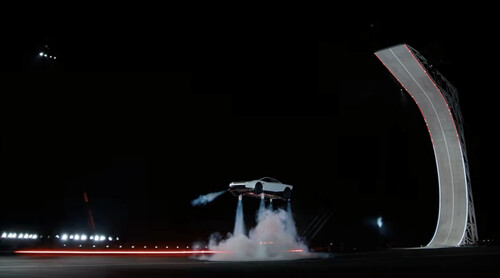
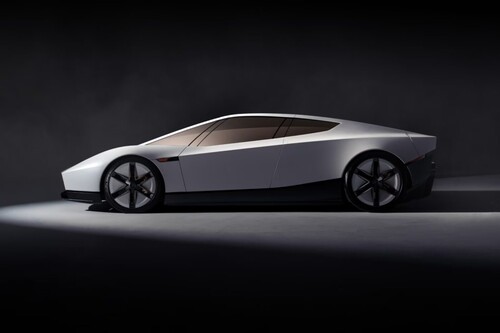
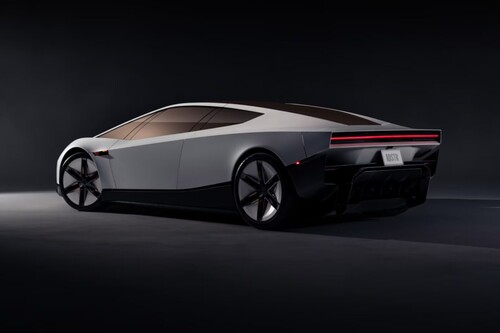
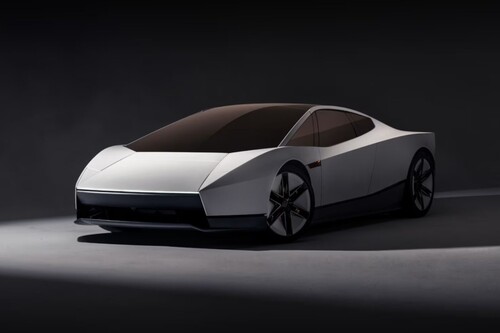
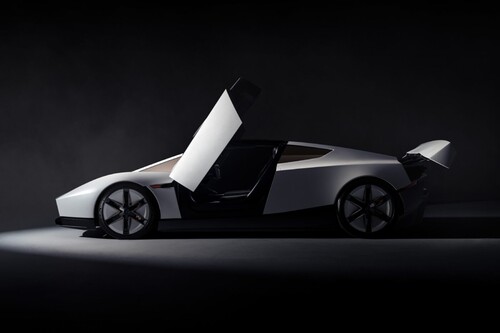
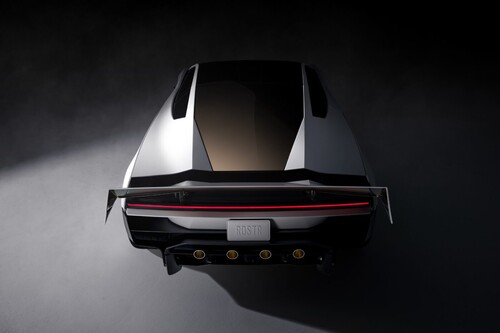
After a nine-year wait, Tesla finally took the covers off its second-generation Roadster on Thursday. The reveal showed off a dramatically different car from the concept first shown in 2017, but the bigger news was what the company says that the car can do. In four different demos, the new Roadster was seen holding up its weight upside down, flipping in the air, and even completing a 0-60 mile-per-hour sprint in 0.81 seconds.
And in case you missed them last night, here are those stunts, all neatly packaged via Tesla’s YouTube account.
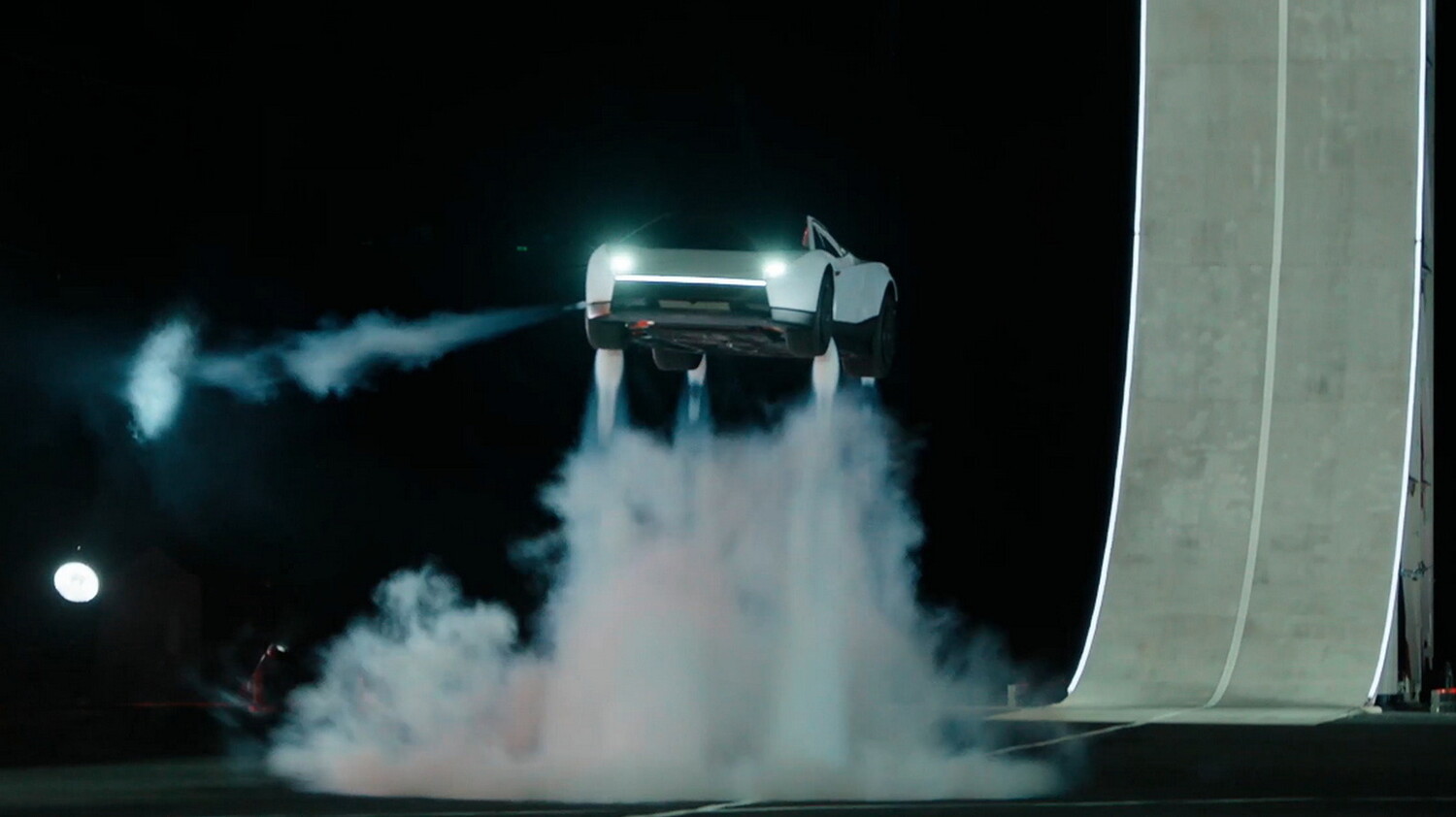
The reveal started with a stunt that Tesla calls “the ramp,” opening with the car using its fan-supplied downforce to drive up a ramp, stop, and hold itself nearly upside down in a demo similar to what McMurtry did with its Speirling track car last year. Tesla’s clipped video picks up right after that, showing a second run where the Roadster continued driving off the edge of the ramp, then used its cold gas booster propulsion system to complete a barrel roll and land level with the ground.
While the flipping is completely unnecessary for anything a car is actually intended to do, the fan system that allows the car to climb the wall is substantial. Fan-assisted downforce systems produce massive grip, and while they have effectively been banned at all levels of professional racing since the 1970s, McMurtry has used theirs to take track records. The Speirling is a much smaller car not burdened by the weight of any rockets, so the Roadster may not match its real-world performance, but it’s still proof that the tech showcased here has some exceptional potential.
Another jump video, one Tesla calls “the kickflip,” shows a Roadster using the same booster system to leap from a rolling start over four other Tesla models, including a semi truck. In the middle of the jump, it uses boosters along the side to complete another barrel roll before again landing level. A similar stunt was shown from a standing start on the ground later in the reveal, but Tesla has not uploaded that video to YouTube.
The third, both the least spectacular and the only boost-aided stunt here that actually showcases an ability useful for a performance car, is short and self-explanatory. It is a boosted sprint to 60 MPH from a standstill, one that Tesla claims happened in 0.81 seconds. That is an absurd number, well past the capabilities of any existing road car, but the use of a limited supply of compressed gas would mean that it is not necessarily repeatable more than a few times on a charge.
Notably, all three stunts are short—very short, in the third case—and none are necessarily said to be completed by the same demo car. Tesla did not make a claim that any individual demonstrator was a production model, just that these were things a version of the car would be able to do. The company’s website claims that the aerial stunts are possible only with a “Rocket” variant, which has just a single seat, is only approved for non-road use, and is listed as for sale only with an invite. The rear-boosted 0-60 run, however, is listed as a possibility for the “Thrust” model. That version—which contains the rear boosters but none of the systems on the sides or floor of the car—is claimed to be a “limited release.”
Given the company’s notorious history with demo videos and the planned 2028 production date, it’s worth considering that these stunts might not exactly be the work of complete cars ready to drive on the road right now. Each stunt also saw the use of no more than a few seconds of boost, raising questions of both how long any of these cars could stay in the air, and how much time and energy is required for the claimed on-board compression system to re-fill the car’s supply of gas. Still, all were physically done in front of a live audience, and all four reflect Tesla’s actual claimed targets for at least one version of the second-gen Roadster.
Fred Smith's love of cars comes from his fascination with auto racing. Unfortunately, that passion led him to daily drive a high-mileage, first-year Porsche Panamera. He is still thinking about the last lap of the 2011 Indianapolis 500.