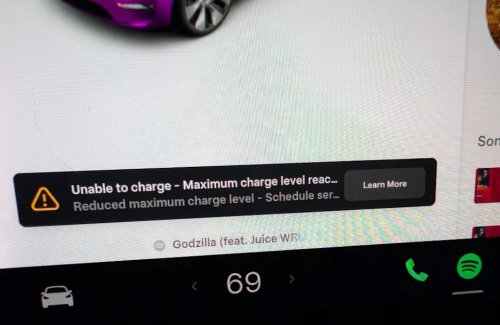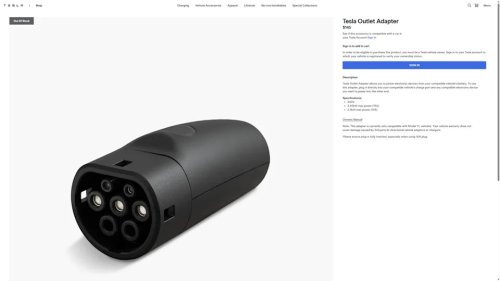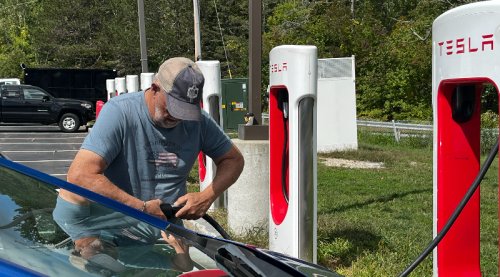

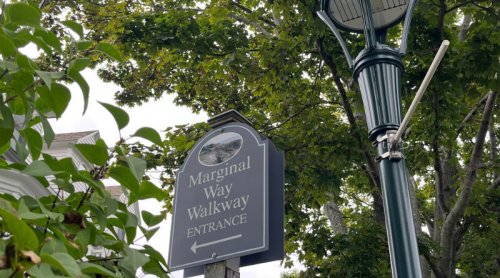

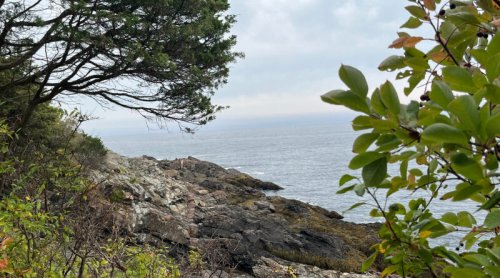
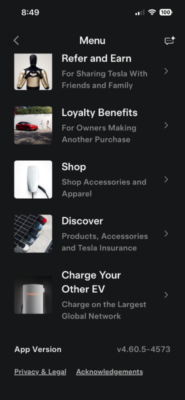
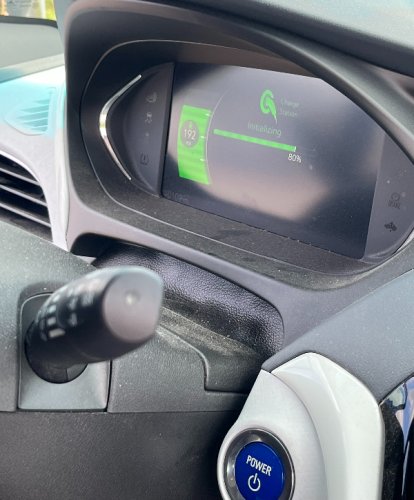


















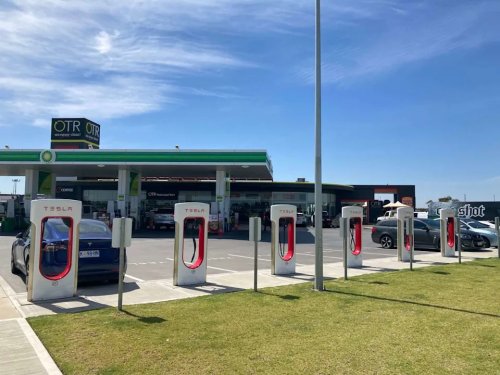
I was wedged between tractor trailers as I held to the extreme right hand lane. Vehicles entered from frequent on-ramps and forced me to make quick lane changes to the left. Road construction narrowed lanes and forced me to merge into oncoming traffic. I veered in and out, around vehicles of varying speed. Hubby and I were traveling home on a series of New England highways from our August vacation in Maine. In retrospect, I had overestimated the range that our 2017 Chevy Bolt was actually capable of producing on a highway, and I was attempting to maintain the lowest possible speed while not becoming an obstacle for other vehicles around me. At our summer home, hubby and I plug the Bolt into an everyday wall outlet and let it do its thing — usually providing us with around 250 projected miles at 80% charge overnight. That’s fabulous for our day trips — we almost always get where we’re going as we cruise around New England in the summer. Sure, the Bolt has good overall range in comparison to other non-Tesla EVs. But highways? Uh uh. For this longer road trip, on the way north we charged at a Kittery, Maine Tesla Supercharger that was also configured for non-Tesla EVs. We had purchased the NACS adapter last summer and found it very handy to have on hand. Like all EVs, the Bolt loves low and slow roads. At our destination of Ogunquit and surrounding area, the roads embrace the granite coast and meander in and out of switchbacks, with lots of 25 mph signage warnings. If the GPS alternatively suggests Route 1, well, the traffic there in the summer is thick, so average travel speeds stay low. Sometimes we charge the Bolt at our vacation accommodation as we travel, but this site overlooking the Atlantic Ocean didn’t offer any EV charging. It was such a special place that we didn’t care. We would make other charging arrangements. Photos by Carolyn Fortuna/ CleanTechnica Starting out for home with 200 miles of projected range, it seemed as if we would get back to Connecticut with just enough miles to spare any range anxiety. Nope. Getting on I-95 heading south changed the narrative quickly. The traffic whizzed along well above the posted speed limit. So I needed to adjust my speed to at least 68 mph minimally once I was caught up in the highway activity flurry. The Bolt’s calculated distance to home of 138 miles home didn’t begin to correlate with the original 200 mile range on the guess-o-meter. Falling, falling. Before you admonish me, allow me to note that, I definitely had researched fast chargers along the route home. Using the Tesla app on my iPhone (our other car is a Model Y, which is happily garaged right now in Florida), I had swiped through to the “Charge Your Other EV” link in order to find chargers that accommodated non-Tesla EVs. Screenshot by Carolyn Fortuna/ CleanTechnica But, just ’cause you find a Tesla Supercharger, it doesn’t mean you’re golden. Take it from me: don’t try to search for Tesla Superchargers on your laptop using Google Maps, for example. I’ve done it and won’t ever do it again. Every single Supercharger appears, but not all are compatible with a non-Tesla EV. It can lead to marital disputes to target a fast charger that doesn’t exist! Anyway, yes, there were opportunities to charge midway to Connecticut, but most were well off the highway in a swirl of congested old factory cities and multiple roads. I identified the Charlton westbound rest area as available with the NACS adapter, and it was at the three-quarter mark of our trip. Those criteria checked off important boxes, but I was still uncertain. It was only last year that I tried to stop at the Charlton Westbound rest area off the Mass Turnpike but found that the NACS adapters weren’t accepted. Had something changed for 2026? Was it a tech error? Would I arrive again at Charlton, only to find that I was out of luck, with an inadequate 46 miles left of projected range to get home? Hubby and I made a pact that, if the Charlton Westbound rest area would not take non-Tesla EVs as advertised, we’d have to crawl on back roads to an available charger and get at least 20 more miles to make it home. I pulled into the Charlton rest area and located the shining red-and-white Tesla Superchargers at the back of the parking lot. All the vehicles currently charging were Teslas. Fingers crossed, I parked. Hubby pulled out the NACS adapter. I engaged the Tesla app to the correct charging station. We both waited to see if the Bolt’s green light would start flashing to confirm it had made a connection with the Tesla Supercharger mothership. The NACS adapter worked! It was such a relief. We gladly sat for an hour to charge to 80%. Photo by Carolyn Fortuna/ CleanTechnica Once upon a time, I followed a wonderful professor from the University of New Hampshire. To paraphrase Donald Murray, once you learn a new idea, the world bombards you with information about it. The Boston Globe this morning explained why the Charlton Westbound Tesla Superchargers now accept non-Tesla EVs. In summary, just a week ago, Tesla, under an amended agreement with the Massachusetts Department of Transportation, opened its fast charging stations at state-owned rest stops on the Mass Pike and I-95 to other brands of electric vehicles. The agreement came after MassDOT failed to improve major transit charging options after convenience store operator Applegreen didn’t come through to overhaul 17 state rest stops and provide new fast charging. So now there are 32 fast charging ports on the major Massachusetts highways, which doubles the number of ports open to all EV drivers at state-owned rest stops. Whew. The timing was ideal for me and the other non-Tesla EVs that were soon buzzing in and out of the Charlton Westbound rest area. If you build it, they will follow.