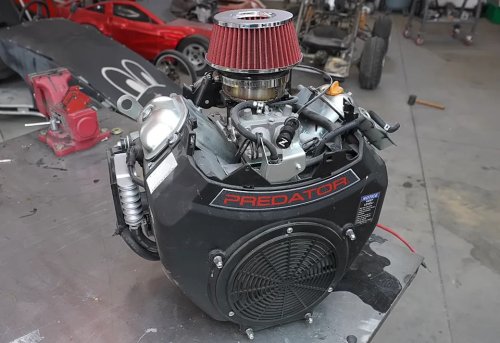
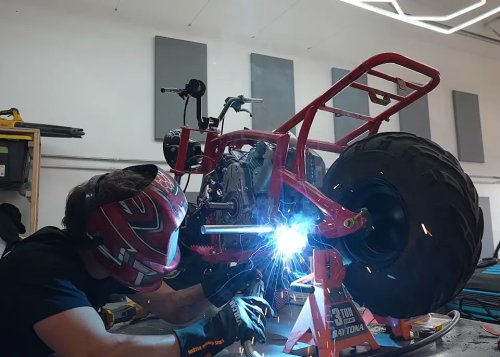
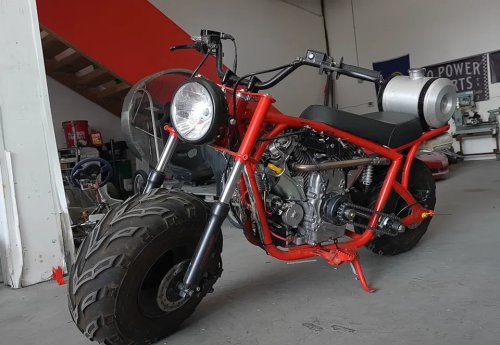
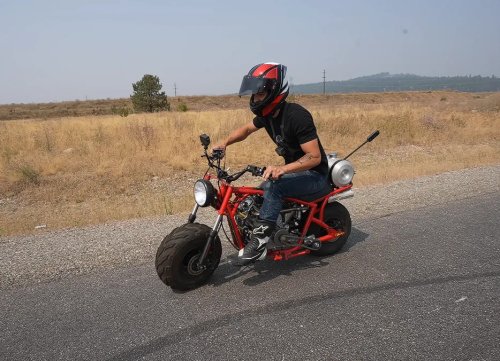



















Someone Shoved a 670cc V-Twin Engine in a Mini Bike, and It’s Just As Terrifying as It SoundsMotorBiscuitRahaan MazumderThu, September 17, 2026 at 1:30 PM UTCAdd us on GoogleWhen most people upgrade a standard mini bike, they usually swap out the factory motor for a classic 212cc Predator engine. It is cheap, easy to install, and provides a healthy bump in speed. But if you have an absolute disregard for your own safety and a serious need for power, a 212cc just isn't going to cut it.In a brilliantly unhinged backyard engineering project, the team behind the YouTube channel BUM decided to skip the small block entirely and shoehorn a massive Harbor Freight 670cc V-Twin into a tiny red mini bike frame.Out of the box, the Predator 670cc is a massive, heavy-duty V-Twin engine typically reserved for sawmills, industrial equipment, or massive go-kart builds. In stock form, it produces roughly 22 horsepower, but the BUM team managed to squeeze about 30 horsepower out of this specific block—a terrifying amount of thrust for a vehicle that barely has a suspension.Cramming the massive powerplant into the tiny tube frame was the first major hurdle. "I don't know if this is actually going to fit very well," the builder admitted while staring down the engine on the workbench.AdvertisementAdvertisementAfter physically wrestling the V-Twin into the frame and removing a few plastic covers and the old exhaust mounts, they used an old-school fabricator's trick to line up the mounting holes. By smearing gear oil on the bottom of the engine and rubbing it with metal dust from the shop floor, they stamped a perfect bolt pattern onto a piece of cardboard to use as a drilling stencil.Once bolted in, the massive red V-Twin completely dominated the frame. "The engine's in, and this thing looks diabolical," the host laughed. "It matches the bike kind of… It's the perfect color scheme".The Custom Jackshaft and Keg TankBecause the engine is so incredibly wide, the output shaft sat way too far to the side to simply run a straight chain back to the rear wheel tire. To solve the alignment issue, the team engineered a custom jackshaft mounted on heavy-duty Tractor Supply bearings. This allowed the power to transfer from the engine's clutch on one side of the bike, across the frame, and down to the rear sprocket on the other side.With the drivetrain sorted, they fabricated a custom dual-exhaust that routed straight back to a single muffler to keep the piping away from the rider's legs.AdvertisementAdvertisementFor fuel, a standard plastic tank wouldn't match the ridiculous aesthetic of the build. Instead, they mounted a massive, keg-style aluminum fuel tank directly behind the seat, feeding gas down to the mechanical pump using an outboard boat motor pressurizer bulb.The 61-MPH "Bowling Ball"The maiden voyage of a 30-horsepower minibike went exactly as you would expect.The team initially tried to run a cheap $10 Amazon clutch, but it immediately began smoking and throwing grease the second they attempted a burnout. After upgrading to a heavy-duty Go Power Sports centrifugal clutch, the bike was finally ready to put the power down to the pavement.The riding experience was utterly terrifying yet incredibly smooth. "For some reason this engine makes this minibike feel like a motorcycle… it kind of feels like a bowling ball," the rider noted.AdvertisementAdvertisementOf course, the only real way to test a build like this is a top-speed run. Tucking his body weight over the front handlebars to counter the massive wind resistance, the rider opened the billet throttle completely wide open on a long stretch of empty road.Checking the GPS app at the end of the run revealed an absolutely staggering top speed of 61 mph."If we can go 61 mph, we could legitimately take this on the public highway," the host cheered.Unfortunately, that single high-speed pass completely roasted the upgraded heavy-duty clutch. Pushing 30 horsepower to a single gear is simply too much friction for standard centrifugal hardware. As the builders quickly learned, if you want to push a 670cc V-Twin to its absolute limits, you are going to need a full Continuously Variable Transmission (CVT).