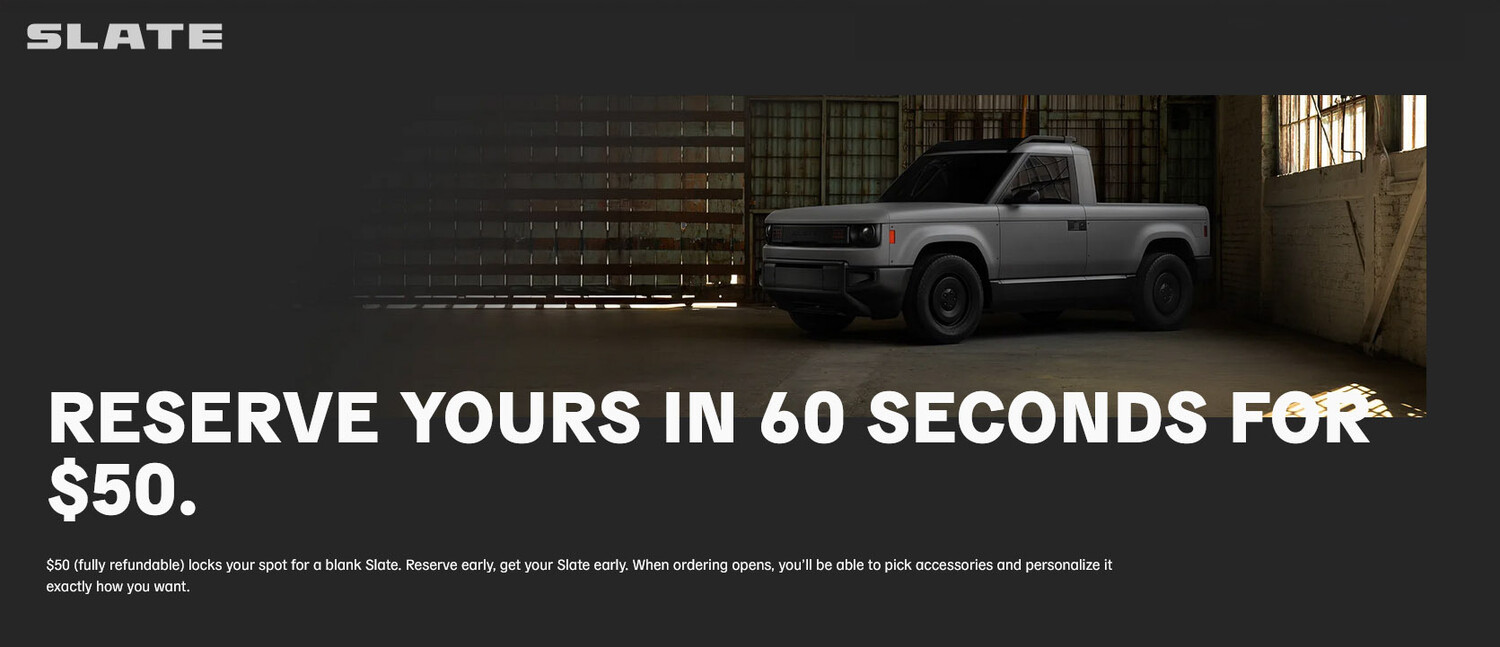
Modern vehicles increasingly rely on enormous touchscreens for everything from navigation to climate control. Slate Auto, the American EV startup developing a deliberately basic electric pickup, has taken a different, more old-school approach to helping drivers find their way. Instead of introducing another digital navigation system, the company recently offered a $30 accessory called "Screenless GPS." Despite the futuristic-sounding name, it was simply a traditional paper road atlas. The limited-edition accessory appeared in Slate's online merchandise store, where it was marketed with a healthy dose of humor. The product is now listed as out of stock, suggesting that at least some customers appreciated the joke. It's a fitting addition to a truck designed around the idea that drivers shouldn't have to pay for technology they already carry in their pockets. Slate's minimalist philosophy extends well beyond navigation. A GPS That Doesn't Need Electricity Image Credit: Slate Auto. The Screenless GPS is a Slate-branded Rand McNally 2027 Road Atlas covering the United States, Canada, and Mexico. It originally cost $30, compared with roughly $20 for an unbranded version. Slate's marketing highlights its supposed technological advantages, including a zero-pixel display, unlimited zoom, and freedom from signal loss. The company even jokes that nobody has ever hacked a road atlas. Of course, the atlas cannot determine your location or provide turn-by-turn directions. Slate explicitly describes it as printed merchandise rather than an electronic navigation device. Why Slate Doesn't Want a Big Screen Image Credit: Slate Auto. The upcoming Slate Truck takes a deliberately stripped-down approach to car manufacturing, featuring manual windows and no central infotainment touchscreen. Instead, owners can mount their existing smartphones or tablets to handle navigation. Slate also makes built-in speakers optional, allowing customers to use their own Bluetooth devices. Its philosophy is as simple as the vehicle itself: removing unnecessary equipment helps keep the truck's starting price at $24,950. An Old-School Accessory With a Modern Message The atlas is partly a marketing stunt, but physical maps still have practical advantages. They work without cellular coverage, batteries, or software updates, although drivers must determine their own location and route. Slate's website sums up the idea with a simple message: "Because trucks don't need more tech." We'll have to wait and see whether its minimalist electric pickup will be a success, but the Screenless GPS shows just how seriously the company takes its anti-screen identity. If you want more stories like this, follow Guessing Headlights on Yahoo so you don't miss what's coming next.

 Liked by Justin Turner, Sarah Poirier




 Liked by Justin Turner, Sarah Poirier