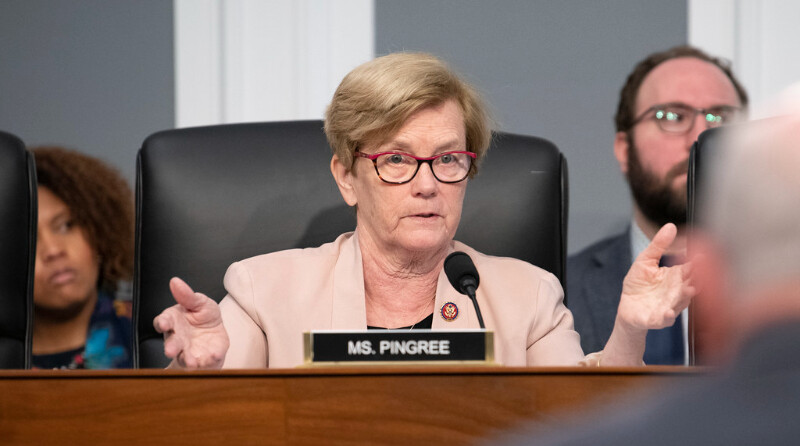
US Representative Chellie Pingree (D-ME) is a longtime organic farmer. She’s also a member of the House Agriculture Committee who is calling on the US Department of Agriculture (USDA) to stop hemming and hawing and, instead, get on the ball to implement recommendations from the Government Accountability Office (GAO) report that examines the growing climate-related risks that diseases and pests pose to US farms and forests. What comes as no surprise to many of us is that the report, “Agricultural Diseases and Pests: Nationwide Assessment and Strategy Needed to Enhance the Climate Resilience of Farms and Forests,” found that USDA has taken “few actions” to address disease and pest risks to US farms and forests. If anything, staffing and funding for some of these programs have been cut. The GAO identified four central areas for immediate attention: Improve and coordinate disease and pest monitoring and surveillance; Incorporate climate information into modeling and projections; Coordinate and expand education, outreach, and technical assistance; and, Modify existing—or develop new—disease and pest management strategies. Calling it the “first line of defense” for farmers and forest landowners, Pingree admonished the USDA for its failure to provide “reliable science, early warnings, and practical assistance” to deal with pests that no longer stick to traditional boundaries. “Otbreaks are starting earlier and lasting longer, and some of the management methods farmers have relied on for years are becoming less effective,” Pingree explained. “In Maine, where our economy and way of life depend on healthy farms and forests, this is not an abstract warning. It is already happening.” USDA’s Climate Hubs, which are a collaboration across the department’s agencies, are in the crosshairs of the Trump Administration. They link USDA research and program agencies in the delivery of tools and information to agricultural producers and professionals. “They’re shedding the expertise needed to confront these threats,” according to Pingree, and, instead, are trying to eliminate funds for Climate Hubs in the proposed fiscal year 2027 Agriculture Appropriations Bill. “That is dangerously shortsighted,” Pingree argued, saying, “GAO has provided a practical roadmap, and USDA should act on both recommendations without delay.” Among GAO’s key findings: From 1960 through 2020, invasive species—including diseases and pests—cost the U.S. agricultural and forestry sectors at least $550 billion. Climate change is expanding or shifting the geographic range of diseases and pests while increasing the timing, duration, and scale of outbreaks. The southern pine beetle, once concentrated in southern and mid-Atlantic states, has now been detected as far north as Maine. Warmer winters are allowing pests such as corn earworm to appear earlier and in greater numbers, making some traditional pest-management methods less effective and potentially increasing crop losses and pesticide use. USDA has not fully integrated disease and pest risks into its climate-resilience planning and has provided farmers and land managers with limited information and technical assistance addressing individual threats. USDA Climate Hubs have supported research, forecasting tools, and outreach related to specific pests and diseases, but the hubs have lost staff and face proposed funding cuts. The President’s fiscal year 2027 budget proposed cutting $153 million from Agricultural Research Service climate-science research and the Climate Hubs, as well as more than $300 million from Forest Service State, Private and Tribal Forestry activities. An analysis published with the fiscal year 2024 President’s Budget estimated that, by 2100, climate change could increase federal crop-insurance payments by $300 million to $2.2 billion annually. Pingree’s letter to USDA Secretary Rollins is copied below. +++Secretary Rollins, I am writing to urge the U.S. Department of Agriculture to swiftly implement the recommendations in the Government Accountability Office’s (GAO) recent report, Agricultural Diseases and Pests: Nationwide Assessment and Strategy Needed to Enhance the Climate Resilience of Farms and Forests. Farmers, ranchers, and foresters know all too well that the impacts of climate change are not distant or theoretical—they are already materializing on the ground and affecting their operations and livelihoods. GAO found that USDA has taken few actions to enhance the resilience of farms and forests to climate‑related diseases and pests, despite clear trends showing rapidly escalating threats. USDA’s Climate Hubs—once instrumental in providing regionally tailored climate and pest information—have reduced their capacity at precisely the moment producers need them most. The consequences of inaction are significant. Between 1960 and 2020, invasive species—including diseases and pests—cost U.S. agriculture and forestry at least $550 billion. Climate change is further compounding these risks. A 2024 analysis estimated that shifting climate conditions could increase federal crop insurance costs by $300 million to $2.2 billion annually. Given the scale of documented losses and projected future costs, it would be fiscally irresponsible for USDA to disregard these findings or delay action. The GAO report lays out a practical, forward-looking roadmap that USDA should adopt without delay. The first step is for USDA, in consultation with stakeholders across the agricultural and land-management communities, to conduct a nationwide risk assessment to identify and assess the relative risks of climate‑related diseases and pests. Such an assessment would provide the analytical foundation for a national strategy to confront these threats before they escalate further. GAO identified four key activities that should inform such a strategy: “improve and coordinate monitoring and surveillances of diseases and pests, incorporate climate information into modeling and projection data, coordinate and expand education, outreach, and technical assistance, and modify existing or develop new diseases and pest management strategies.” Farmers and foresters across Maine are already being forced to adapt to unpredictable and extreme weather, pest outbreaks, and shifting growing seasons. Visit with any producer across the country and their stories will confirm the urgent need for USDA leadership. Farmers in my state have seen dramatic increases in pest populations, requiring many to spend thousands of dollars investing in netting and high tunnels to protect their crops. Others have faced late freezes, heavy rainfall, extreme heat, and drought that have damaged or destroyed crops. Some have also struggled to obtain timely crop insurance or disaster assistance to recover from these losses. As the report notes, rising temperatures have enabled the southern pine beetle to expand its range into forests as far north as Maine. The resulting tree death and damage can leave forests more vulnerable to future insect outbreaks and wildfires. These stories demonstrate that climate change is not a distant threat—it is a daily reality for Maine farmers, who are innovating and adapting but cannot shoulder the burden alone. USDA must meet this moment with urgency, leadership, and a clear commitment to implementing the GAO’s recommendations. Thank you for your attention to this critical issue. I look forward to your response to assist farmers, ranchers, and foresters facing the impacts of climate change and your plans to reduce climate-related risks to American agriculture and forestry while protecting taxpayers from avoidable future costs.