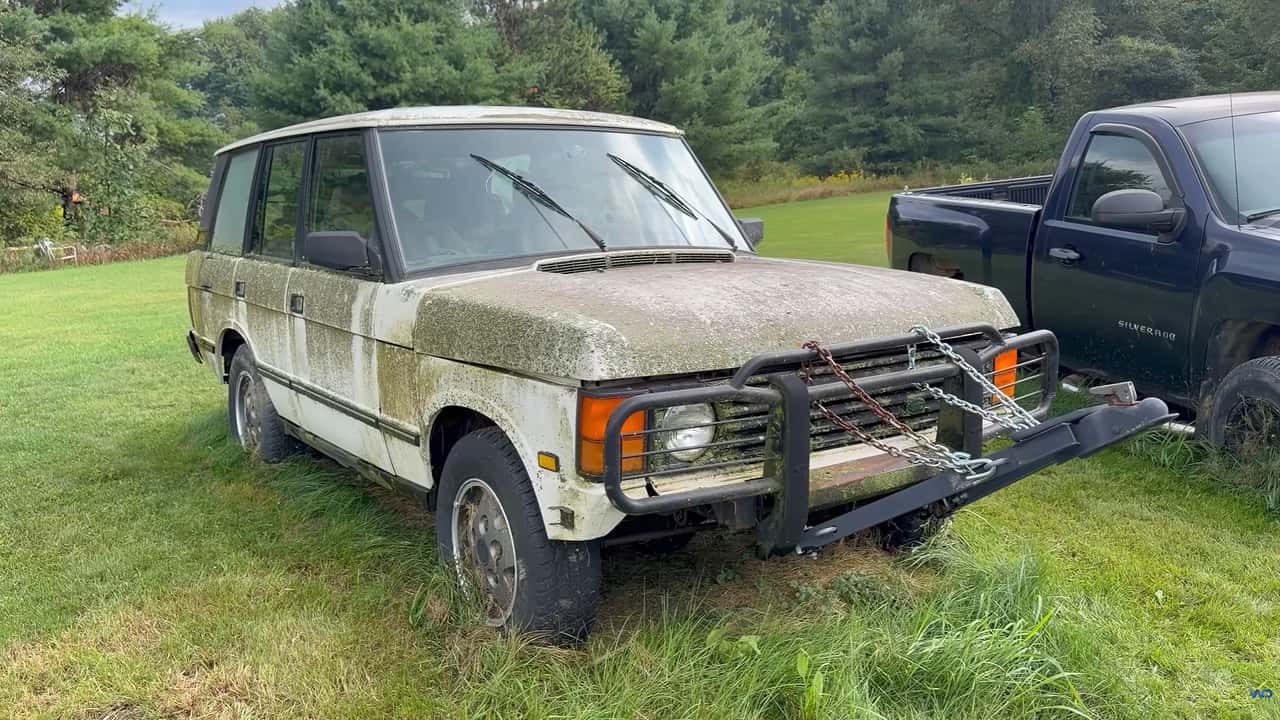
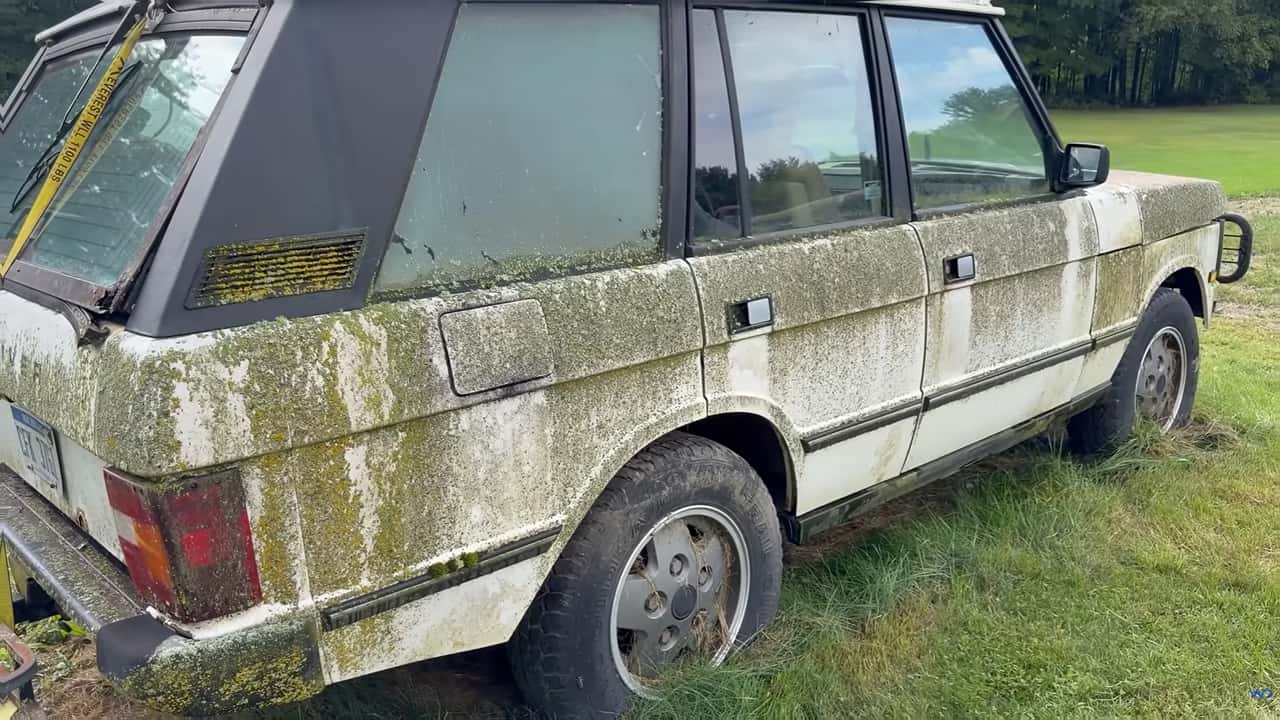
Mark's son Cody got a Range Rover for his sixteenth birthday. Cody died in a 2011 accident, and the SUV sat untouched for five years parked under a walnut tree before it moved to a friend's lot for another six months. The crew at WD Detailing found a 1992 Range Rover buried in mold, dead grass growing through the wheels, and grease baked onto the hood. They didn't know the full story until Mark showed up and explained why the truck had been left to rot. Scrubbing Years Of Mold Off A Sentimental Range Rover Abandoned 1992 Range Rover Covered In Mold The restoration started with hardware. Rusted bolts held a tow bar to the front bumper. The crew needed a wrench and an impact driver just to break them loose before washing could even begin. The rear carrier wouldn't budge either. The pin had rusted solid inside the hitch, so the team strapped the basket for safety and cut through it with a rotary tool instead of fighting the corrosion by hand. Paint correction meant wet sanding the hood before the first wash, since organic growth had etched into the clear coat itself. The EPA's own guidance on basic mold cleanup steps notes that moldy porous material often has to be discarded rather than cleaned. That's why the carpets came out entirely instead of getting scrubbed in place. Interior work followed the same pattern: vacuum first to pull loose dirt, then hot water extraction, then steam to break down stains baked into the seats. The EPA also notes that cleanup under roughly 10 square feet can typically be handled without a professional. This job ran well past that scale. Getting A Dead 3.9-Liter V8 Running Again Abandoned 1992 Range Rover Covered In Mold Under the hood sits a 3.9-liter V8 making 180 horsepower and 227 pound-feet of torque. It's an aluminum-block engine Rover bought the rights to from GM back in the 1960s. Five years of sitting dormant left it without spark or injector pulse when the team's mechanic, Adam, first turned the key. Adam traced the dead injectors to a failed ignition module, the part that signals the coil to fire and tells the computer when to pulse the injectors. A dead fuel pump compounded the problem. He installed a replacement and ran fresh fuel lines to the front of the engine. What do you think? Plenty of Range Rover Classics get rescued with full rebuilds or modern engine swaps, chasing more power or long-haul reliability. This one stayed closer to its roots. Once the new pump kicked on and the ignition module fed a clean signal, the original V8 fired and settled into a steady idle. After five silent years, the truck crept forward and back under its own power again before the crew finished the final polish.

 Liked by Logan Bouchard, Caleb Martin























 Liked by Logan Bouchard, Caleb Martin