Next year will mark the 40th running of the Porsche Mobil 1 Supercup, the one-make race series so ubiquitous you hardly need either Porsche or 911 qualifiers for somebody to know what you mean by “Cup car.” Like other sports cars with long histories, the further you go back in time, the more similar the racing 911 is to the roadgoing version. Likewise, the further forward you move, the more they diverge.
Early 964 Cup cars are, like Ferrari’s 355 Challenge, road legal with normal VIN codes. They were stripped, caged versions of standard Carreras. I’m leaving out a lot of hardworking engineers’ tweaks here, but the point is that there was a time that driving a Cup car felt mostly like a normal car with more noise, fewer comforts, and better safety equipment. The 1999 996-generation Cup still used a coded key and had a normal clutch and an H-pattern 6-speed—it was just a very sticky GT3. But the 997 generation of 2005 was the fork in the road, introducing a sequential gearbox. The 2013 991-gen brought in a motorsport engine-management system and electronics. And the 992 generation that races today nominally resembles a 911 but operates nothing like one and requires a team to run it.
I tried the 992 Cup Car. It is incredibly intimidating. I do not have what it takes to be successful in a car like that, and I would not want to have to round up a posse to go for a drive, even if the performance is staggering. Instead what I really want, as do many other amateur and wannabe racers, is a race car that closely resembles their road car. Hence the popularity of the GT3 RS. If the car never leaves the track property, why get a GT3 RS when you could get an Oreca LMP for $100k less?Because it’s not really about being street legal; it’s about being approachable and turnkey.
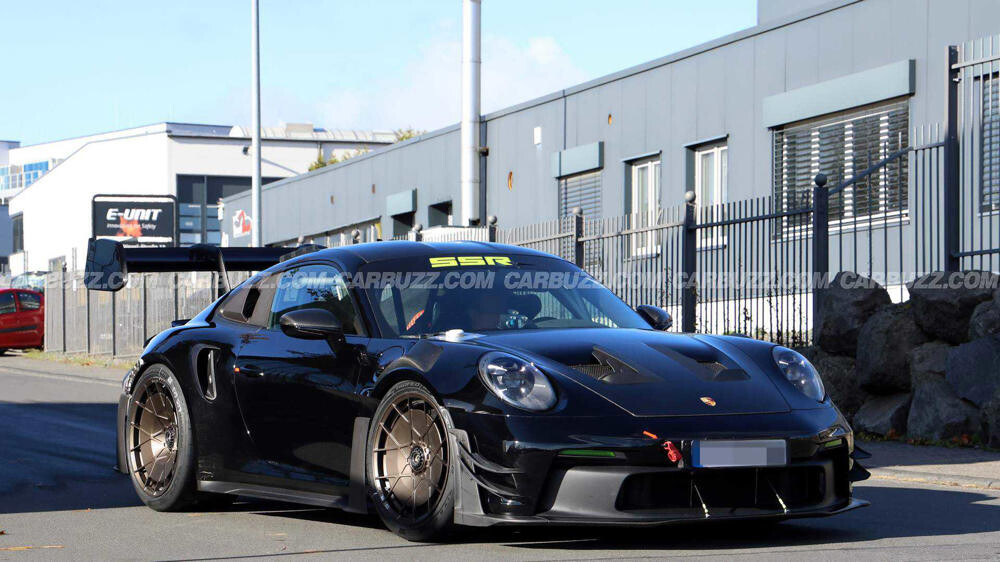
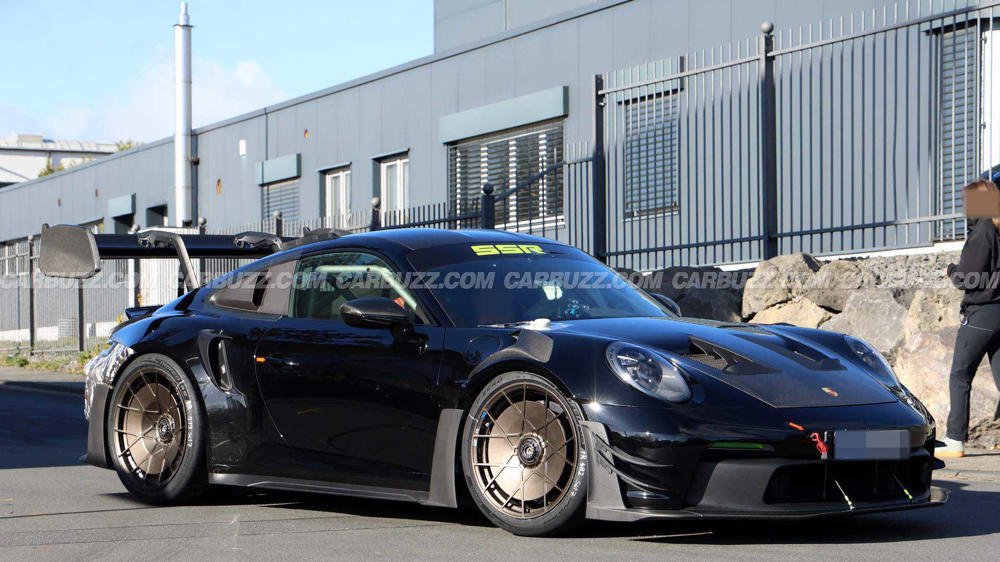
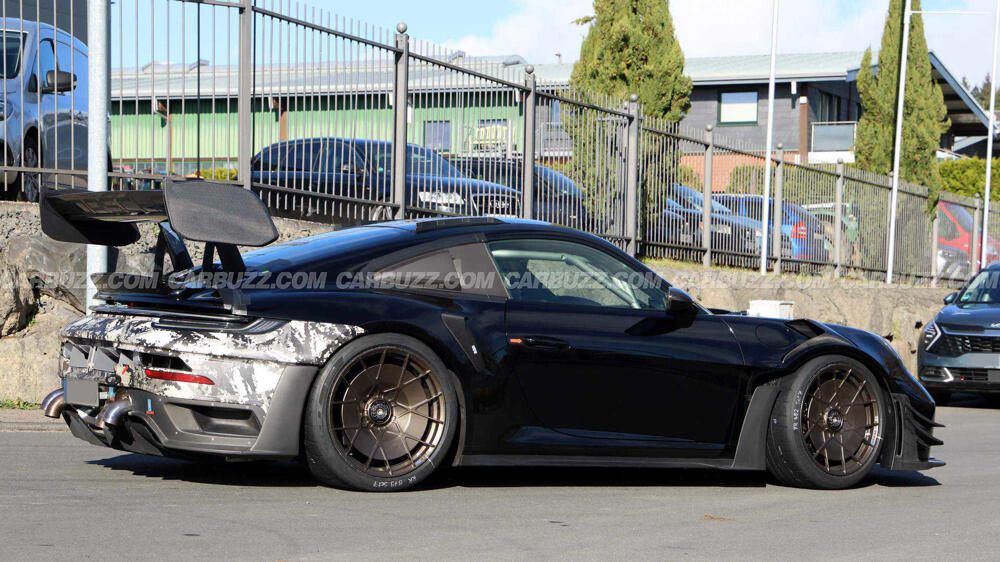
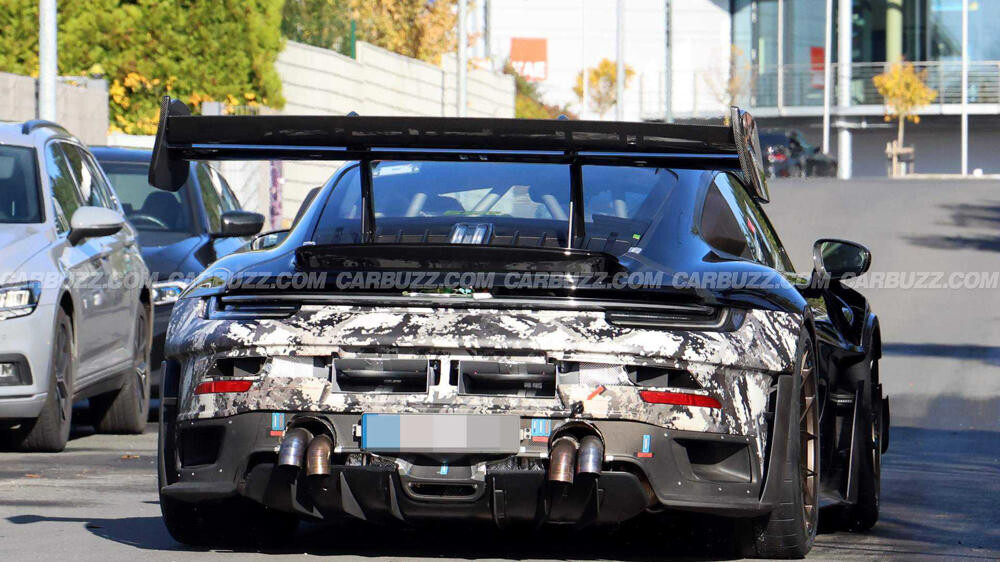
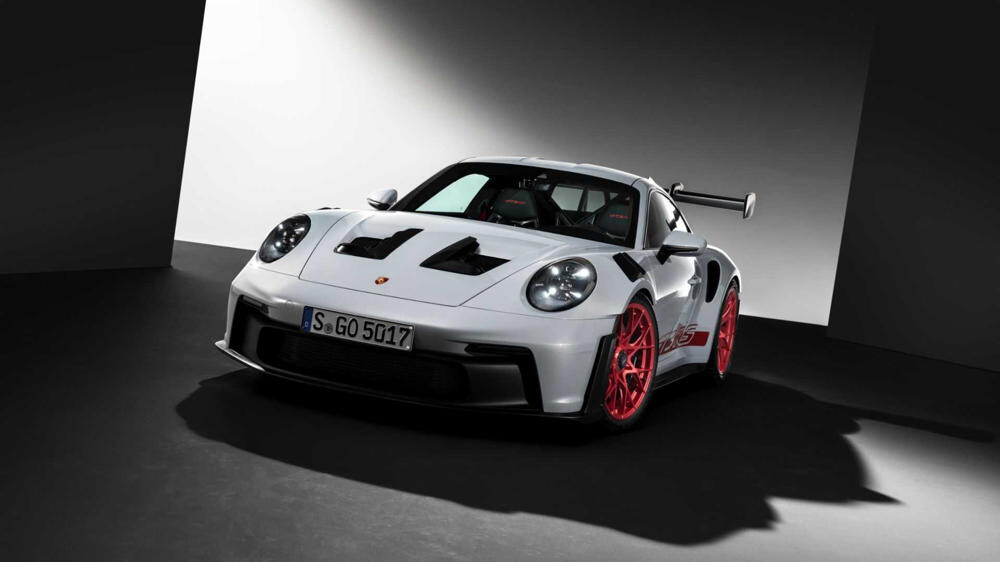
The car for regular weekend warriors used to be the GT4/RS Clubsport, but sadly, the 718-generation Cayman is now dead and buried. Earlier this year, rumors swirled that Porsche was prepping a 911 GT4 to take the Cayman’s place, and the story ran alongside photos of a racy-looking camouflaged 992 GT3. It turns out that Porsche is going GT4 racing with the 911, but that will be a modified Cup car, not the one from those pictures. Instead, the images were of the car you see here, the new 911 Challenge. Essentially, it’s the old GT3 Cup car concept for today’s country-club weekend warriors: an upfitted, stripped, and caged GT3 road car.
A roll cage can only make a car so approachable, but once I’d stopped and crawled into the comfy seat, things got familiar quickly, as I was looking at the complete 992-generation dashboard, gauge cluster, and center console. The steering wheel is straight out of the GT3 RS (though without an airbag installed). After strapping in with the multipoint harnesses,I pressed the original start button on the left, and the 4.0-liter flat-six fired just like a standard GT3. The Challenge retains the factory heating and ventilation; the road car’s touchscreen display is gone, replaced by a blank panel with emergency cutoff and fire switches.
Mechanically, it’s barely changed from the GT3. The engine makes six more horsepower, now 508 hp total, thanks to a race-specific exhaust setup. But it still uses the standard, seven-speed PDK dual-clutch transmission, so you can just put it in drive if you prefer, or shift using the paddles.
My drive in the Challenge was brief. Just four laps around the 2.5-mile Circuit Ricardo Tormo, following on from my four-car Manthey test. For context, with factory race driver Timo Bernhard driving this circuit, the Challenge almost perfectly splits the range: 4.6 seconds per lap slower than a Cup, and 5.2 seconds quicker than a GT3 Weissach. Notably, it’s also 1.6 seconds quicker per lap than the GT3 RS Manthey. Where it gets interesting is in the details.
A GT3 RS Manthey is on road-legal tires but with enormous downforce. The Challenge is on slicks but with the same aero package as a standard GT3.
So if you’re willing to throw away street legality, for $275,000 (less than the cost of many standard GT3s) you can go far quicker on a track than you could with the fastest road-legal 911 you can buy, the Manthey GT3 RS, which would knock on the door of half a million dollars.
Everything about the Challenge is easy. As long as you’re reasonably comfortable on a slick tire, the rest of the car comes directly to you. The Challenge is far more reliant on mechanical grip than downforce, so you can start learning the car by going much quicker through hairpins than you ever have before, rather than having to learn it by going full send over a blind crest in sixth gear, with potentially scary consequences.
Likewise, because there isn’t 2200 pounds of downforce, the Challenge isn’t sprung too stiffly, so you don’t take abuse on bumpy curbing. The knobs for traction control and PTV work essentially the same as the GT3 RS, just with new programming specific to the Challenge.
I’m not going to pretend, in five laps, to have a thorough understanding of the dynamics of the 911 Challenge, or to say that I took it to its limit. I had just enough time to get comfortable, which is more than I can say about other race cars.
What I did have was an incredible time on the track. The Challenge is the kind of car that inspired me to want to push it harder, but the “race car” bits of it disappeared into the background, so I could focus on things happening outside rather than things inside. It was instantly comfortable and familiar, and a place I could spend all day. Three-hour double stint in an enduro? That would be no problem. Also, possible thanks to the 29-gallon fuel cell.
There will be a one-make series for the 911 Challenge, and initially Porsche wants to sell them to folks who intend to enter, but that’s not really the point—this is the 911 race car that most 911 owners actually want. It is a fun, flexible, approachable, and fizzy experience that elevates what they already love about the 911 and can race if they want to, but that won’t require a whole team if they just want to rip off a few laps after work. And for less money than the road car, not more.
It’s the race car for people who want their race car to feel like a 911, not like a corporation.