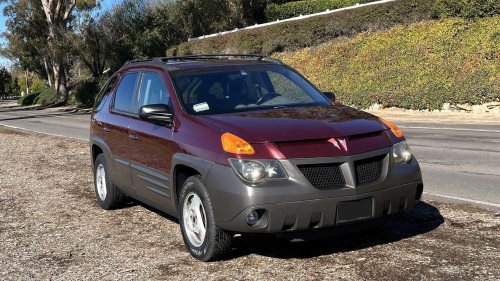
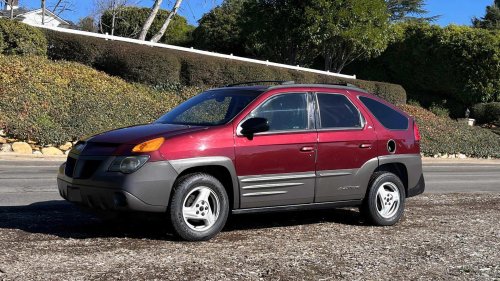
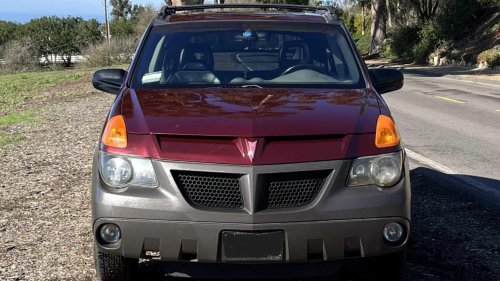
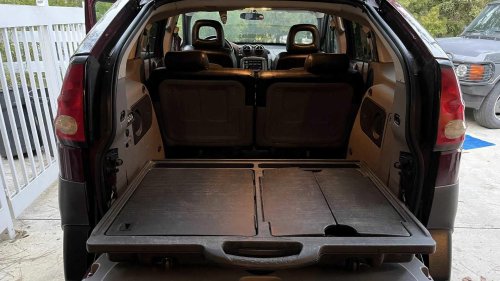
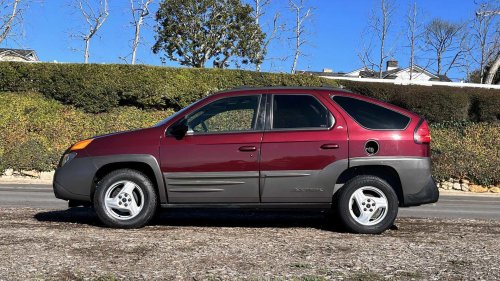
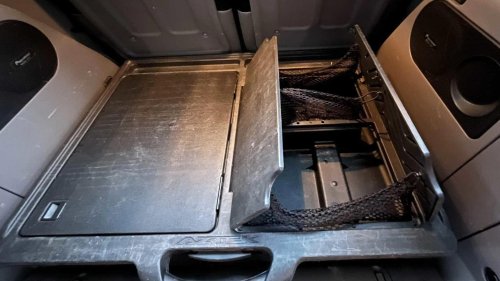
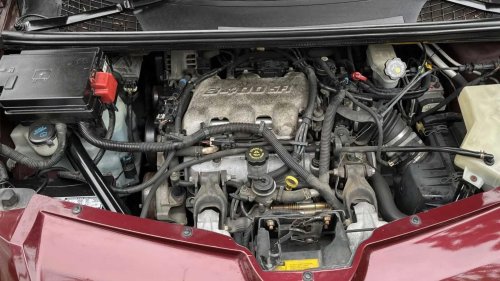
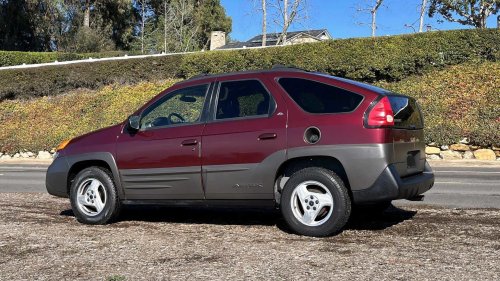
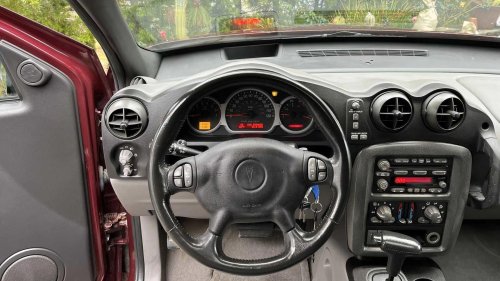
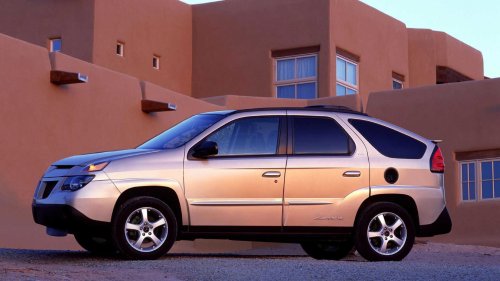
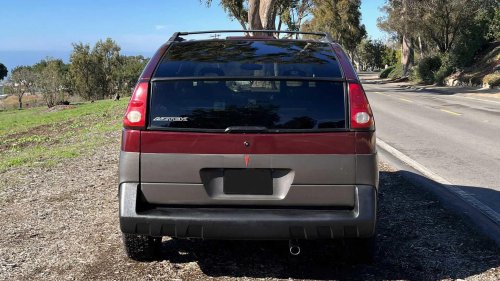
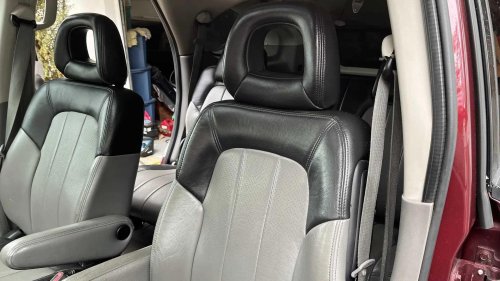
























If you want to be reminded that the 2000s were a very different time, look no further than the Pontiac Aztek. This strange mid-size crossover SUV is one of the most intriguing automotive failures of this century. With how poorly the Aztek was received when new, you might imagine that its mechanical underpinnings were flawed to their core. Yet, that wasn't the case at all. Underneath its somewhat haunting body, there sat a highly versatile crossover with strong utility and a solid powertrain.Among the few who purchased one, most owners would end up falling in love with its undeniable charm. Yes, it was weird, but it worked. However, most people couldn't even fathom looking at an Aztek, let alone owning one. Understanding why this pioneering crossover ended up the way it did will tell you more about the automotive industry than any star-studded success story. A Design That Was Doomed From The Start Bring A TrailerThe Pontiac Aztek has the unfortunate honor of being one of the ugliest cars ever produced. That's not up for debate. Yet, why did it end up looking like that in the first place? The Original Concept Car Was A Hit Considering how well-received the Aztek concept was on debut, it's a bit sad that the production model didn't match those high expectations. The original concept model was first shown in 1999, and the production model debuted in the summer of 2000. From the beginning, the target audience of the Aztek was a young and active Gen X demographic, who received the quirky styling positively. The idea was to craft something bold and futuristic that looked purposeful just from its aesthetic. Indeed, the Aztek was purposeful and bold, but it didn't end up being quite as futuristic as it thought it was.Yet, the primary issue was that the concept model was much sleeker and more aggressive than the end product. This is a common occurrence in the automotive industry. However, the Aztek's purpose was to make a statement about GM's ability to make bold styling decisions. The Aztek's chief designer, Tom Peters, who would go on to design the C7 Chevrolet Corvette, stated that the Aztek was intended to be an "in-your-face" vehicle. The vision was clear from the start. The execution, however, didn't exactly pan out. Destruction By Committee Bring A TrailerFrom the start, the Aztek was intended to be aggressive and distinct. Yet, with one committee revision after another, the bold styling that defined the crossover was softened. By the time the public saw the final product, the original allure was gone. The biggest mistake was the redesign of the front fascia. In the concept car, the Aztek employed a unique hood and front fender body design. Despite its weird look, it worked because it was unique and cool. Bring A TrailerThe final product, however, employed a much more conventional and awkward-looking hood, bumper, and fender design. It was different, but not in a good way. Other than that change, the Aztek looked almost the same as the concept from the side and the rear. However, this altered front end design was significant enough that it changed the entire outlook of shoppers. The concept was confident, but the production car was confused. Where The Pontiac Aztek Succeeded Bring A TrailerIf the Pontiac Aztek just looked a little bit...well...better, its legacy would have been similar to the Honda Element. By nearly every functional measure, it was a competent and even impressive vehicle in certain regards. Minivan Levels Of Utility Bring A TrailerWhile the Aztek's polarizing exterior may get attention, it was the inside that truly defined its capability. It shared GM's U-body platform with the Pontiac Montana and other GM-branded minivans. This was a smart move from Pontiac because it made the Aztek genuinely functional with a foundation optimized for interior volume. Without the rear seats, the Aztek offered 94 cubic feet of cargo room. To put that into perspective, a 2026 Toyota Grand Highlander offers 84.3 cubic feet of cargo space. The difference is that the Grand Highlander is almost 20 inches longer than the Aztek and significantly larger in every other dimension.Bring A TrailerPontiac didn't stop there. One of the Aztek's most useful functions was its frequently optioned pullout cargo tray, which was rated at 400 pounds and rolled on built-in wheels. There was also a 22-way configurable cargo net system that was rated for 200 pounds and connected to anchors in the rear cargo area. Another available option was the tent and inflatable mattress package with a built-in air compressor. The center console also functioned as a removable cooler with a built-in handle. That was certainly something ahead of its time. The split rear tailgate was just as cool and functional. It offered contoured seating with built-in cupholders. How many new vehicles are built with the tailgate party in mind? None that we know of. Highly Capable Technology Packages Bring A TrailerThe Aztek was designed for active lifestyles, but it was never marketed as a truly outdoor vehicle per se. What's surprising is that the Aztek offered more capability than meets the eye when equipped with the optional Versatrak AWD system. Compared to more budget-oriented AWD systems of its era, the Versatrak used a more sophisticated system capable of providing meaningful traction in rain and snow.Another benefit of the AWD variant was that these models also received fully independent rear suspension and disc brakes, an upgrade compared to the standard model's solid rear beam axle and drum brakes. There was even an optional head-up display, DVD player, XM satellite radio, and TPMS. In 2003, a Rally Edition was introduced that offered lowered front suspension, 17-inch chrome wheels, and an upgraded grille and rear spoiler. Despite the Aztek seeing new refinements with every passing year, the crossover did not manage to be a sales success. Why The Aztek Failed To Capitalize On Its Strengths Bring A TrailerThe Aztek's ugly face doesn't tell the full story of why it never achieved its potential. GM needed about 30,000 sales annually to break even, and it didn't manage to hit that target even once. The Pricing Dilemma Bring A TrailerIf the Aztek had one gross miscalculation aside from its looks, it was how the vehicle was priced. Considering its intended Gen X demographic, the Aztek was priced too high, especially compared to its segment rivals. GM was initially hoping for sales of around 75,000 units annually, but didn't manage to hit its break-even figure of 30,000 units even once. During its debut year in 2000, the Aztek only sold 11,201 units. For the 2001 model year, GM adjusted the trim lineup and lowered the price, resulting in sales of 27,322 units. Further rebates and pricing cuts followed in 2002, which saw the Aztek achieve its best-ever sales with 27,793 units. 2003 saw similar figures, but by 2004, the decline to 20,588 units was an obvious start to the end. In its final model year in 2005, the crossover had only sold 5,020 units, officially marking its discontinuation. A Deeper Issue At Hand Bring A TrailerEdmunds went out of its way to declare the Aztek first on its "100 Worst Cars of All Time" list. Its reasoning had less to do with the Aztek's looks and more to do with the fact that the Aztek was the nail in the coffin for the Pontiac brand. It may sound a bit dramatic, but the point does have some merit. The Aztek's failure was not an isolated event, but rather, part of a list of systemic issues plaguing GM. The American automaker always seemed to have good and ambitious ideas, but the execution always ended up being sloppy and unfulfilled. A car company is a machine with a lot of moving parts, and when it mattered, GM's departments never seemed to be able to coordinate their functions harmoniously. The underlying idea of the Aztek was a novel one that could have been a difference maker, but its real-world impact simply lacked weight. The Aztek's Legacy And Current Standing General MotorsNow that we are well into the post-hype era surrounding the Pontiac Aztek, some things have become clearer. Few production vehicles have gone from universally despised to genuinely coveted in such a short time as the Aztek. The reasons behind that shift go beyond ironic appreciation. The Emergence Of Cult Status Bring A TrailerSometimes, all it takes is one well-timed phenomenon to change an entire cultural discourse. In the case of the Aztek, it was featured as the car of Walter White, the protagonist of one of TV's biggest hits of the century, Breaking Bad. Indeed, the Pontiac crossover served as the perfect casting choice for the fictional New Mexico-based high school chemistry teacher turned drug kingpin. Reportedly, the vehicle was also repainted into its recognizable gray-beige-green palette to better suit the mild-mannered character of Walter White in the backdrop of the Southwestern desert.In 2015, Edmunds ranked the Aztek sixth among U.S. used car buyers aged 18 to 34, attributing its rise in popularity to the "Breaking Bad Effect." Because production had ended less than a decade earlier, the impact of a TV appearance on the Aztek's popularity was striking. What The Aztek Told Us About The Future Bring A TrailerWhile the Aztek was a commercial failure, it did get some things right about the eventual direction of the automotive market. It arrived at a time when crossover SUVs were still a budding segment that hadn't yet experienced a surge in popularity. The Aztek offered the functionality of a minivan without the aesthetic of a minivan. That exact formula is the value proposition that has driven crossover sales for the past 15 years. The architectural foundation of the Aztek was ahead of its time, but corporate mismanagement diluted its impact and vision. So, next time you see a Subaru Crosstrek or a Hyundai Santa Cruz, remember who paved the way for these quirky vehicles.Sources: GM, Edmunds, J.D. Power