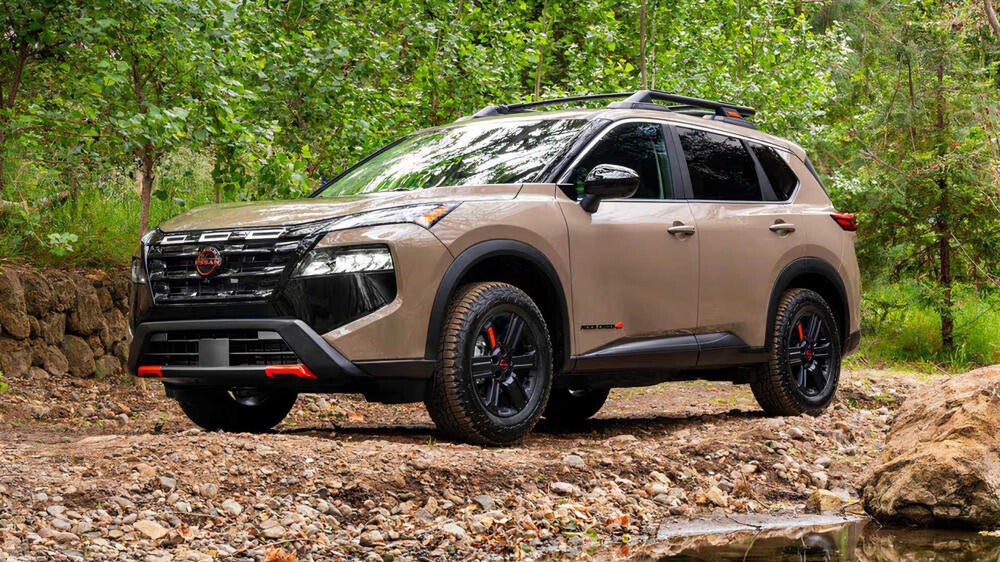
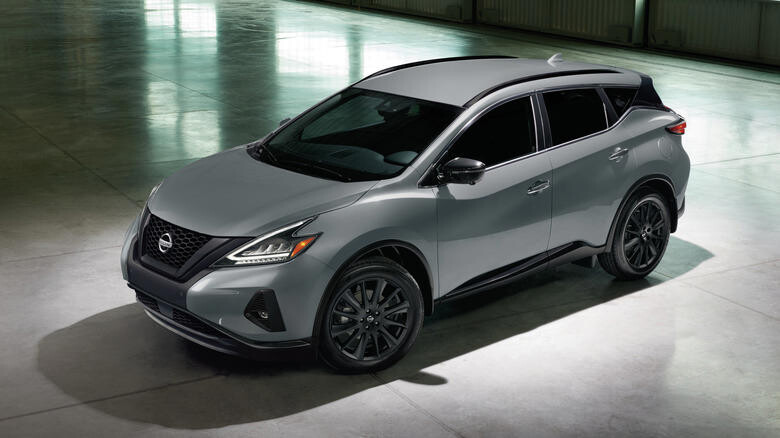
The Rogue is by far Nissan’s best seller in the United States, with the brand shifting more than 200,000 units of the compact crossover last year. So the company can’t afford to screw with it whimsically. That’s why there are soon to be two Rogues. The regular version will continue to be produced by Nissan’s giant plant in Smyrna, Tennessee. And the new 2027 Rogue Hybrid tested here will be imported from Japan. Despite its name, the Hybrid isn’t just to keep up with gasoline-electric rivals—it’s a fundamental step beyond them.
Our expert editors test every vehicle we review. Read more about how we test and review cars here.
The Lowdown
Nissan has offered hybrid versions of the Rogue, off and on, since the 2017 model year, including a 2026 plug-in hybrid, which was a thinly disguised Mitsubishi Outlander PHEV (itself based on the Rogue). This Rogue Hybrid, though, is a new twist for Nissan. It’s not a parallel hybrid like the archrival Toyota RAV4 but a serial hybrid, similar to the sometimes fondly misremembered Chevrolet Volt.
A serial hybrid is, to oversimplify only slightly, an electric powertrain lashed to an internal-combustion engine that acts as a generator to produce current. That current is delivered to a battery and electric motors that do the propulsive work. There is no direct, mechanical drive from engine to road; traction is all delivered electrically. Like a diesel-electric railroad locomotive. That spares buyers the need to live with a constantly variable transmission. For which, hallelujah.
The engine is a 1.5-liter turbocharged three-cylinder making 148 hp and 171 lb-ft in its own right and working in conjunction with a dinky 1.67-kWh lithium-ion battery pack. Drive is delivered through two electric motors, one turning each axle, with a peak system output quoted at 225 hp.
- Vehicle tested: 2027 Nissan Rogue Hybrid SR w/Tech
- Base price: $39,065
- Price as tested: $45,595
- Location: Santa Barbara County, California
How Does It Drive?
Since this is an electric crossover that happens to have an internal-combustion engine aboard, it drives very much like other electrics. That includes one-pedal driving with regenerative braking in “e-Pedal” mode. It’s more Leaf than Pathfinder or regular Rogue.
Historically, Nissan has done a great job of tuning every Rogue’s suspension for its duty of prowling across every obstacle suburbia throws at it. It crosses Costco speed bumps confidently, doesn’t chunk up when sliding across a curb during parallel parking, and steers precisely and confidently when sneaking into a garage full of bicycles and long disused exercise equipment.
The dry roads of Santa Barbara County in October are no challenge for any all-wheel-drive system. That in mind, the Rogue Hybrid makes effective use of its 235-mm-wide all-season radials (on 18-inch wheels in the base SV and 19s with the SR and Platinum). With much of its battery and electric motor weight carried low, Nissan claims a weight distribution of 56 percent front and 44 percent rear for the test vehicle. The conventional Rogue carries about 60 percent of its weight on its nose.
And then there’s the engine itself. The inline-three runs on the Miller cycle and has a relatively large turbocharger that spools up to keep the engine at its torque peak easily. The engine won’t spin past 5200 rpm, and since all it does is send juice to the motor and battery pack, there was no way for me to push it past that low redline.
This is not a fire-breathing electric. Acceleration is nicely linear as with, say, the Leaf or a Chevrolet Bolt. Because 225 hp can push two tons and then some only so quickly, 0–60 is likely in the mid-six-second range, and the quarter-mile will be just under 16-seconds. It’s roughly comparable to the Leaf.
As nonplussed as the acceleration times will leave those who love to drive, there is the compensation of outstanding fuel economy. The EPA rates the new Rogue Hybrid SR at 41 mpg in the city, 36 mpg on the highway, and 38 mpg combined. That’s up a huge 12 mpg in the city cycle compared with the conventional Rogue Platinum AWD, along with a smaller 4 mpg on the highway and a modest 9 mpg combined.
The rest of the Rogue Hybrid’s mechanical substance is familiar stuff. Many of the structural elements and suspension design carryover from the current conventional Rogue, along with the 106.5-inch wheelbase. The Rogue Hybrid’s 72.8-inch overall width is up 0.4 inch, and the 67.2-inch overall height is down 0.2 inch. Nissan isn’t screwing with what’s working.
What’s It Like to Live With?
Nissan’s interior designers have done an outstanding job of making the new Rogue Hybrid feel roomy. The dash is relatively low below the windshield, and the door panels are shaped for some elbowroom. The seats are also well considered and cushy, which in this class of vehicle is what matters. Eight-way power-adjustable and heated front seats are standard across the line, with the Platinum trim also getting ventilation for cooling and a memory feature. Like giant moonroofs? One comes standard on the Platinum and optional on the lesser trims.
Then there are the Platinum’s massive twin 14.3-inch screens across a common plane. It’s pretty much the same setup as used in the better Leaf models. And the graphics are similar as well. The best feature is the Platinum’s head-up display, which is all kinds of wicked cool.
Also aboard is Nissan’s ProPilot Assist semi-autonomous system, which allows hands-free driving for extended periods. On known, well-marked roads, I found that it worked well.
However, carrying around two powertrains induces pudginess. Nissan lists the conventional 2027 Rogue at between 3444 and 3534 pounds, depending on trim level. The Rogue Hybrid comes in between 4065 and 4167 pounds.
Nissan lists the gross vehicle weight rating of the pure combustion Rogue at 4641 pounds and the Hybrid’s at 5192 pounds. That means that the Hybrid is down in lugging by about 100 pounds—two large suitcases or one large dog. So, pack light and adopt smaller dogs.
Should I Buy One?
The Rogue competes in the toughest part of the current automotive market: compact crossovers. Virtually every manufacturer’s best seller is in this class, with an increasing percentage of the vehicles being hybrid.
Priced across the line to compete with Toyota’s all-hybrid RAV4 line, the Rogue Hybrid is a solid alternative, although the RAV4 AWD is more efficient on every EPA figure. But as Toyota dealers are often constrained by supply issues, so there could be more price flexibility at the Nissan stores.
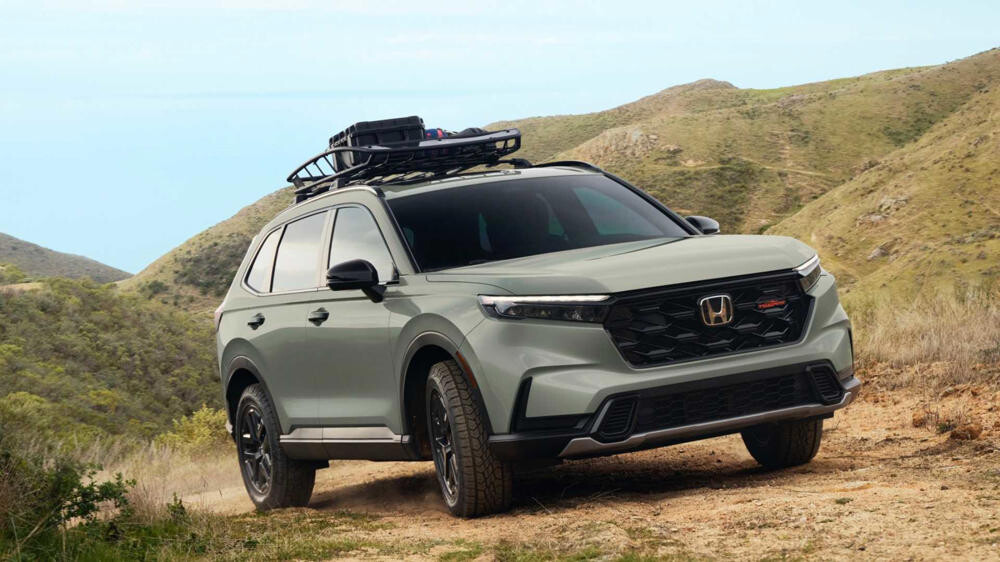
The other obvious rival is the Honda CR-V Hybrid, which uses a similar but subtly different powertrain from the Rogue Hybrid, this combining a primary electric drive motor with a lockup clutch that can mechanically link the engine to the wheels at higher speeds. The Rogue has a slight advantage on EPA mpg figures when compared with the all-wheel-drive version of the Honda, but the front-wheel-drive CR-V Hybrid is less expensive and better on gas.
Highlights and Lowlights
We Love:
- Comfy cabin.
- Unique serial hybrid driving experience.
- Solid fuel mileage with a lot of range.
We Don’t Love:
- Not quick enough.
- Generic appearance.
- Weight tempers load rating.
Favorite Detail:
The Rogue Hybrid’s nose has an odd funkiness about it. In the SR (with Tech package) that was on hand, most of the upper grille is blocked off. The indentations are more the suggestion of cooling than actual cooling. And the relatively small multipart headlights are surrounded by decorative lighting mostly to balance out the large simulated grille.