Nio, a Chinese electric vehicle (EV) company, said its fourth-quarter loss widened from a year earlier amid escalating competition in the sector, while its forward revenue guidance was below market expectations.
On Friday, the Shanghai-based company said its quarterly loss widened to 7.13 billion yuan (US$983.7 million) from 5.59 billion yuan a year earlier. Analysts, according to a Bloomberg poll, expected the company to report a loss of 5.53 billion yuan. Revenue rose 15 per cent to 19.7 billion yuan, which was lower than a 20.13 billion yuan consensus estimate.
“The competition landscape in the smart EV industry is evolving rapidly, making 2025 a critical year for the market reshaping,” William Li Bin, Nio’s founder, chairman and CEO, said in a post-earnings conference call. Nio would be able to unlock new revenue opportunities with nine new models across three brands this year, tech-driven cost optimisation and global expansion, he added.
For the first quarter, the company expects vehicle deliveries to rise 36 per cent to 43 per cent from a year earlier to 41,000 to 43,000 units. Revenues are expected to climb 25 per cent to 30 per cent to 12.37 billion yuan to 12.86 billion yuan. Analysts expect 17.85 billion yuan in revenue.
Li said the premium Nio brand would strengthen its market position by using more technology and experience-driven products, while the mass-market Onvo brand would focus on increasing its sales and product mix. The Firefly brand, which targets middle-income consumers on the mainland, would begin deliveries in April, acting as a driver of the firm’s global expansion.
“Looking ahead to 2025, we will sharpen our focus on enhancing profitability by driving cost reductions through technological advancements, optimising operational efficiency and accelerating scalable growth,” said Stanley Yu Qu, Nio’s chief financial officer.
Nio said gross margin in the fourth quarter rose to 11.7 per cent from 7.5 per cent a year earlier. The firm had started cutting costs since last year by focusing on various aspects such as supply chain, research and development, and sales and services.
“As we continue to strengthen our cost control and expenses management in the second half of this year, together with the improvements in the sales volume and vehicle margins, we are confident that we are going to achieve our break-even target in the fourth quarter,” Li added.
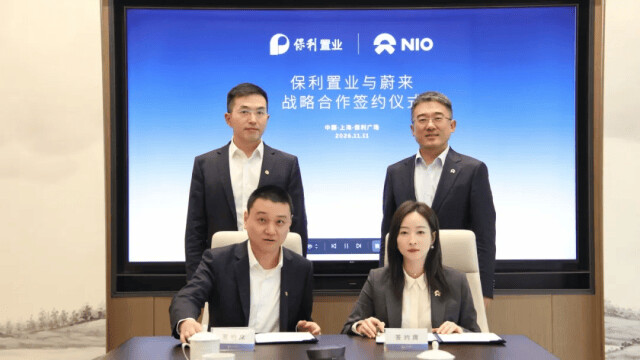
The firm’s earnings came days after Nio and Contemporary Amperex Technology Limited (CATL), the world’s biggest producer of EV batteries, said they would expand the availability of battery-swap stations. CATL plans to invest up to 2.5 billion yuan in Nio under the partnership. Battery swap technologies allow compatible cars to quickly trade spent batteries for fresh ones, bypassing lengthy recharge times.
In contrast, Nio rival BYD on Monday unveiled a new charging and battery system that it said could power up EVs as quickly as refuelling a petrol-powered car.
Nio, which owns the most chargers and battery swapping stations in China, has built 3,172 power swap stations in more than 700 cities.
The company plans to expand its power swap network, covering over 1,200 county-level divisions in 14 provincial-level administrative regions in China, including Beijing, Shanghai, and Guangdong, by June 30 this year. By the end of the year, more than 2,300 county-level divisions in 27 provincial-level administrative regions will be covered.