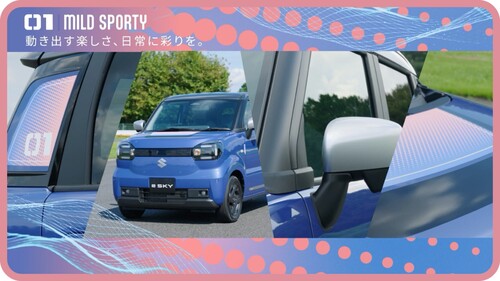
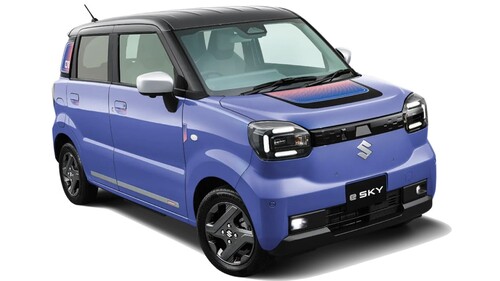
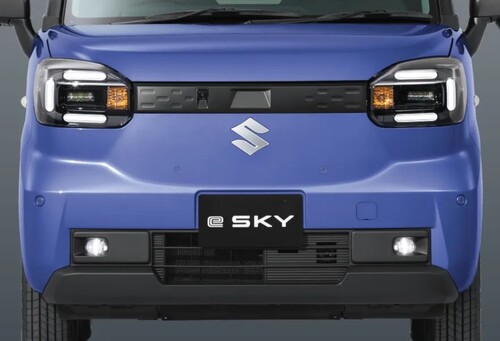
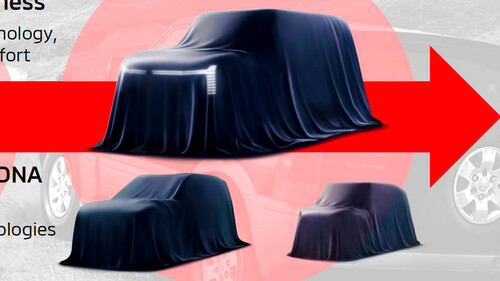
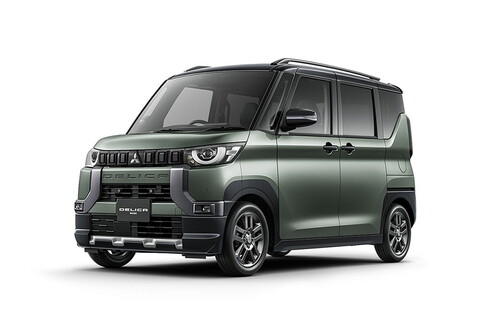
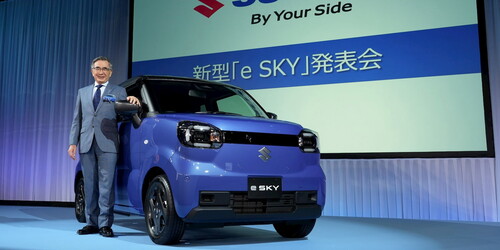
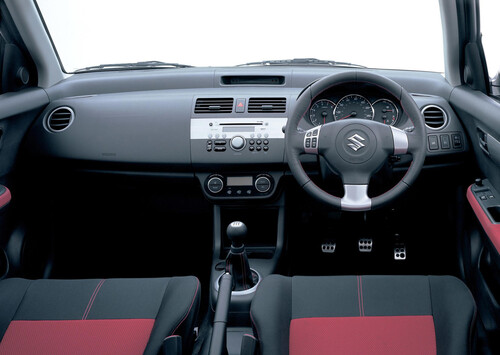
Suzuki has laid out an ambitious 10-year strategy that will reform how it builds cars in order to fend off Chinese competitors. The plan will be led by the development of new modular powertrains that cover electric, hybrid and range-extender forms, all of which will be fitted to a fresh generation of models. This will be combined with shorter development cycles, a renewed focus on lightweight construction and a switch to a software-defined digital architecture. With so many developments coming at once this isn’t just an action plan, but a revolution for Suzuki and the way it develops and builds its vehicles. Suzuki might be something of a niche brand in the UK and Europe, but it has a massive global footprint. This is especially true in emerging markets such as India and South America, both of which are seeing the competition sharpen up as Chinese competitors enter these regions. The new set of electric, hybrid and petrol engines will be developed in-house by Suzuki for its global models, giving different markets options that best suit local conditions and customer requirements. However, these will be reimagined as a family of components, rather than individual powertrains. In effect, this will create a modular system that can be put together depending on the use case. Fundamental to the system is an electrified front axle that will first be applied to the eSky electric city car that we’ll see in the UK in 2027. Suzuki will develop two types of electrified front axle, one in 94bhp form for A-segment or city cars and the other a more powerful 174bhp option that’ll be used in B and C-segment models. In both cases, all the relevant components for a BEV’s powertrain will be packaged together, including the electric motor, inverter and transmission. In larger B and C-segment models, these electrified axles can then be joined by a small petrol-powered motor to create a hybrid option. In a switch from its hybrid motors today, the future system will switch to a generator-style layout, similar to Nissan’s E-Power system. This means only the electric motor will power the wheels, keeping the petrol engine isolated from the drivetrain with the sole job of providing energy for a small battery pack. If customers want to tip the electrification balance towards something like a range-extender or plug-in hybrid, the battery pack can be swapped for a much larger unit, giving it a much longer all-electric range. These two layouts can be swapped without needing to change any of the electrified axle’s core engineering, it just sources its power from different battery packs. Suzuki will also develop an electrified rear axle with small 13bhp or 40bhp motors to give all-wheel drive capability, which can then theoretically be paired to any of these three layouts depending on the model. Alongside these modular powertrains, Suzuki will intensify its focus on building lighter and more intelligently designed cars for them to sit in. The Japanese brand is already known for its exceptionally light models – the Swift supermini weighs around 950kg despite its mild-hybrid system – so will build on this experience with new weight-reducing measures. Suzuki says that despite new safety equipment raising the weight of its cars by around 80kg in the next few years, it aims to remove more than 100kg through new manufacturing techniques and optimising its platform for these modular powertrains. This ‘Right is Light’ philosophy will embody all of the car’s future components, from interior materials and plastics, which will also then make its components easier to manufacture and recycle at the end of their life. This all goes hand-in-hand with Suzuki’s commitment to faster development periods. Taking inspiration from the Chinese, the Japanese company will reduce its future models to a 24-month development period, rather than the five or even six-year periods it uses now. Having a modular powertrain system will aid this transition, as will Suzuki’s global manufacturing and development footprint, ensuring that variants can be designed from the outset to be as well suited to their key market as possible. With this in mind, Suzuki will put extra emphasis on the Indian market, which it sees as the greatest growth opportunity. Alongside this new way of modularising the car’s mechanicals and hardware, Suzuki will also create modular software, creating its own ‘software-defined vehicle’ that’ll ensure development of its digital systems will happen just as quickly as the rest of it. By creating one centralised brain, new-model development and more features will be easier to integrate and less costly to develop. Suzuki’s eSky is the first all-new model under this strategy, and will be on sale in the UK next year. This is the smallest new model we’ll see in the UK, and while its size and placement in Britain will limit the amount of variation to pure-electric forms, it should offer a dual-motor all-wheel drive option in time. Beyond this, the timing is less precise. However, Suzuki’s ageing model range is ripe for reinvention, and with this 24-month development programme in place, we could see a new Vitara, Swift or even an electric Jimny sooner than we might think. In fact, the Jimny’s fantastic success in the UK is proof that while many might consider Suzuki a niche player, with the right product the brand can certainly create a stir. Get even more from Auto Express, follow our channels...• Google• Reddit • Whatsapp