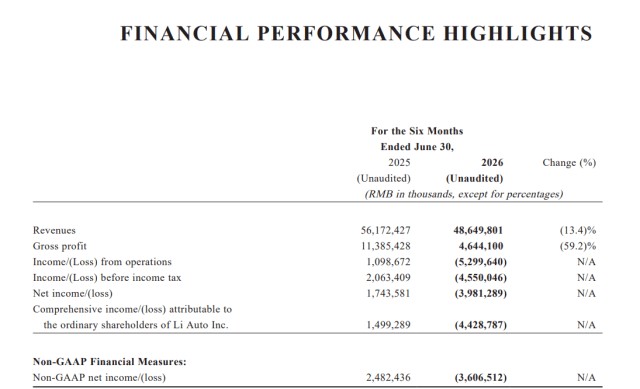
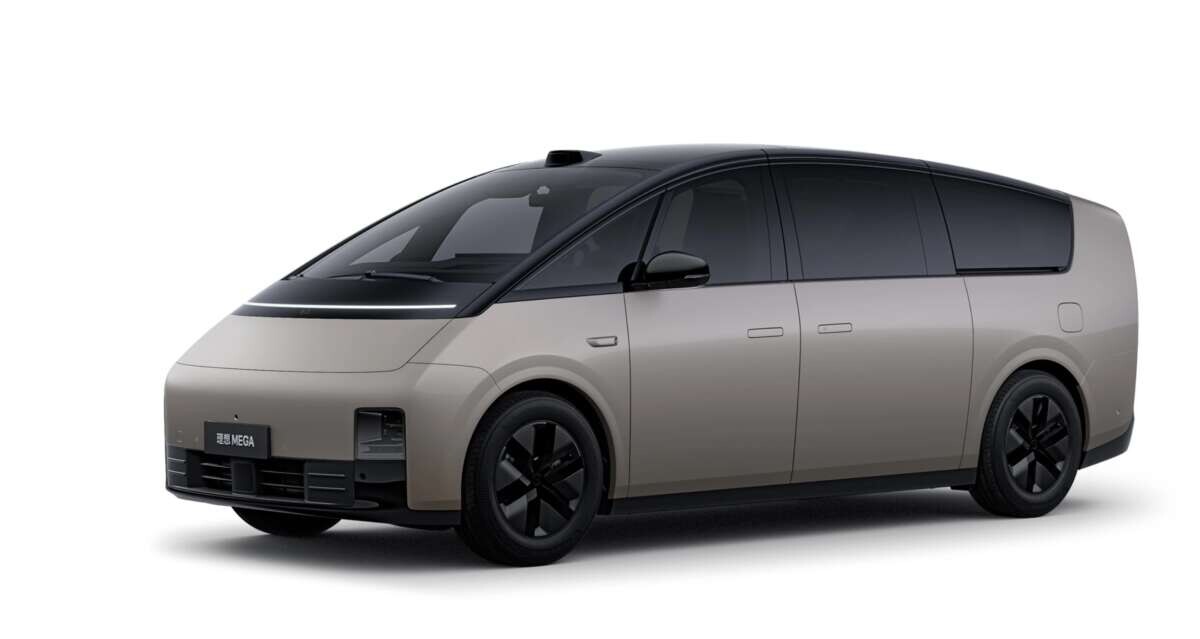
On November 17, Li Auto CEO Li Xiang said on social media that several robotics companies had expressed interest in working with the automaker, which plans to gradually make its Mach M100 chips available to external customers. The move would extend the applications of Li Auto’s self-developed chips beyond its own vehicles and into the embodied intelligence sector. The Mach M100 was unveiled at Li Auto’s Livis Day event in June this year. Built on a 5nm automotive-grade process, the chip delivers 1,280 TOPS of computing power. Li Auto’s Mach 100 chip Unlike conventional architectures, the M100 uses a dynamic dataflow architecture. Li Auto says its actual operating efficiency exceeds 82%. The new Li Auto L9 Livis was the first model to feature the chip, which has since been adopted in the updated L8 and L6, as well as the MEGA and i9. In Li Auto’s vehicle applications, the Mach M100 primarily handles on-device AI inference tasks and works alongside the company’s next-generation perception system. Li said vehicles equipped with the chip already use a new 3D Vision Transformer (ViT) perception solution. The system extends forward perception to 300 meters and improves dynamic object recognition capability by 50%. It can also identify parking targets 10 meters earlier. Li Auto i9, equipped with Mach 100 chip Li also noted that Li Auto was the first mainland Chinese company invited to speak at the TSMC Open Innovation Platform (OIP) Ecosystem Forum. A paper on the Mach M100’s architecture was also selected for the Industry Track at ISCA 2026. Beyond the technology itself, Li Auto is establishing a separate operating entity for its chip business. In July this year, the company registered ChipCore (Shanghai) Technology Co., Ltd. as a wholly owned subsidiary. Media reports had previously indicated that Li Auto was pursuing external partnerships for self-developed technologies, including its Mach chips, and had been in discussions with embodied intelligence companies. Li’s latest public comments provide further clarity on the company’s plans to expand its chip business beyond its own vehicles. Li Auto’s push to commercialize its in-house technologies comes against a challenging financial backdrop. In the first half of 2026, the company reported a net loss of approximately RMB 3.981 billion ($597 million), compared with a net profit of RMB 1.744 billion ($261 million) in the same period last year, amid model transitions and weaker sales. Li Auto’s key financial results for H1 2026 Its overall gross margin fell to 9.5% from 20.3% a year earlier, while its vehicle margin declined to 7.8% from 19.6%. Research and development spending totaled RMB 5.5 billion ($824.5 million) in the first half, up approximately 3.3% year on year. Cash reserves stood at RMB 87.5 billion ($13.12 billion) at the end of the second quarter. Although funding is not an immediate constraint, sustained R&D investment, product transitions and market competition continue to weigh on profitability. For Li Auto, supplying the Mach M100 to external customers would provide an additional source of chip revenue while increasing shipment volumes and spreading the costs of earlier R&D and mass production across a broader customer base.

 Liked by Madeleine Tremblay, Jenna Brown














 Liked by Madeleine Tremblay, Jenna Brown