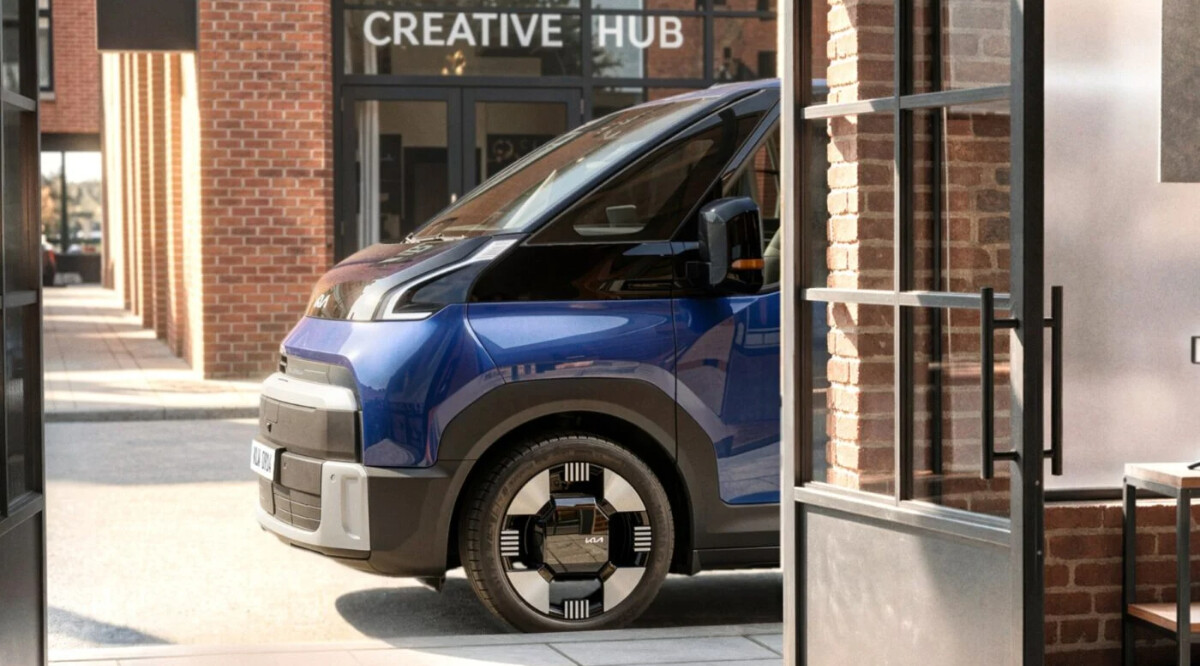
The Kia Besta EV was made for the 1986 Asian Games. Decades later, the brand is back to making EV vans alongside its other models. Kia made its first EV ever 40 years ago by converting a diesel-powered Besta van to electric. The Besta EV was made for the 1986 Asian Games, as a way to keep time for marathon runners without exhaust fumes bothering the competitors. The Besta EV had an estimated 35 kWh battery. Kia has cemented itself as one of the world's premier EV manufacturers. However, although the brand now has a full line of EVs from big to small, this didn't happen in a vacuum, nor was it an overnight development. No, it took time, work, and years of research and learning. This week, Kia itself acknowledged just how far it's come over 40 years of EV development. It's first EV, a converted version of the Kia Besta, mirrors one of its latest EV efforts, the Kia PV5 van. Kia's first EV launched in 1986 and was important for several reasons. It was based on a van called the Besta. This was Kia's first self-developed van, replacing the Mazda-based Bongo van that it was making before. The 1986 Asian Games needed a vehicle that could be used as a timekeeping van for marathon runners. The vehicle would need to be able to keep pace with the marathon and house timekeeping and camera equipment without disturbing the runners with exhaust fumes. Thus, Kia ripped out the 2.0-liter diesel engine from the Besta and replaced it with an electric motor and 35 kWh worth of batteries. Kia Besta 1986 EV The range wasn't great, but it was enough to do the whole 26.1-mile marathon on one charge. Most importantly, Kia says it was South Korea's first-ever EV. The brand would go on to continue developing EVs, with its Pride EV hatchback becoming Korea's first EV certified for commercial sale in 1993, albeit not a full-series production run. This car, which you may have known in gas form as the Ford Festiva, launched with a 17.4 kWh battery and solar panels that Kia said were good for almost ten miles of additional range. Eventually, Kia made its first series production model, the Kia Ray EV, in 2011. Three years later, the Kia Soul EV came to market in 2014, which was the U.S.'s first-ever Kia-made EV. It's very interesting to see just how quickly Kia's EV prowess has grown. There's only a four-year gap between the Kia Soul EV and the Kia Niro EV. Within four years, the Kia Soul EV's 93-mile range jumped to 238 miles for the Kia Niro EV. In a relatively short amount of time, Kia's EVs went from being useful as a second car to having enough range to be a sole vehicle. And it hasn't stopped since then, either. Forty years later, the brand has returned to making EV commercial vehicles. Kia's PV5 is on sale in much of the world (except the U.S. and Canada), mirroring Kia's first EV efforts with its Besta van in 1986. It has a full line of EV models, although we are missing some in the U.S., like the EV2, EV4, and EV5, on offer. There's a reason why so many buyers are choosing Kia EVs; EVs make up 37% of Kia's UK sales. There's a lot to choose from, and they're all strong options.