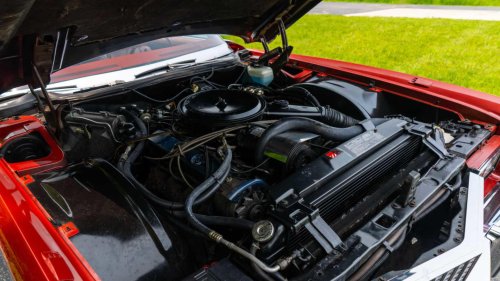
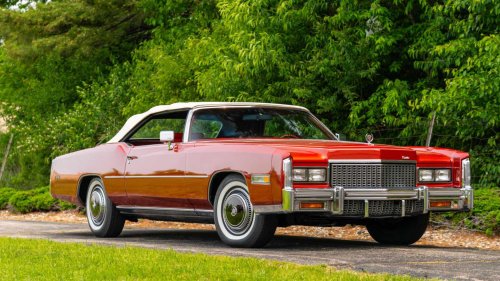
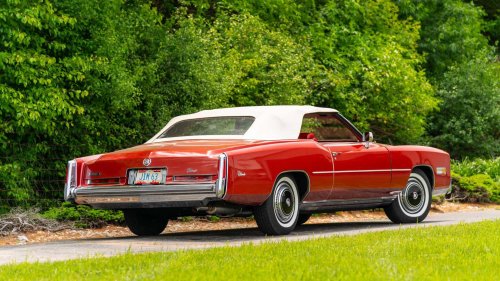
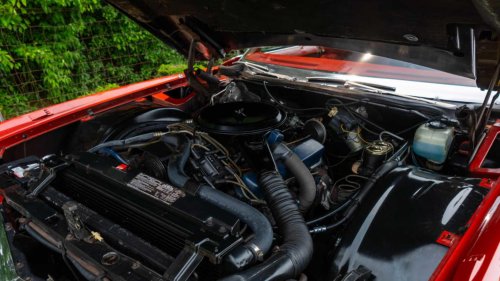
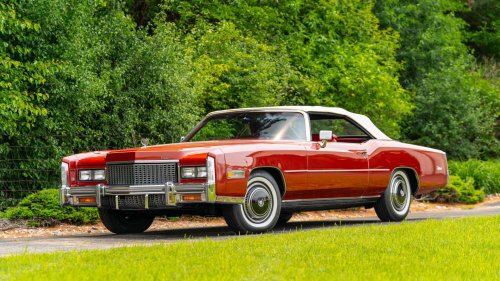
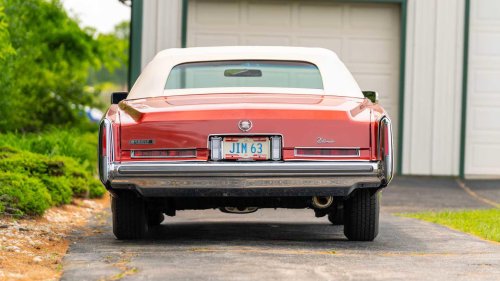
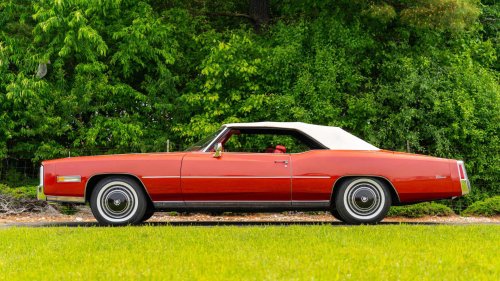
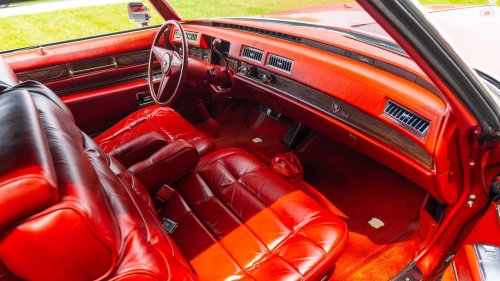


















Cadillac built the largest displacement production V8 in history and deliberately sent all that power to the front wheels. Not to the rear wheels, where every engineer at the time would have put it; the front. That decision is the whole story.It started with 400 horsepower and 550 lb-ft of torque. Six years later, federal emission legislation had bled it down to 190 hp. What Cadillac built worked exactly as intended. What happened next was out of their hands. The Biggest V8 In History Didn't Come From A Muscle Car Mecum Cadillac was the first automaker to mass-produce a V8 engine, and for decades it treated displacement as a competitive advantage rather than an engineering limit. The 500 cubic-inch (8.2-liter) V8 that arrived in 1970 was the logical endpoint of that philosophy, and it remains the largest displacement series production V8 engine ever built.The engine was developed by stretching the existing 472 big-block, pushing the stroke out to 4.304 inches from 4.060 inches to hit the 500ci mark. Bore and stroke both measured 4.30 inches, with a 10.0:1 compression ratio. The result was 400 hp and 550 lb-ft of torque.Muscle car buyers in 1970 were chasing similar numbers in rear-drive Chevelles and GTOs. Cadillac built something bigger, quieter, and aimed it somewhere else entirely. That 550 lb-ft wasn't sports car torque. It was torque engineered to move a 5,000-pound luxury cruiser without the driver breaking a sweat. The Eldorado's Front-Wheel-Drive Gamble Started In 1970 Mecum The 500 V8 launched exclusively in the Cadillac Eldorado—a front-wheel-drive personal luxury coupe riding GM's E-body platform. The Oldsmobile Toronado used that same platform and the same TH-425 transaxle, but it ran its own Oldsmobile engine. Same chassis, different powertrains — a distinction worth stating plainly, because it trips up even knowledgeable readers.The drivetrain layout was unlike anything associated with front-wheel drive today. The V8 sat longitudinally with the torque converter mounted at the rear of the engine, as it would be in a rear-drive car. From there, a chain drove the gearbox, and the output shaft pointed forward to a planetary differential, sending power to the front wheels through CV-jointed half-shafts.It was a purpose-built large-car solution, not an adaptation of small-car thinking. The TH-425 transaxle was a heavy-duty unit developed specifically for this application, first appearing in the 1966 Toronado and carried forward into the 1967 Eldorado. It served both lines through 1978.Mecum Auctions The front suspension used torsion bars. The rear was a non-driven axle with leaf springs. Power steering was tuned deliberately light, which was exactly what Cadillac buyers expected.When the 9th-generation Eldorado arrived for 1971, the formula carried over and grew. The car stretched to 224 inches in length, nearly 19 feet, and weighed close to 5,000 pounds. Putting the massive V8 engine's mass over the driven front axle, with 550 lb-ft of torque going through it, was a real engineering challenge in an era before traction control existed. The torsion-bar suspension and chain-driven transaxle were doing significant work. Cadillac had been selling front-drive to luxury buyers since 1967, though, and by the early 1970s customers had accepted it. Partly because a heavy front-drive car turned out to be more manageable in poor weather than a high-powered rear-drive machine from the same era. Why Cadillac's Answer To Every Problem Was More Cubic Inches Mecum In the early 1970s, the personal luxury coupe market was running on excess. Lincoln was getting larger. Cadillac's answer to every competitive challenge was the same — more displacement, more silence, more weight.The Eldorado was engineered around isolation and directional stability, not driver engagement. The 500's torque made the car feel effortless at low speeds, which was precisely what Cadillac's buyers wanted. The front-drive layout added a practical bonus too. A flat cabin floor, with no driveshaft tunnel interrupting the interior, which Cadillac leaned into as a genuine luxury differentiator.In 1970 and 1971, there were no meaningful emissions guardrails yet. Cadillac had the engineering capability, the platform, and a buyer base that rewarded bigger numbers. Going to 500ci was both the path of least resistance and the best marketing move available. So why didn't they just keep it there? How The Government Took 210 Horsepower Away In Six Years MecumThe 1970 Eldorado ran 0–60 mph in 8.8 seconds and covered the quarter mile in 16.3 seconds. For a car weighing nearly 5,000 pounds, that was genuinely impressive. The 500 V8 was producing 400 hp and 550 lb-ft at that point, and nothing else on the road touched it for displacement.The cuts started immediately. For 1971, the compression ratio dropped from 10.0:1 to 8.5:1 to comply with the incoming federal mandate requiring unleaded fuel. Power fell to 365 hp and 535 lb-ft—a meaningful loss, but the engine still had presence.Then 1972 arrived, and the numbers fell off a cliff, though not entirely for the reasons it looked like. The industry switched from SAE gross to SAE net horsepower ratings, which measured output under real-world conditions rather than optimistic lab settings. The 500 was now rated at 235 hp and 385 lb-ft, and while the new standard exposed how inflated gross figures had always been, actual emissions tuning was tightening at the same time.Mecum By 1974, output was down to 210 hp and 380 lb-ft as federal calibration requirements bit harder. In 1975, the 500 lost its Eldorado exclusivity entirely. It replaced the 472 across Cadillac's full lineup, except the Seville, at the same 210 hp rating. The engine that had been the Eldorado's defining feature was now powering everything.For 1976, the final year, the carbureted 500 produced 190 hp at 3,600 rpm. There was one exception: late 1975 and 1976 cars optioned with electronic fuel injection were rated at 215 hp, a small but real improvement over the carbureted version. Either way, the arc was brutal. 210 hp gone in six years. Why 1976 Is The Year Every Eldorado Collector Needs MecumCadillac built 14,000 Eldorado Convertibles for the 1976 model year and marketed the car as the last American-built convertible. That claim became the centerpiece of its collector identity, and it held, at least until Chrysler revived the format in 1982. Within that 1976 run, the final 200 Bicentennial edition cars are the most recognized sub-series, finished in a distinctive specification to mark the occasion.For 1977, the 500 was replaced in the Eldorado by a 425 V8. The biggest production V8 in history was gone from the car it was built for, quietly retired after six years of legislative attrition.Mecum If you're buying, the choice depends on what you're after. The 1970 or 1971 coupe is the right target if power is the priority. Those are the years closest to the engine's original tune, before the compression cuts and emissions calibration did their worst. On Classic.com, the 9th-generation Eldorado averages $26,440, with sales ranging from $2,727 at the low end to $143,000 at the top. The spread reflects condition variance as much as anything, but convertibles and Bicentennial cars carry a consistent premium.If you want the most story, the last of the big convertibles, the last 500, the Bicentennial badge, 1976 is the one to find.Cadillac took the largest V8 ever put in a production car and routed it through the front wheels at a time when nobody else would have tried it. The engineering held up. What brought it down wasn't a flaw in the concept. It was six years of federal emissions legislation doing exactly what it was designed to do.Sources: Corvette Forum, Classic, Hagerty