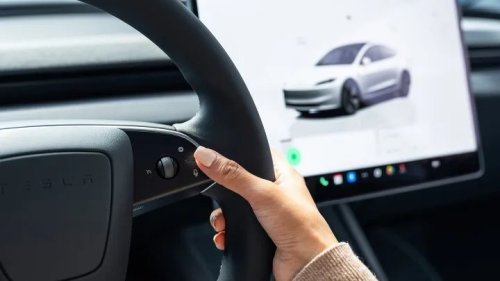
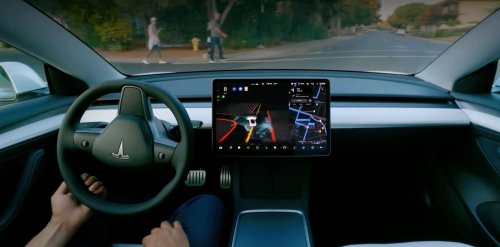
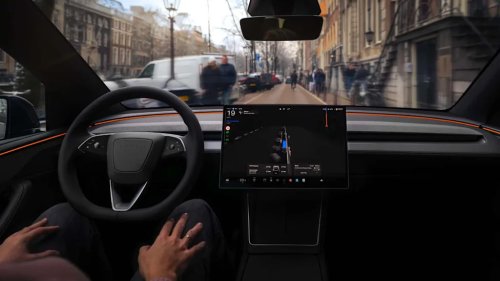
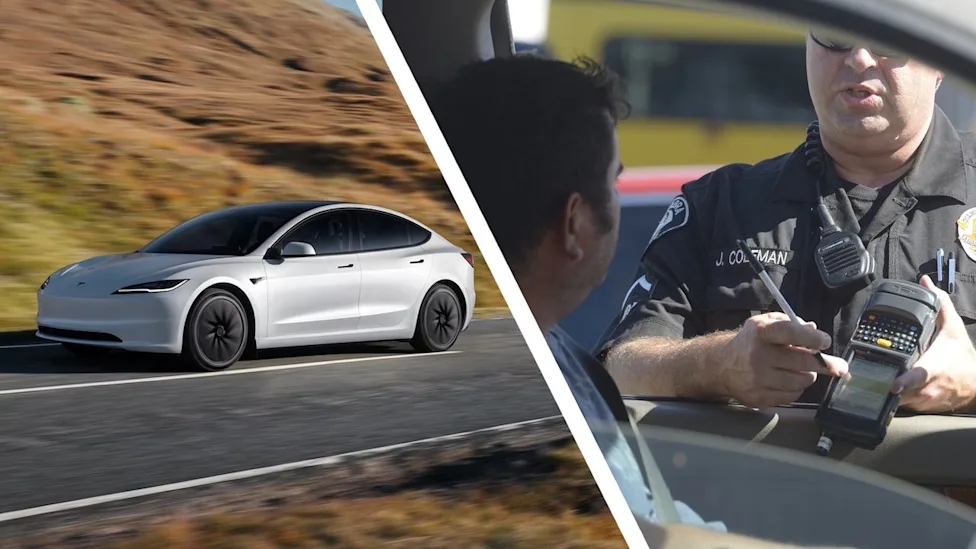
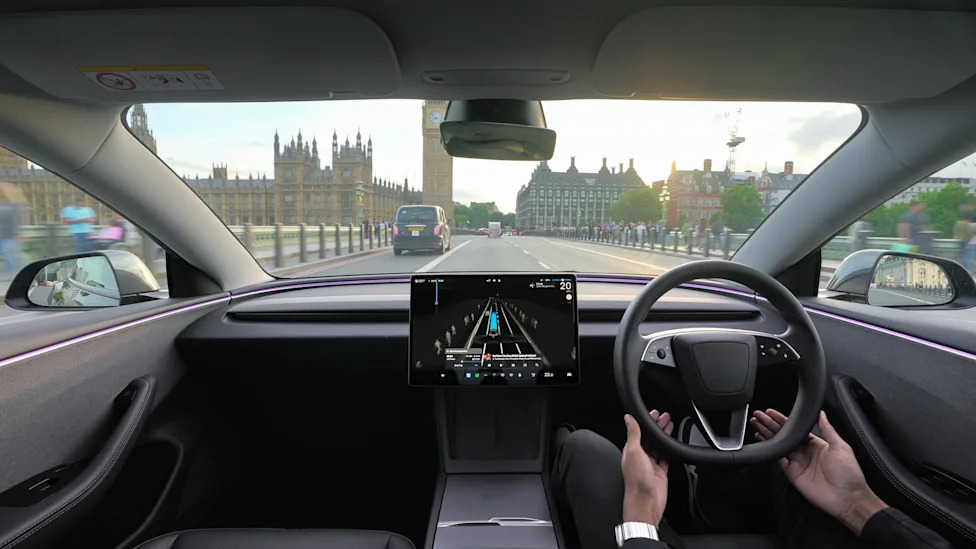
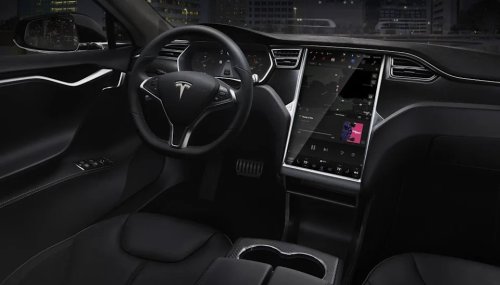
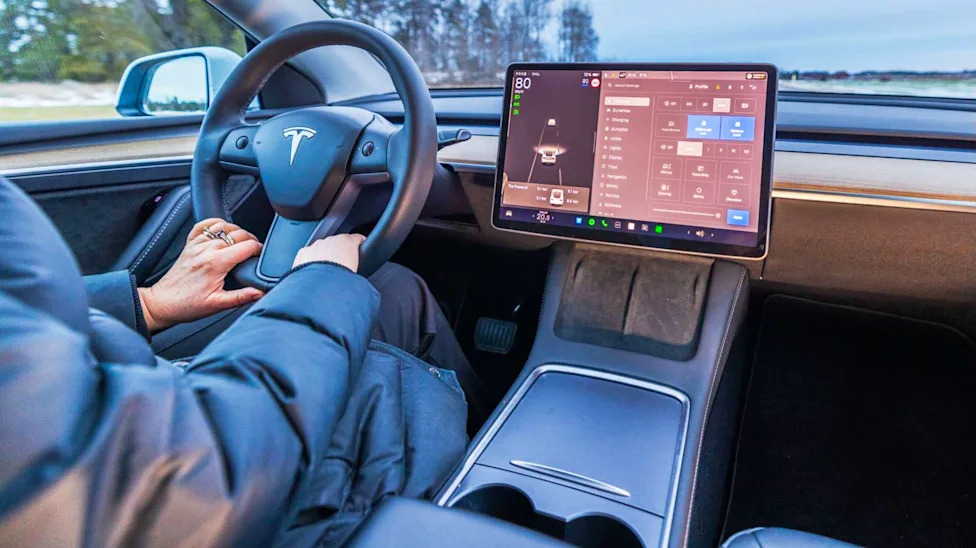
When you buy through links on our articles, Future and its syndication partners may earn a commission.Credit: Getty Images / MediaNews Group / Orange County Register / TeslaA police officer pulled a Tesla over for traveling 64mph in a 45 mph zoneThe owner attempted to plead innocence as Full Self-Driving was runningPolice issued a very blunt responseVideo footage has surfaced online that shows a police department in Parker, Colorado, reportedly pulling over a Tesla for traveling 64mph in a 45mph zone.AdvertisementAdvertisementWhile this isn't unusual in itself, the plea from the Tesla's driver is, as the excuse was that they weren't in control at the time. "I wasn't driving. I had Autopilot on," came the plea.The three-minute video was released by the police, alongside a blunt reply (or perhaps a warning to other drivers?) that read: "Driver assistance technology does not replace the driver.""Whether your vehicle has adaptive cruise control, lane centering or full self-driving, you are still legally responsible for operating your vehicle safely," the response added.Despite the driver being clocked at 64mph in a 45mph zone, the Tesla owner belligerently claims they weren't in control, it wasn't their fault and that the self-driving system was activated.AdvertisementAdvertisementThe police officer then says: "I don't know how these systems work, but you're not the first person I have stopped with Autopilot activated."In fact, one of Electrek's own writers documented the moment he got a speeding ticket while using Tesla's Full Self-Driving.Despite setting the system to Standard mode — as opposed to the faster Hurry or Mad Max settings — the vehicle still crept up to 78km/h in a 50km/h zone.Analysis: Bad by designCredit: TeslaTesla's Autopilot and Full Self-Driving systems are designed to assist the person behind the wheel, rather than completely replace them, no matter what Elon Musk espouses in his various public statements.AdvertisementAdvertisementCurrently, the law states that the buck stops with the driver, and any reckless driving, speeding or accident ultimately remains the driver's fault, as they need to be ready to take control if and when these systems fail.However, Tesla makes things difficult, as it has designed FSD to drift over the limit, even in Standard mode, and also took away the adjustable speed offset that once allowed owners to cap how far over the limit the vehicle would creep in autonomous modes.Electrek reports that the adjustable speed offset was recently removed in FSD v14 and replaced with fixed driving profiles.It is easy to see why Tesla has trained its systems this way, as many drivers get frustrated when technology vehemently adheres to speed limits and subsequently fails to keep up with traffic.AdvertisementAdvertisementBut with many other semi-autonomous cruise-control technologies, the driver has complete control over the speeds at which they are happy to creep over the limit.If Tesla's driving assistance systems keep landing drivers in hot water, many will stop using them entirely, which is exactly the opposite of what the company wants.After all, Elon Musk has long promised that drivers will soon be able to text and immerse themselves in all manner of side tasks in the very near future.But right now, it feels like Tesla owners need to be more alert than ever.














 +31 others


![Tesla, Battery, Not sold on Tesla Powerwall? There are great battery alternatives out there [update]](https://cdn.topcarnews.net/thumb/id/aHR0cHM6Ly9pMC53cC5jb20vZWxlY3Ry-ZWsuY28vd3AtY29udGVudC91cGxvYWRz-L3NpdGVzLzMvMjAyNi8wNy9ob21lLXNv-bGFyLWJhdHRlcnkucG5nP3c9MTUwMCZh-bXA7cXVhbGl0eT04MiZhbXA7c3RyaXA9-YWxsJmFtcDtzc2w9MQ/18e81f395a77dbb42269ab5e106fea41.png?t=20261009&post_id=68280)
![Tesla, Battery, Not sold on Tesla Powerwall? There are great battery alternatives out there [update]](https://cdn.topcarnews.net/thumb/id/aHR0cHM6Ly9lbGVjdHJlay5jby93cC1j-b250ZW50L3VwbG9hZHMvc2l0ZXMvMy8y-MDI2LzA4L3NvbGl4LXgxLWNvcHkuanBn/a9fe4985234387a08124ce5984c09772.jpg?t=20261009&post_id=68280)
![Tesla, Battery, Not sold on Tesla Powerwall? There are great battery alternatives out there [update]](https://cdn.topcarnews.net/thumb/id/aHR0cHM6Ly9lbGVjdHJlay5jby93cC1j-b250ZW50L3VwbG9hZHMvc2l0ZXMvMy8y-MDI2LzA4L2JsdWV0dGlfRVA4MDAtY29w-eS5qcGc/2d9344a919e78ef6ada1803d9a030ce2.jpg?t=20261009&post_id=68280)
![Tesla, Battery, Not sold on Tesla Powerwall? There are great battery alternatives out there [update]](https://cdn.topcarnews.net/thumb/id/aHR0cHM6Ly9lbGVjdHJlay5jby93cC1j-b250ZW50L3VwbG9hZHMvc2l0ZXMvMy8y-MDI2LzA4L0Vjb0Zsb3ctREVMVEEtUHJv-LVVsdHJhLmpwZw/eff5ecb316465dcf28dd74e9eb1b324c.jpg?t=20261009&post_id=68280)
![Tesla, Battery, Not sold on Tesla Powerwall? There are great battery alternatives out there [update]](https://cdn.topcarnews.net/thumb/id/aHR0cHM6Ly9lbGVjdHJlay5jby93cC1j-b250ZW50L3VwbG9hZHMvc2l0ZXMvMy8y-MDI1LzEwL2dhcmFnZV9iYXR0ZXJ5XzVf-c3lzdGVtX2NvbnRyb2xsZXJfM19VUy0x-LmpwZw/116b4706c7e7c77633518a677e92bdc3.jpg?t=20261009&post_id=68280)
![Tesla, Battery, Not sold on Tesla Powerwall? There are great battery alternatives out there [update]](https://cdn.topcarnews.net/thumb/id/aHR0cHM6Ly9lbGVjdHJlay5jby93cC1j-b250ZW50L3VwbG9hZHMvc2l0ZXMvMy8y-MDI2LzAyL2dtLWVuZXJneS0xLTUud2Vi-cA/f6c358bbb69cf5917e5d0d7d5cb1c03d.webp?t=20261009&post_id=68280)