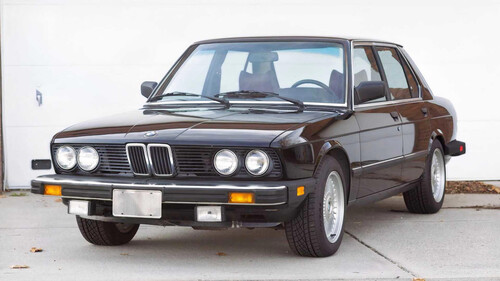
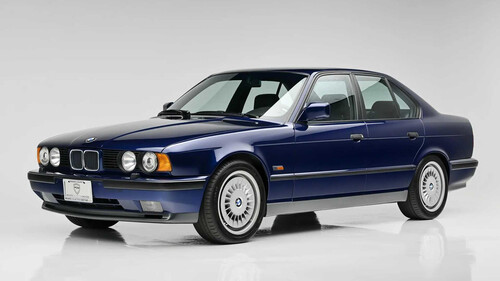
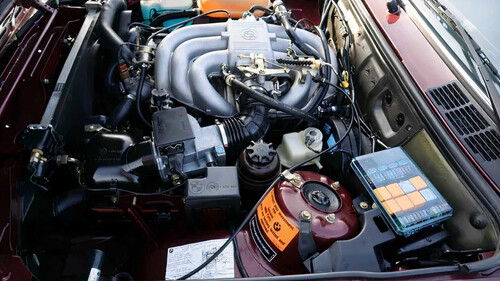
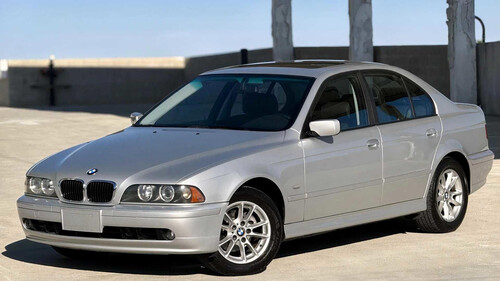
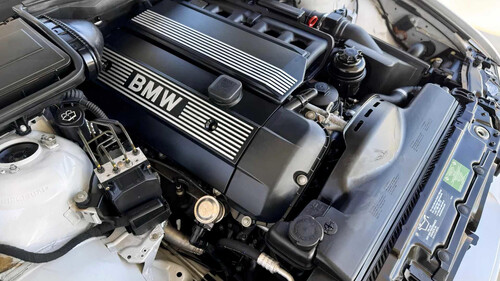
I Finally Drove The E39 BMW 5 Series And It Lived Up To The HypeAutoblogKarl FurlongSun, September 27, 2026 at 3:00 PM UTCAdd us on GoogleAutoblog and Yahoo may earn commission from links in this article.I started my motoring magazine collection early in 2001, right around the time BMW was at its best. The elegant E38 7 Series was still on sale and the sporty E46 3 Series was on its way to becoming the best-selling BMW of all time. Between these two sedans was the midsize 5 Series, in its fourth generation at the time. Codenamed E39, it is considered by many to be the single best car ever produced by BMW, and quickly became one of my personal hero cars. If there was a comparison test involving executive sedans, the E39 came out on top more often than not.Well over two decades later, I finally had the chance to drive not one, but two E39s within the space of a few weeks. Both were 528i derivatives—one manual, one automatic—and in immaculate condition considering their age. My time behind the wheel not only lived up to my considerable expectations, but demonstrated the enduring appeal of the E39.The E39 BMW 5 Series: A Brief History1997 BMW 5 SeriesBMWThe fourth-generation 5 Series was launched in the U.S. for the 1997 model year, replacing the E34 and arriving initially in six-cylinder 528i and V8 540i variants. Eventually available as a wagon and in high-performance M5 guise (which had a 4.9-liter V8), the 528i fell away from the 2001 model year, when new 525i and 530i variants were introduced. In other markets, the E39 was also available in 520i and 523i flavors, although these were not considered powerful enough for U.S. market tastes. There was also a range of diesels. Rear-wheel drive was standard across the lineup and manual transmissions were widely available.AdvertisementAdvertisementThe E39 was a significant step up from the E34. It was the first 5 Series to use aluminum components for many of its chassis components. Its ride and handling balance were considered class-leading, it was quieter (double glazed side windows were available), and build quality was much improved over the E34.The winner of numerous industry awards, Consumer Reports declared the 530i to be the best car it had ever reviewed in 2001.Stepping Into The E39 In 20261998 BMW 528iCars & BidsView the 4 images of this gallery on the original articleSliding behind the wheel of an E39 BMW 5 Series is like stepping back in time, but in all the right ways. The contrasts between this and a 2026 BMW are in everything you see, touch, and even smell. Take the steering wheel's diameter, for instance, which is oddly large by modern standards. There's also the strangely thin steering wheel rim; modern BMWs have distinctly chunky steering wheels, seemingly designed for an NBA athlete's hands; perhaps it's a microcosm of how many more layers of isolation exist between car and driver in a modern BMW.AdvertisementAdvertisementThe 528i draws its interior charm from understated wood inlays rather than jazzy ambient lighting. The gauge cluster features instrument dials that are rounded and analog, not haphazard digital bars that would be better off in a SpaceX rocket. Not everything was perfect in the late 1990s, though: The cupholders are useless and the rearview mirrors far too small for such a large car. You'll also have to rely on compact discs to listen to your music of choice, and the CD changer is in the trunk. Initial E39s had a standard cassette player.1999 BMW 528iBring A TrailerCabin quality is close to faultless. The leather-upholstered seats are a lot more plush than even those in an E46 3 Series. And it's the real deal, not the SensaTec/Sensafin/Veganza faux leather options that have gradually made their way into new BMWs. The door cards are beautiful, with pillowy-soft inserts, and closing those doors delivers a satisfying yet distant thud; it sounds like you're listening to the doors close through noise-canceling headphones.Even close to 30 years later, the E39's interior has aged beautifully and it's little surprise that this is considered the peak of BMW cabin design.Driving The E39 BMW 528i1999 BMW 528iBring A TrailerI set off in the 528i with the five-speed manual gearbox first. This was a 1998 model and equipped with the 2.8-liter M52 naturally aspirated six-cylinder engine. One of BMW's smoothest Sixes, the 1998 model produces 190 horsepower and 206 lb-ft of torque, but its strengths do not lie in outrageous outputs.AdvertisementAdvertisementThe mechanical, firm shifts of the manual gearbox stood out first. The satisfying shifter immediately lends the car a strong sense of tactility that would be missing in a modern 5 Series. The clutch was easy to modulate but the throttle required a firm press to get the revs up. The M52 is everything you'd expect from a BMW N/A six-pot: creamily smooth, eager to rev, and practically inaudible at a cruise.It lacks the low-down punch of a modern turbocharged car, but you are handsomely rewarded each time you extend the mill beyond 3,000 rpm. Inline-six engines are known for their perfect balance, with the number and layout of the cylinders canceling out primary and secondary forces. If any engine needs its red line marker, it's this one; there's none of the coarseness—sonically or through the major controls—you'd experience in a turbo-four or even a V6 as the revs rise.1999 BMW 528iBring A TrailerThe steering isn't particularly light at lower speeds, nor is it as direct as in the average current BMW, but the hydraulically-assisted, rack-and-pinion setup delivers the feedback that was lauded in BMWs from this era. At higher speeds, the car feels remarkably stable and planted. And, even compared to this car's immediate successor—the E60 5 Series—the E39 still feels surprisingly compact.The 528i automatic I drove was a 1999 model that had covered around 108,000 miles. It had a slightly more powerful 193-hp version of the M52. Despite that, it felt a lot lazier than the manual version, with the automatic transmission significantly hampering the engine's performance. I drove a five-speed automatic version—this differed from U.S.-spec 528i models for 1999, which still had a four-speed auto. Still, the car felt livelier once up to speed and gearshifts were silky smooth. Personally, I enjoy many older automatics, as they don't have to go hunting through a dizzying number of gears to keep the engine operating in its most efficient and performance-optimized range. There's also a clearer sense of what gear you're in at any given moment.AdvertisementAdvertisementBoth E39s rode beautifully. The suspension lets you know you've hit a bump or encountered an undulation, but it all feels tightly controlled and cushioned enough never to disrupt the calm in the cabin. The 16-inch alloys (on the models I drove) with generous sidewalls help, and the E39 was mercifully launched before wobbly RunFlats were introduced by BMW.All in all, this is a car I could easily drive ever day in 2026. It's cosseting when you want it to be, entertaining when you're willing to put in some effort, and completely devoid of gimmicky interfaces, lane-keeping warning buzzes, and other distractions—the E39 simply allows you to get on with the job of driving, and deeply immerses its driver in that process.Related: This 1996 BMW Just Proved Toyota Isn't the Only Brand That Lasts ForeverOne Last Thing… Just Look At It1999 BMW 528iBring A TrailerView the 3 images of this gallery on the original articleAdvertisementAdvertisementMaybe it's the fact that I'm looking at it through rose-tinted glasses, bearing in mind that the E39 graced the covers of so many of the first motoring magazines I ever read. Or maybe I have a nostalgic longing for restrained automotive design, where something as simple as a fog light surround didn't look like the body part of a Decepticon from one of the Transformers movies.The E39's graceful lines are fully in keeping with the general driving experience; not a single detail appears superfluous or out of place, which can't be said about the latest 5 Series. There's the classic long hood and short rear deck, and the sedan's entire form is cleaner and softer than the E34. Even this pre-facelift model—introduced before the LCI variant with its characteristic "angel eyes"—still looks good. It also comes from an era when not eight out of every 10 BMW models leaving the factory were draped in M badges. It's a classic luxury sedan and wears that badge with a quiet confidence.Related: Junkyard Gem: 1998 BMW 528iFinal Thoughts1999 BMW 528iCars & BidsI have little doubt that a brand-new BMW 5 Series will make the E39 feel sluggish, sparsely equipped, and outdated. But it's precisely what's missing from the E39 that makes it especially endearing in 2026. Driving this car felt like the automotive equivalent of a digital detox. There's nothing to detract from the driving experience: No touchscreen that must be tapped, personalized profile that must be signed into, or auto stop/start system that must be angrily turned off. By including only that which is essential to the driving experience, the E39—even in "humble" 528i form—does a better job than many modern Bimmers of living up to its maker's 'Ultimate Driving Machine' maxim.Related: The 7 Best BMW Models of the 21st CenturyThis story was originally published by Autoblog on Sep 27, 2026, where it first appeared in the Features section. Add Autoblog as a Preferred Source by clicking here.