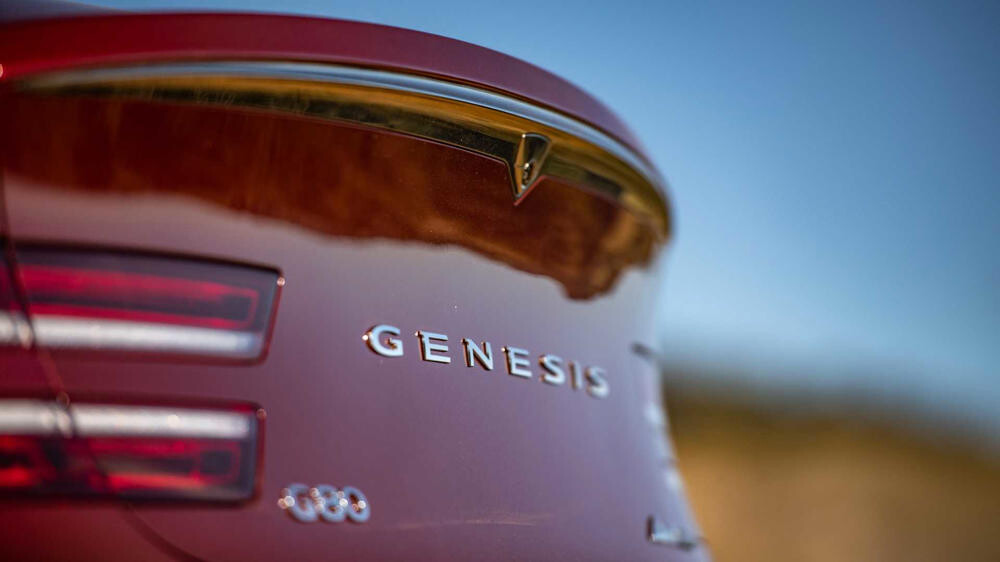
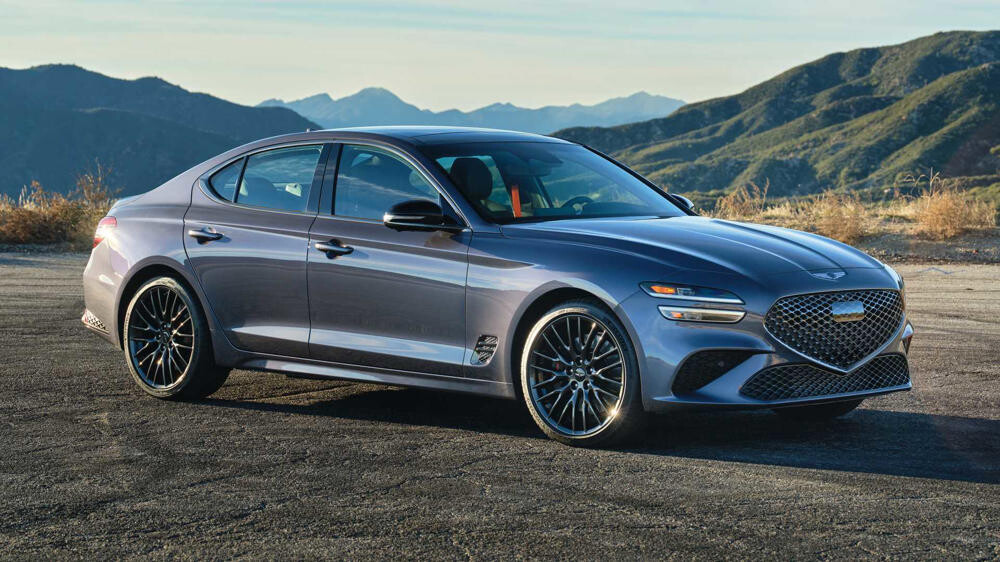
If you've ever settled into a top-spec Hyundai or Kia and quietly thought, "This feels like it should cost twice as much" — you're not imagining things, and the data is finally catching up to the feeling. A growing body of owner-satisfaction research confirms what sharp-eyed cross-shoppers have suspected for years: Korean automakers are no longer just nipping at the heels of the luxury establishment. In several measurable ways, they've already pulled ahead of some premium brands that charge a significant premium for the privilege of their badge. Smart Shoppers Are Choosing Korean Naturally, this takes you to one of about two solutions: the Hyundai Palisade or Kia Telluride. More than any other, these machines are proving to be financial power moves leveraged by the smartest shoppers who know that skipping a luxury-branded model no longer entails sacrificing any of the good stuff, and there's lots of data to prove it. In fact, the luxury SUV business is being challenged today, and the key contenders are Korean. Years back, savvy shoppers started picking up on it, monitoring Kia, Hyundai, and Genesis's headline trajectories as the trio climbed charts for sales, satisfaction, dependability, and the like. A decade ago, this trend was beginning to question the need to spend six figures on a luxury SUV for many shoppers. Today, the latest generation of Korean vehicles is challenging the luxury SUV business model more aggressively than ever. The result? Premium brands once held a comfortable lead over mass-market models in the annual J.D. Power APEAL study, but that's no longer the case as the industry closes the gap, with the Koreans leading the charge. The APEAL study ranks brands by owner-reported scoring data around how satisfying a new vehicle is to own. It focuses on elements like design, performance, comfort, and the technology experience. In simple terms, vehicles with higher scores do a better job of delighting their owners during the first 90 days of ownership, making the highest-scoring models feel most worth the money. More mass-market models are appearing with higher and higher scores because mass-market manufacturers have quietly closed the gap, and Hyundai, Kia, and Genesis are now delivering cabins, interfaces, and refinement levels once reserved for big-dollar flagship models priced out of reach of most buyers. Lowering the cost of entry to a world-class luxury experience seems to be working, as the Korean group recently posted a record first-half performance in the US market. APEAL: The Satisfaction Gap Is Closing Fast The latest five years of J.D. Power APEAL data reveal an accelerating trend: mass-market brands are rapidly closing the satisfaction gap with luxury manufacturers, and in several cases, luxury brands are already losing ground. Hyundai and Kia are the clearest examples of this shift. Across five model years, Hyundai ranges from 844 to 858 and Kia from 845 to 857, producing two of the most consistent scoring bands in the entire mass-market category. That consistency translates into confidence for shoppers, who know exactly what they're getting year after year, even as major models transition from one generation to the next. If you like specifics, consider the following: in the most recent study year, Hyundai's 858 sits just 12 points behind Lexus (870) and 18 points behind Mercedes-Benz (876). Kia's 857 trails Volvo (863) by only six points. Hyundai and Kia outright outperform several premium brands in individual years as well: Audi, Acura, and Infiniti all fall below Hyundai and Kia's top scores. Genesis reinforces the trio's momentum on the premium side. With APEAL scores ranging from 869 to 886 in our data set, Genesis consistently ranks among the highest-scoring luxury brands, outperforming Mercedes-Benz, Lexus, Audi, Volvo, Acura, and Infiniti across multiple years. Only Porsche and Land Rover maintain a clear lead. Genesis isn't catching up; it's already locked into the top end of the luxury satisfaction spectrum. Five Key Lessons Learned From 30 Years of APEAL Data, According to J.D. Power Larger, Luxury Vehicles Are More Appealing: In general, larger and more expensive vehicles achieve higher APEAL scores than smaller and less expensive vehicles. However, over the 30-year history of the study, we have tracked the narrowing gap between luxury and mass market brands. In 2019, that gap hit an all-time low. The average APEAL score for premium brands was 853 points, compared with 818 for mass-market brands. In the latest results, the gap narrowed even further, with premium brands scoring 884 and mass market brands scoring 855. Infotainment Systems Are Consistently Detrimental to APEAL: Infotainment systems are one key area where automakers appear to be out of tune with the needs and desires of consumers. Automakers keep pouring additional features into their vehicle infotainment systems, but owners are not responding well. In 2024, 25% of owners said that switching between audio sources contributed to a poor experience and 23% complained about a difficult menu structure. Appealing Vehicles Overcome Problems in the Minds of Owners: New vehicles that create joy for their owners often overcome any negatives caused by problems they experience. Understanding what makes owners respond well to the design and performance of their vehicle is just as valuable to automakers as being aware of quality issues. Fuel Prices Are Strongly Correlated With APEAL Scores: Fuel prices and vehicle fuel economy have a lot to do with APEAL scores, and over the past several years we've watched BEVs become a satisfying alternative to new-vehicle owners. In 2024, emotional satisfaction was highest among owners of non-Tesla BEVs compared to all fuel types. Appealing Vehicles Retain Their Value: Vehicles with a higher APEAL performance retain their value at a greater rate than do those with lower APEAL performance. As of the latest results, the Net Promoter Score is 38 points higher when APEAL is above average, meaning owners are more likely to promote their vehicle and recommend it to friends and family, further illustrating the long-term marketplace effect of a highly appealing vehicle. Other mass-market brands are illustrating the shrinking gap, too. Across our data, Buick (840–848) sits closer to Lexus and Mercedes-Benz than several premium competitors. Mazda (828–839) tracks near Acura and Audi, often within 10–15 points. Volkswagen (827–851) trails BMW and Volvo by modest margins, especially in its strongest years. In APEAL scoring, the traditional 'luxury on top, mass-market far below' hierarchy has been compressed into a much narrower band where top levels of refinement, comfort, and technology are no longer premium-brand exclusives. Hybrid adoption is also playing a role. Hyundai, Kia, and Genesis have accelerated the rollout of hybrid and next-generation hybrid powertrains, which directly improve APEAL scoring by enhancing smoothness, quietness, and interface sophistication — all of which drive owner satisfaction. Layer on strong performance across VDS, IQS, and TXI studies, and Hyundai Motor Group's brands build a reputation for dependable, trustworthy technology that reinforces high APEAL results. Here's a little more context for those who want the full picture: a look at the five-year APEAL rankings also shows which brands most frequently appear at the very top and very bottom of the satisfaction spectrum. Top satisfaction performers include Mini, Dodge, and Ram, while Chrysler is the most common bottom-five occupant in our data, alongside frequent flyers Mitsubishi and Jeep. The takeaway? As some mass-market brands struggle to maintain satisfaction, our Korean trio consistently avoids the bottom and is increasingly challenging the top. Next-Generation Manufacturing Muscle Is Playing A Role What makes this moment different is the underlying cause: major headlines recap the APEAL winners and losers, but we can dig a little deeper into the trend for the benefit of savvy readers. As Hyundai and Kia go all in on AI-driven robotics and next-generation automation to reduce manufacturing costs, those savings can translate into more satisfying vehicles at progressively lower price points. Hyundai Motor Group has invested heavily in AI-driven robotics and next-generation manufacturing automation — using factory-level innovations to cut costs, boost flexibility, and free up bandwidth to push content levels even higher. Together with its subsidiary Boston Dynamics and as reported by the Atlanta Journal-Constitution, Hyundai has ambitious plans to bring an AI and robotics strategy to its production lines. The BBC reported that new Atlas robots will be integrated across Hyundai's global network beginning in 2028. As reported by the Korea Herald, Hyundai has already incorporated "software-defined" factories into its global manufacturing efforts, with a continued rollout aiming to reduce manufacturing costs by a third. This manufacturing advantage should help continue to drive owner satisfaction scores that rival or surpass those of traditional luxury brands. There's also a longstanding advantage almost no other automaker can match: Hyundai still forges its own steel, which helps avoid pricing volatility, stabilize costs, and support an entire manufacturing ecosystem built around cost efficiency. Lower production costs don't just improve margins; they allow the automaker to deliver vehicles that resonate more strongly than ever with shoppers who can see the big picture. How To Use This Information To Your Advantage While this information illustrates how the Korean brands are catching up to — and in some cases surpassing — luxury rivals across key metrics, buyers can put this data to work when making smart purchasing decisions in the following ways: Smart Cross-Shopping: Test drive Kia and Hyundai vehicles back-to-back with a German alternative - and choose top-spec flagship models to get first-hand experience of what that luxury looks like Test Time: Test features in the vehicles you test drive, especially infotainment systems and native software as JD Power highlights the frustration of luxury car owners with these systems. Factor In Real Ownership Costs: Do your homework to ensure you understand financing, maintenance, and insurance costs for all the brands you cross-shop so that your money goes furthest.

 Liked by Adam Carter, Sophie Turner



















 Liked by Adam Carter, Sophie Turner


