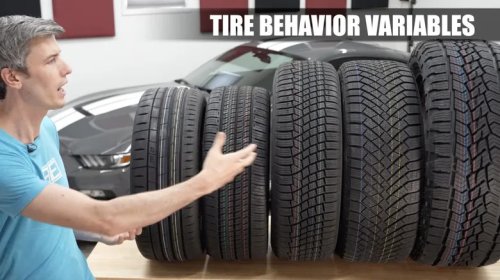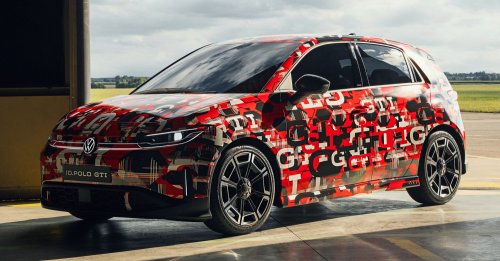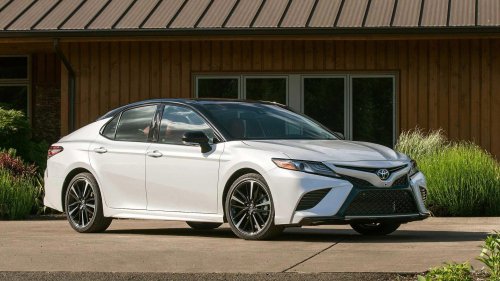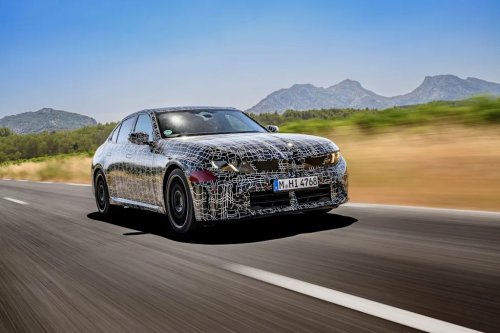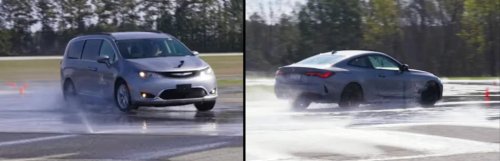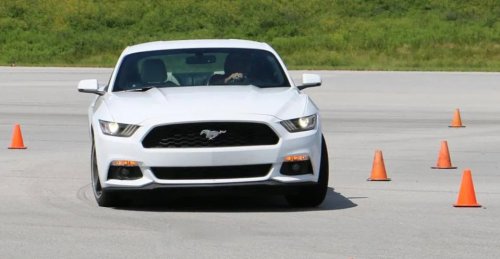
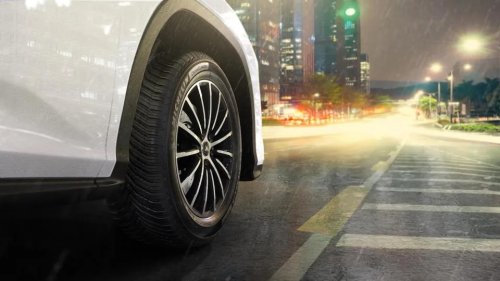
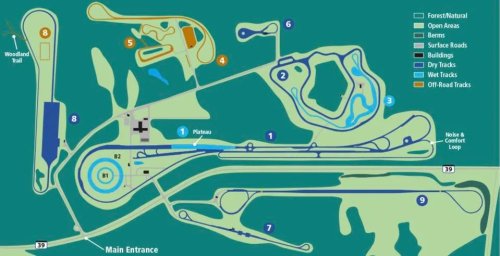




















How High Performance Testing Builds Premium Tires For The Average CarForbesScotty Reiss, ContributorUpdatedSat, September 19, 2026 at 2:24 PM UTCAdd us on GoogleA Ford Mustang on the test track at Michelin's Laurens Proving Grounds in South CarolinaMichelinDeep in the piney South Carolina woods, an hour from the nearest interstate highway and past farms and fields, a camouflaged SUV pulls into an oversized garage and parks. Technicians rush to its four corners to inspect it as a camouflaged sedan flicks on its lights and leaves the garage, easing onto a high-speed track at Michelin's Laurens Proving Grounds.The scene is a common one that plays out on the site's 3,300 acres of tracks and test grounds, and it's the fundamental element to Michelin's dominance of the tire market, not simply because the company pairs with carmakers on their tires, but because this is where the company tests and refines its products."Car manufacturer partners and OEMs are coming here to this facility to test the specific tire line that we develop for their cars, but we're also testing some of our tire lines ourselves," said Omer Waysman, vice president, business-to-consumer marketing, Michelin. "And the objective is to combine the best performance from the car with the best performance from the tire."AdvertisementAdvertisementProbably more astounding, though, is that even though Michelin is the maker of a premium product, it can accommodate nearly every car and truck on the road, allowing consumers to safely and to comfortably get where they need to go.Consumer Confidence Starts With Carmaker PartnershipsWhen a car buyer hops into a new car for a test drive the last thing they might think about is what went into the tires they're riding on. But there's a lot: carmakers work with their tire suppliers to fine tune the compounds and components so that each vehicle handles as it's intended to, that it attains optimal fuel economy and that it doesn't add noise or discomfort to the ride.This process is one that tire makers like Michelin are heavily invested in, providing not just access to its test facilities, but engineers and experts to assist carmakers in reaching their goals.The result of the relationship goes beyond simply supplying new tires to carmakers, however. It translates to a longer-term relationship with car owners to provide replacement tires once the original tires are worn. As a car ages and as drivers face a wide variety of driving conditions, from rain and snow to mud, gravel and pockmarked pavement, tire makers are missioned with ensuring that their products continue to deliver the optimal experience. It's actually quite surprising to think that a single type of tire, such as an all-season tire designed for most conditions, is expected to perform flawlessly on all types of cars, from Chevrolet Suburbans to Ford Bronco Sports to Toyota Camrys. This is how Michelin makes it happen.The Michelin CrossClimate 2 tire is designed for all types of weather, even snowWhat Goes Into A TireIt may not look like it on first glance, but tires have evolved quite a bit in the past couple of decades. Tire makers like Michelin are developing advanced synthetic compounds that, when paired with internal structures like steel wire, polyester cords and new more resilient tread patterns, add up to longer-wearing, better performing tires.AdvertisementAdvertisementSome of Michelin's best-selling tires, such as the Defender 2, carry a warranty of 80,000 miles and are expected to last nearly that long, though as a caution, most tires should be replaced after five years and should regularly checked for wear, cracking, dry rot or flat spots that signal the tire is no longer safe and needs to be replaced.But to make the most of these new structures and recipes, and with the goal of extending the life of the tire, the focus on testing is paramount.The test tracks at Michelin's Laurens Proving GroundsTesting For All ConditionsMichelin's proving ground in Laurens, South Carolina encompasses 12 tracks and more than 10 miles of roadway for testing. Each track is designed for a specific purpose to allow engineers to refine a tire's performance in designated conditions.We went out on four of these tracks with Derek Secord, senior subjective test driver at Michelin, on a wet skid track designed for hydroplaning, a wet handling track, a high-speed road course and an off-road trail to feel the performance of different types of tires. The facility also includes a longer track to test road noise and comfort, wet and dry skid pads, wet and dry braking courses and a heavy truck test track.AdvertisementAdvertisementWith each test run we were able to experience the difference between high-quality and low quality tires; why new tires should go on a car's rear tires first, how performance tires enhance a highly-tuned sports car and the balance between performance and comfort on a bumpy dirt trail.Two of the vehicles used for testing at Michelin's Laurens Proving GroundsThe Ultimate Test: Performance On The Track And TrailWhile daily-driving tires built for the most commonly sold cars and SUVs, such as the Toyota Camry or the Hyundai Tucson, is Michelin's bread and butter, that knowledge is based in what is learned in developing tires for high-performance vehicles such as the Corvette C8 and BMW M3. Here, Michelin has to pair the expectations of the car's engineers with their most advanced knowledge and techniques.The goal is often to balance the sport-performance requirements with on-road requirements: Tires that are comfortable, quiet and safe, but also deliver a grippy, masterful experience when the driver demands it. Performance car tires are expected to grip the pavement even in tight turns at high speeds, a situation in which most other tires lose traction.The same is true on the off-road trail. Our test ride took us on a two-mile loop, starting with a stretch of pavement that let us hit speeds of up to 50 miles per hour. Then, we turned onto a muddy, gravely trail of humps, bumps, creeks and hills. The Ford Bronco Raptor, equipped with BFGoodrich All Terrain T/A KO which are also made by Michelin, kept up easily even at high speeds; it was a bit more challenging for the three passengers holding on tight in the Bronco.AdvertisementAdvertisementOnce we got to the end of the trail and slowed to a more normal driving speed to go back to our base, the Bronco assumed a new personality: Calm, comfortable daily driver.And that's really the goal, with both the off-road tires as well as the performance tires, all-season tires and all-weather tires: To leave driver and passengers feeling comfortable and secure as they get where they need to go.This article was originally published on Forbes.com