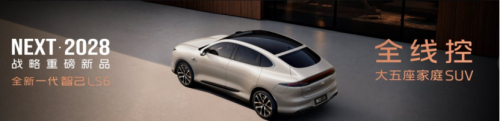
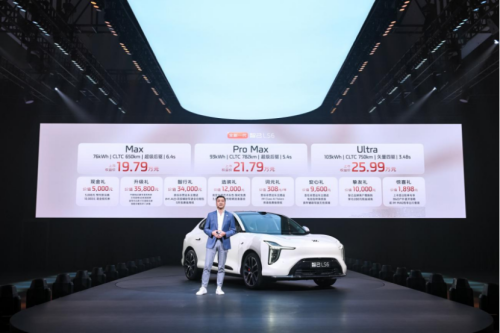
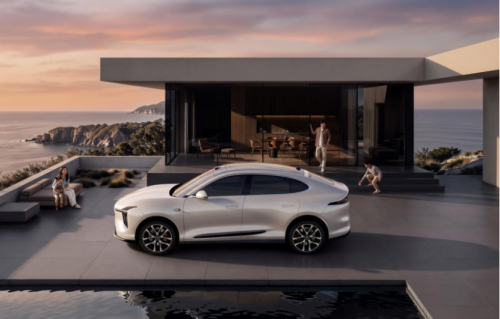
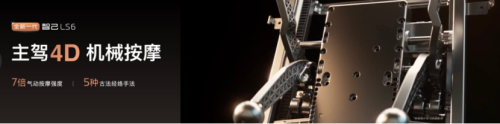
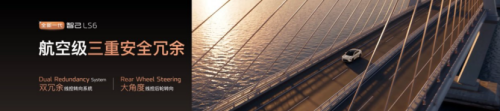
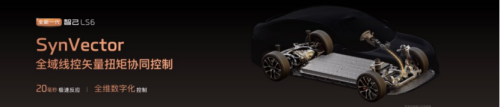
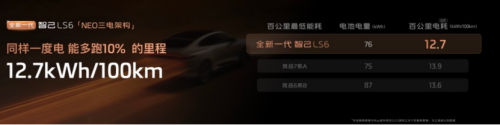
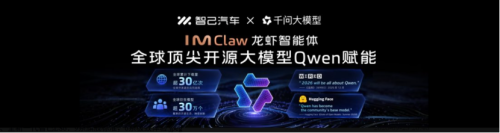
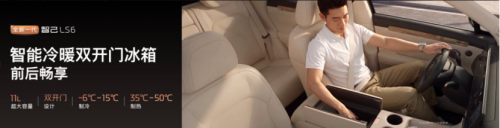
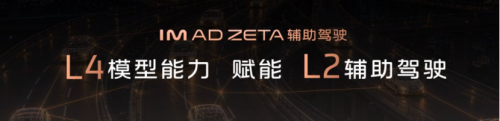
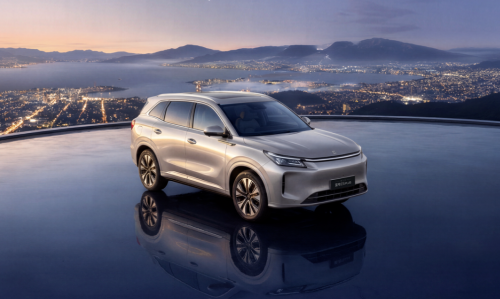
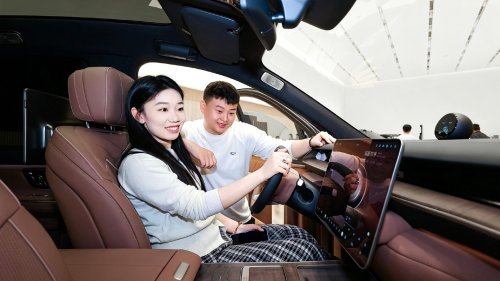
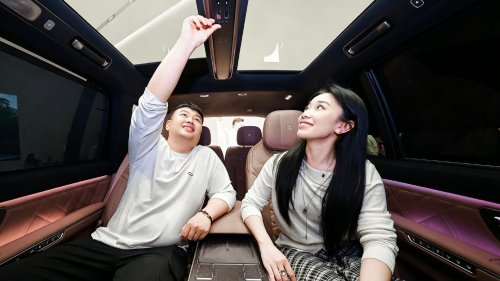
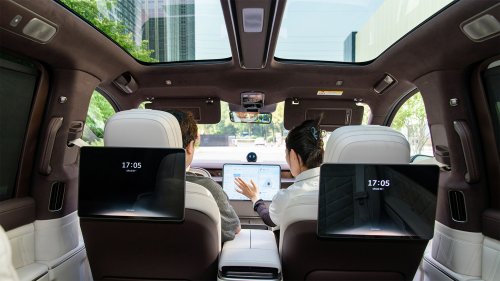
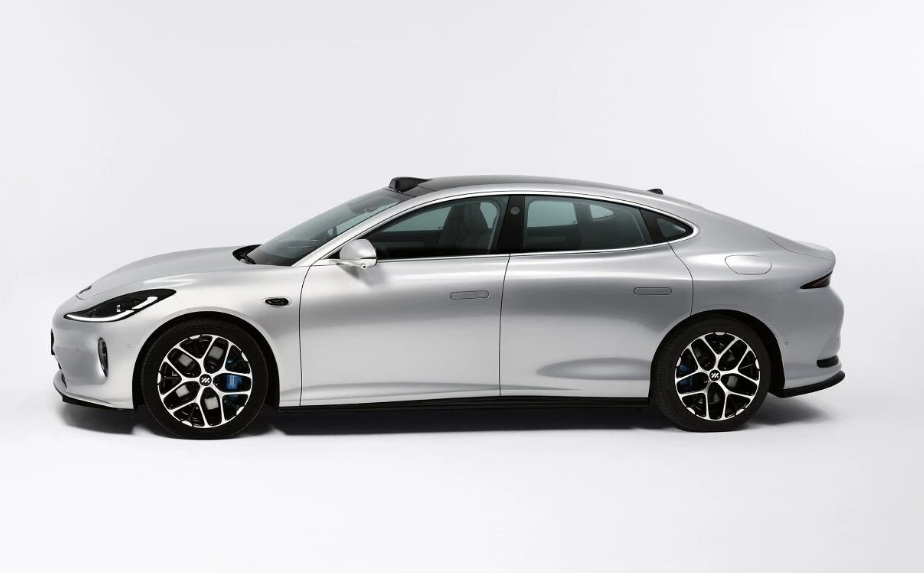
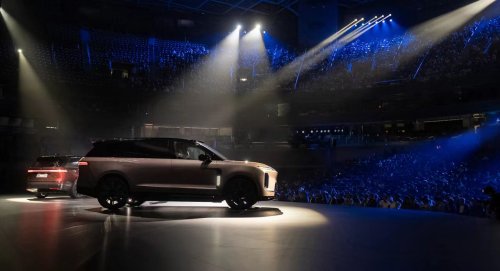
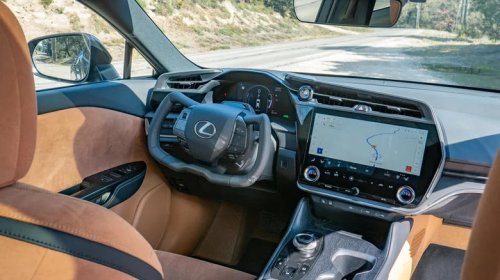
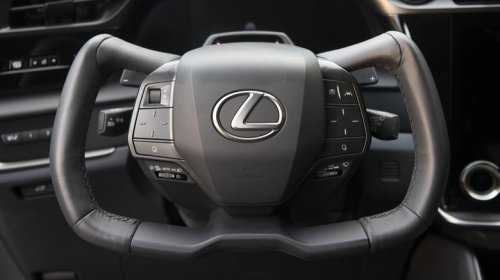
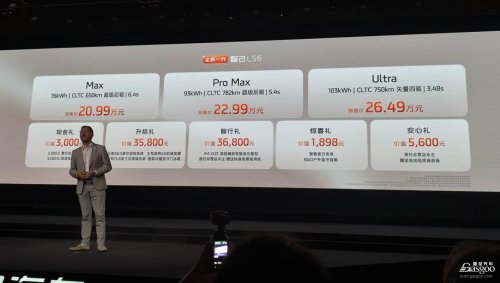
Gasgoo Munich- As smart vehicles evolve rapidly, the commercial rollout of steer-by-wire technology is picking up pace.On July 1, 2026, the mandatory national standard GB17675-2025 "Basic Requirements for Automotive Steering Systems" will officially take effect. It scraps the long-standing mandate that "steering wheels must retain a mechanical connection to the wheels" — ending an engineering convention that has held for roughly 130 years at the regulatory level.More crucially, the recently launched all-new IM LS6 has sent another jolt through the industry and among consumers: priced from 197,900 yuan, it comes standard with a steer-by-wire system across the entire lineup.Image source: IM MotorsUntil now, steer-by-wire has largely been confined to flagship models costing 400,000 yuan or more, sometimes even as an extra-cost option. Squeezing the price band from the 400,000-yuan tier down to 200,000 yuan isn't just about thinner margins — it required a sweeping overhaul of engineering and organizational structures.So, how did they drive down the cost? And without a mechanical connection, what guarantees safety? IM Motors' technical team offered deep-dive answers to these questions. Here's the breakdown.How Do You Squeeze a 400,000-Yuan Feature Into a 200,000-Yuan Cost Box?Pushing tech downmarket sounds simple in a sentence. In accounting terms, it's a grueling ledger."Right now, a by-wire chassis delivers a fantastic experience, but it's also very expensive," said Xiang Jiao, CTO of IM Motors, pulling no punches.Why the steep price? A full by-wire chassis involves far more than simply deleting the steering column. It demands dual-redundant power and communication, two independent steering actuator motors, a feedback system to simulate road feel, a high-response brake and suspension coordination controller, plus the algorithmic brain to orchestrate all these electronic components. Historically, this suite only appeared on flagships above 400,000 yuan — only the premium margins on such vehicles could absorb the R&D and material costs.Image source: IM MotorsHow, then, did IM cram it into a 200,000-yuan price bracket? Xiang Jiao pointed to two words: white-box."Backed by SAIC's 70 years of manufacturing heritage, our in-house R&D ensures every component and development phase is a 'white box,' stripping out the costs that come with 'black boxes,'" Xiang explained. "Leveraging SAIC's robust supply chain then keeps product costs manageable, allowing us to pass a consumer-friendly price to users."To unpack this: under the traditional supplier model, automakers receive a "black box." Suppliers quote the function, performance, and price, but keep the inner workings hidden. Every added feature triggers a new invoice; even a minor calibration tweak requires waiting in line. "White-box," by contrast, means the automaker defines and iterates the chassis control's critical paths itself — eliminating cascading outsourcing markups and reclaiming technological sovereignty.In-house development, of course, is only step one. The other half of the cost-reduction equation is organizational.In 2023, IM overhauled its chassis division into a VMC (Vehicle Motion Control) organization. Pei Yichen, Technical Director of IM's Vehicle Motion Control Department, explained the rationale: "Chassis components are increasingly electrified — electronic brakes, suspension, steering, and rear-axle steering. If each has its own controller and algorithm, the system becomes fragmented. Sometimes, one plus one doesn't exceed two; they can actually clash."IM's solution was to deploy a unified "cerebellum" model, centrally orchestrating the once-siloed chassis electronics — shifting them from operating in isolation to pulling together. This architectural integration is the linchpin of driving down costs."This shift isn't happening only within IM," Pei added. "A VMC team has also emerged under the SAIC Group Technical Center, handling all group-level vehicle motion control operations. We are deeply bound to them in all development work." In other words, this isn't a solo push by IM; SAIC is consolidating chassis R&D capabilities previously scattered across the group.Cost-cutting isn't confined to the chassis, either. Fu Yuchen, product manager for the all-new IM LS6, recounted an internal debate over the driver's seat. After experiencing the 4D mechanical massage seat in the flagship LS9, he found the improvement over traditional airbag massages "worlds apart." But when he pitched the feature to the project team, project manager Gong Jiasen's immediate reaction was a hard no.Image source: IM MotorsThe refusal had solid logic: the mechanical structure would thicken the seatback by 40 to 50 mm, directly eating into second-row legroom — an unacceptable trade-off for a family SUV.Ultimately, no one gave up. The seat, general packaging, and materials teams formed a task force, redesigning the massage mechanism's ball joint and force arm to shave 13 mm off the seatback thickness. The result is the "version 2.0 mechanical massage seat," which shifted from a paid option to a standard feature across the board."Those 13 millimeters matter," Gong said. "We redesigned the ball joint and force arm, extended the massage range longitudinally, and fine-tuned the vibration amplitude based on female users' voice-of-customer feedback."Cost reduction, then, is never as simple as "we made it cheaper." It's carved out of the seams of organizational coordination — one "13 millimeters" at a time.Without a Mechanical Connection, What Guarantees Safety?Talk of steer-by-wire always circles back to the question consumers care about most: if that solid linkage between the steering wheel and the tires disappears, what happens if the electronics fail? Does the car just run away?Pei Yichen offered an emphatic reply: "With rational, precise safety redundancy design, our steer-by-wire system can actually be safer and more reliable than a mechanical steering system."He drew two analogies. First, commercial aviation: fly-by-wire systems were introduced to airliners four decades ago and dramatically cut accident rates — by potentially more than 90%. Second, everyday life: a quartz watch is more accurate and reliable than a mechanical one, and requires no regular servicing. "Steer-by-wire is similar," he noted. "It's practically a new species."Analogies aside, convincing consumers requires hard numbers. Pei provided them: IM's steer-by-wire system has undergone over 10,000 individual test cases. The entire by-wire chassis has covered 1 million km in R&D testing. The timeline spans eight full years, from project initiation in 2018 to mass production in 2026. The gauntlet included repeated heat-pump startups at -30°C in Hailar, full-power AC and fast-charging in Turpan where surface temperatures exceed 50°C, and high-altitude climbing on Jade Dragon Snow Mountain.To meet the new national standard's strict "failure response" requirements, IM's answer is "aviation-grade triple safety redundancy." Steer-by-wire has three primary failure modes: power loss, communication loss, and actuator motor failure. IM's approach gives every critical link an independent backup. If main power fails, a backup power source takes over in milliseconds; if primary communication drops, a redundant channel steps in instantly; if sensor readings glitch, the system cross-validates across multiple data sources to determine the driver's true intent.Image source: IM MotorsMeanwhile, the all-new IM LS6's steer-by-wire gives the vehicle a capacity for "independent judgment." Through SynVector — its full-domain by-wire vector torque coordination control — the system can execute corrective actions in 20 milliseconds during a high-speed blowout or sudden crosswind, roughly 10 times faster than a human. It isn't replacing the driver; it's stabilizing the car before the driver can react.Image source: IM Motors"Safety is something we hope users never have to rely on, but we still insist on doing it best," Xiang said.Worth noting, too: beyond safety, steer-by-wire brings tangible changes to daily driving. A 4.49-m turning radius allows a U-turn with just half a turn of the wheel, making this nearly 5-m midsize SUV far more nimble in tight streets and parking lots.Beyond the Chassis, What Else Is Being Redefined?The by-wire chassis is the most talked-about tech label on the all-new IM LS6, but hardly the only one. "IM has introduced the NEXT·2028 strategy in product and R&D, aiming to give users advanced technologies one to two years ahead of the industry," Xiang noted.Beyond the by-wire chassis, the all-new IM LS6 rolls out new tech across multiple dimensions — from the tri-electric architecture and smart cabin to assisted driving and comfort features. Here's a breakdown of the key elements.On the powertrain front, the new IM LS6 rides on the NEO tri-electric architecture, achieving 12.7 kWh/100km under combined conditions. Its full-domain 800V high-voltage platform supports 396 kW ultra-fast charging, adding 500 km of range in 15 minutes and compatible with over 90% of public chargers. It packs a CATL 93 kWh battery pack, delivering a CLTC range of 782 km.Image source: IM MotorsInside the cabin, the IM Claw intelligent agent was co-developed with the Qwen large language model. Features including the driver's 4D mechanical massage seat, Bang & Olufsen audio, and a smart dual-door heated and cooled fridge come standard across the lineup.Image source: IM MotorsFor assisted driving, the all-new IM LS6 features the IM AD Zeta system, developed in deep partnership with Momenta, using L4-grade model capabilities to power L2 functions. The vehicle also debuts an incapacitated driver assistance system: if the driver loses control, the car can autonomously pull over and stop, reducing accident risk.Image source: IM MotorMonikaSeen in full, the all-new IM LS6's tech upgrades aren't isolated breakthroughs but a systemic "tech democratization." These forward-looking technologies send a clear signal: IM is systematically migrating the technological assets once reserved for flagships into the 200,000-yuan mainstream market, making them accessible to a broader consumer base while sharpening its competitive edge.The endgame of pushing tech downmarket, then, is never just about making flagship features affordable for more buyers. It's about shifting a technology from a "premium option" to an "industry foundation." That goes for steer-by-wire, 800V architectures, and smart cabin compute platforms alike. When the tipping point arrives, the real winner isn't the one who slashes prices the hardest — it's the one who turns technology into infrastructure, letting the entire industry run on top of it. That may be the most memorable thing about the all-new IM LS6: it's not just a car, but an industry case study in how "tech democratization" actually happens. (Photo credits: IM Motors)