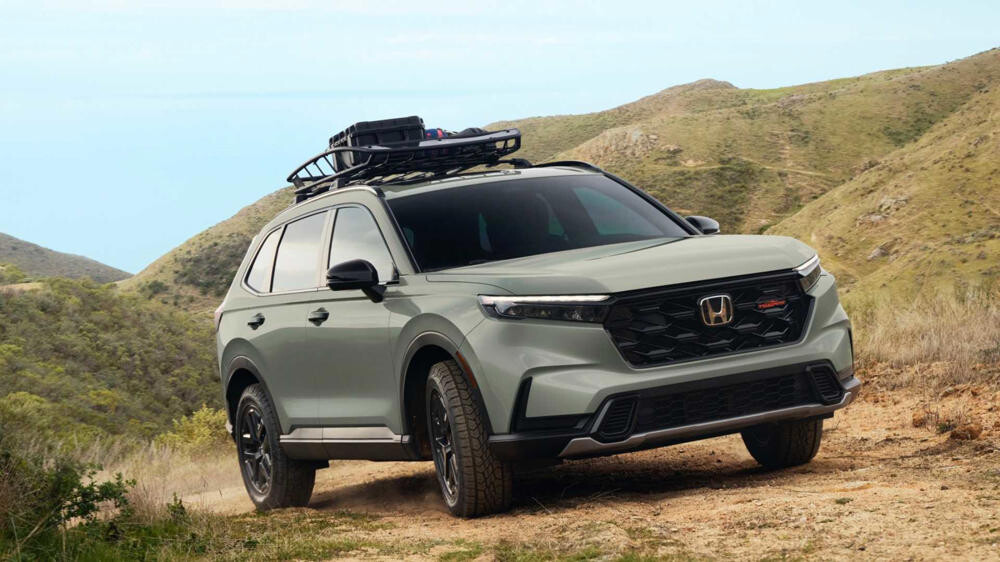
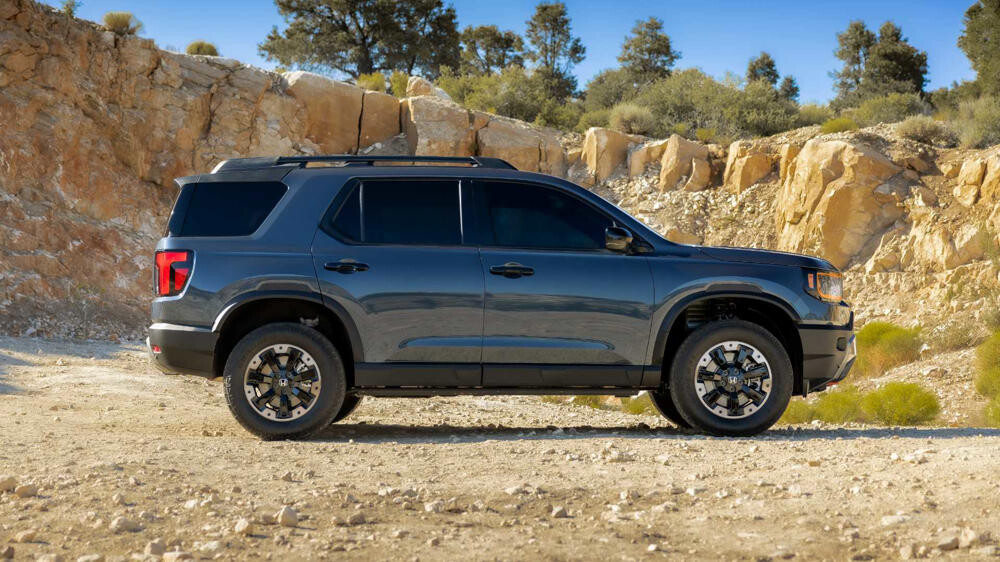
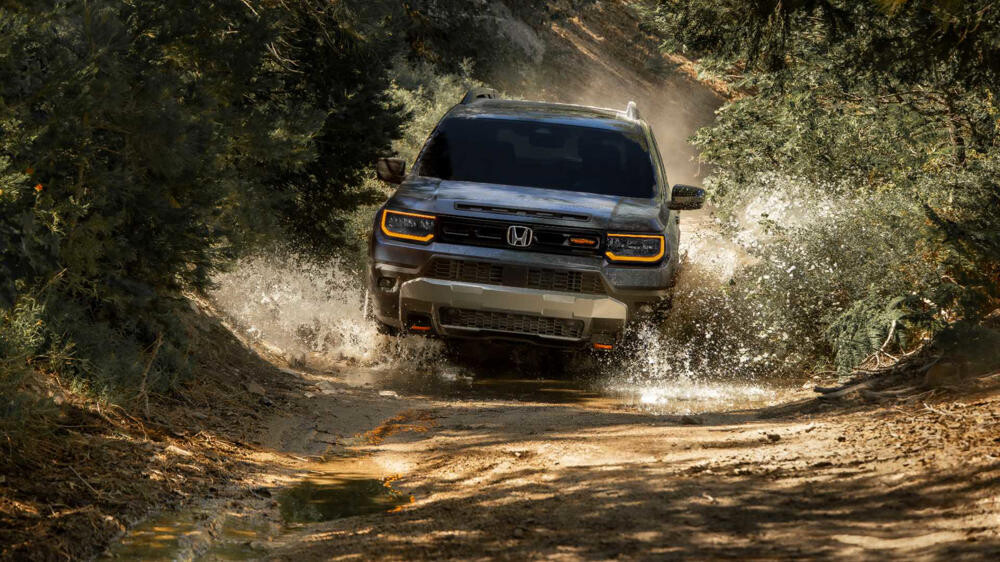
For nearly three decades, the Honda CR-V has been a familiar sight in Canadian driveways, valued for its practicality, reliability reputation, and everyday versatility. Now, one of Canada's most popular SUVs is preparing for a major transformation. Honda officially confirmed on November 12, 2026, that the next-generation 2028 CR-V will arrive in 2027 with an exclusively hybrid powertrain, ending the availability of conventional gasoline-only models. The announcement marks a significant shift in Honda's Canadian lineup, where hybrid versions already account for nearly 70% of CR-V sales. Alongside the elimination of gas-only engines, the seventh-generation SUV will introduce a redesigned platform, improved fuel efficiency, and advanced electric all-wheel-drive technology. For Canadian buyers, the change raises important questions about affordability, performance, manufacturing, and what comes next for the compact SUV market. Gas-Only CR-V Models Will Disappear With the Next Generation Honda's decision means the traditional gasoline-only CR-V will no longer be offered when the seventh-generation model arrives in 2027. The upcoming SUV will carry the 2028 model-year designation, marking the beginning of a new chapter for a vehicle that has been part of the Canadian market since 1997. The current 2027 CR-V still offers conventional gasoline power, including a 1.5-litre turbocharged four-cylinder engine producing 190 horsepower. Buyers can also choose hybrid versions, but that distinction will disappear with the redesigned model. Every new 2028 CR-V will feature gasoline-electric hybrid technology as standard equipment. Importantly, the transition does not mean the CR-V is becoming a fully electric vehicle. Honda's hybrid system continues to use a gasoline engine alongside electric motors, allowing drivers to refuel at ordinary gas stations without relying on external charging equipment. The difference is how efficiently the engine and electric components work together. For longtime CR-V owners who appreciate straightforward operation, the familiar ownership experience should remain recognizable, even as the technology underneath changes significantly. Honda has not announced an exact Canadian sales date for the redesigned SUV. Canadian Buyers Have Already Made Hybrids the Popular Choice Honda's move toward an exclusively hybrid CR-V reflects purchasing trends that have already transformed its Canadian business. According to the automaker's November 12 announcement, hybrid versions accounted for nearly 70% of Canadian CR-V sales. Honda also identified the CR-V Hybrid as Canada's best-selling hybrid vehicle in 2025, highlighting how quickly gasoline-electric technology has moved into the mainstream. The company expects CR-V Hybrid sales to increase by approximately 17% year over year in 2026, demonstrating that demand continues to grow even before the redesigned model reaches dealerships. The trend extends beyond a single SUV. Honda Canada recorded consecutive all-time hybrid sales records in 2024 and 2025, while electrified gasoline-electric models now represent nearly half of its new-vehicle sales in the country. For families replacing an older compact SUV, hybrids increasingly offer a familiar alternative to conventional engines rather than an unfamiliar technology requiring a change in driving habits. Honda's decision effectively turns an option already chosen by most CR-V customers into the standard configuration. However, the remaining buyers who prefer lower-priced gasoline-only models will face fewer choices within Honda's compact SUV lineup. A New Hybrid Powertrain Promises Better Performance and Efficiency The 2028 CR-V will introduce Honda's fifth-generation two-motor hybrid system, representing a substantial development beyond the technology available in today's models. Honda says the redesigned system will expand the range of conditions in which the gasoline engine operates efficiently while improving the performance and efficiency of the electric drive unit. The company is targeting a fuel-economy improvement of more than 10% for its next-generation hybrid vehicles. That figure remains an engineering target rather than a certified Canadian fuel-consumption rating for the upcoming CR-V, making it important to distinguish Honda's expectations from independently verified results. For comparison, the 2027 Canadian CR-V Hybrid produces 204 horsepower and 247 lb-ft of combined torque, with most hybrid trims rated at 6.4 L/100 km in combined driving. The conventional gasoline AWD model consumes approximately 8.4 L/100 km. Honda has indicated that the redesigned SUV should deliver greater standard power and efficiency, but final horsepower, torque, and fuel-consumption figures have not been released. If the improvements translate successfully into production, Canadian drivers could benefit from smoother acceleration, reduced gasoline consumption, and lower operating costs without giving up the convenience associated with conventional vehicles. Electric All-Wheel Drive Could Improve Canadian Winter Performance One of the most interesting developments for Canadian drivers is Honda's newly developed electric all-wheel-drive system. The technology is designed to provide more precise and responsive motor control, allowing the vehicle to manage driving forces electronically. The existing CR-V uses Honda's Real Time AWD system, which automatically distributes power according to driving conditions. The next-generation approach introduces greater electric control into that process, potentially improving how quickly the SUV responds when traction changes. Honda has identified the technology as a central component of its future hybrid vehicle architecture, although detailed Canadian specifications remain unavailable. For drivers navigating snow-covered residential streets, wet highways, and slippery parking lots, improved power distribution could be particularly valuable. Honda is also developing integrated vehicle-motion controls intended to improve stability and responsiveness during cornering. However, the company has not released independent winter-testing results or confirmed whether electric AWD will be standard across every Canadian 2028 CR-V trim. Those details will matter when comparing the redesigned SUV with competing models. The technology also cannot eliminate the need for appropriate winter tires, especially when braking or cornering on ice. A Completely Redesigned Platform Could Transform the Driving Experience Beyond the new hybrid powertrain, Honda is introducing an entirely new vehicle platform with the seventh-generation CR-V. The architecture has been engineered to combine greater structural rigidity with reduced weight, two characteristics that can improve handling and efficiency. During a 2025 technology presentation, Honda said its next-generation hybrid platform was designed to weigh approximately 90 kilograms less than the previous platform. Engineers also introduced a new approach to body rigidity intended to manage how weight is distributed across the tires during cornering. Honda has not confirmed how much lighter the finished 2028 CR-V will be compared with the outgoing vehicle. The redesigned architecture also emphasizes shared components across future Honda models. The manufacturer has targeted more than 60% parts commonality among vehicles using the platform, potentially reducing development complexity and manufacturing expenses. For families, the practical benefits could extend beyond technical specifications. A well-engineered platform can influence how securely an SUV handles highway curves, how comfortably it absorbs uneven pavement, and how effectively it balances cabin space with fuel efficiency. Nevertheless, actual improvements in ride comfort, interior dimensions, and passenger protection will require production specifications and independent testing before they can be properly assessed. The Biggest Question for Canadian Buyers May Be Price Although Honda is emphasizing efficiency and performance, affordability could become the most closely watched aspect of the redesigned CR-V. The 2027 Canadian lineup currently offers a gasoline-powered LX two-wheel-drive model with an advertised selling price of approximately $40,728. The Sport Hybrid, the least expensive hybrid version, is listed at approximately $49,647. These Honda Canada figures include specified freight and fees but exclude taxes, and the two trims differ in equipment and drivetrain. Nevertheless, the nearly $9,000 difference between their advertised starting prices illustrates why eliminating the conventional gasoline model could matter to budget-conscious households. Honda has outlined a broader engineering objective to reduce the production cost of its next-generation hybrid system by more than 30% compared with a system introduced in 2023. That target could help contain manufacturing expenses, but it does not guarantee a cheaper vehicle at dealerships. The company has not disclosed Canadian pricing for the 2028 CR-V or confirmed whether a more affordable entry-level hybrid will be introduced. Financing costs, insurance premiums, and long-term fuel savings will ultimately influence the purchasing decision. A more efficient standard powertrain would be welcome, but the starting price will help determine whether the redesigned CR-V remains accessible to the same broad range of Canadian families. Lower Fuel Consumption Could Deliver Meaningful Long-Term Savings The financial appeal of hybrid ownership becomes clearer when gasoline consumption is compared over several years. Under current Canadian ratings, the 2027 CR-V AWD with a conventional gasoline engine uses 8.4 L/100 km combined, compared with 6.4 L/100 km for most hybrid AWD versions. Over 20,000 kilometres, that difference represents approximately 400 litres of gasoline. At an illustrative pump price of $1.60 per litre, the potential annual savings would be around $640. The advantage is especially noticeable in city driving, where the hybrid's electric motors can reduce reliance on the gasoline engine during lower-speed operation. However, actual savings depend on driving habits, temperature, road conditions, and fuel prices. Natural Resources Canada emphasizes that published consumption figures are standardized comparisons rather than guarantees of real-world performance. Canadian winters, frequent highway travel, and heavier loads can all influence the results. The 2028 CR-V's promised efficiency improvements could strengthen the financial argument for hybrid ownership, but those benefits cannot be calculated precisely until official ratings become available. Buyers must also consider the purchase price, financing terms, insurance, and maintenance expenses when evaluating the total cost of ownership. Ontario Manufacturing Will Remain Central to Honda's CR-V Strategy The next-generation CR-V also carries significant implications for Canada's automotive manufacturing industry. Honda has confirmed that Canadian-market CR-Vs are built at Honda of Canada Manufacturing in Alliston, Ontario, where production of the model began in 2012. The facility remains a lead manufacturing operation for the CR-V and is included in the company's next-generation North American production plans. Just days before announcing the redesigned SUV, Honda unveiled a $166-million Canadian capital investment for factory upgrades and retooling. That investment forms part of a broader $867-million commitment supporting future vehicle production and manufacturing flexibility. The investment is particularly important for the more than 4,000 workers employed at Honda's Alliston operations. The facilities produced approximately 401,000 vehicles in 2025 and have manufactured more than 11 million vehicles since opening in 1986. Honda's upgrades will support next-generation hybrid and gasoline-powered vehicles, including the reintroduction of engine manufacturing. The redesigned CR-V will also be assembled at Honda facilities in Ohio and Indiana, illustrating the integrated nature of North American automotive production. Although the transition eliminates the gasoline-only CR-V, it does not mean Honda is abandoning conventional engines across its entire Canadian vehicle lineup. Toyota's Hybrid-Only RAV4 Raises the Stakes for Honda Honda's decision arrives as its biggest Canadian competitor has already committed to a similar strategy. Toyota redesigned the RAV4 for the 2026 model year with an exclusively electrified lineup consisting of conventional hybrids and plug-in hybrids. The standard RAV4 Hybrid delivers 236 horsepower, while its most efficient Canadian AWD configuration is rated at approximately 5.5 L/100 km combined. That compares favourably with the outgoing CR-V Hybrid's 6.4 L/100 km rating. Honda's next-generation powertrain therefore faces a clear challenge: improve efficiency and performance sufficiently to compete with Toyota's newest technology while preserving the comfort and versatility that CR-V customers expect. Competition involves more than fuel consumption. Toyota offers a plug-in hybrid RAV4 capable of travelling an estimated 80 kilometres on electricity alone, providing an alternative for drivers who can charge at home. Honda has not announced a comparable plug-in version of the 2028 CR-V. Canadian buyers will also compare purchase prices, cargo capacity, safety technology, winter capability, and interior comfort. Both vehicles have important Canadian manufacturing connections, with RAV4 production in Ontario and CR-V production in Alliston. As these two major nameplates move toward hybrid-only lineups, conventional gasoline SUVs could face increasing competitive pressure across the segment. Honda's Broader Strategy Is Shifting Toward Hybrid Vehicles The all-hybrid CR-V is part of a much larger change in Honda's global automotive strategy. During its May 2026 business briefing, the company announced plans to introduce 15 next-generation hybrid models worldwide by the end of the fiscal year ending March 31, 2030, with North America identified as a priority market. In October, Honda formally introduced the Honda Hybrid name for its next-generation gasoline-electric technology. The objective is to combine greater efficiency, improved driving performance, and lower production costs as the manufacturer responds to changing consumer demand. The redesigned CR-V will become one of the most visible examples of that strategy. The shift follows a broader reassessment of Honda's electric vehicle investments. In May 2026, the manufacturer indefinitely suspended its previously planned Canadian electric vehicle value-chain investment project, while maintaining production at its existing Alliston facilities. Honda subsequently committed new funding to hybrid-focused manufacturing improvements. The developments demonstrate a move toward electrification that does not depend exclusively on fully battery-powered vehicles. For consumers hesitant about charging infrastructure or the purchase price of a new electric SUV, hybrids offer a different route toward reduced gasoline consumption. Honda has not abandoned electric vehicle development altogether, but the CR-V announcement makes clear that hybrid technology will play a central role in its immediate North American product plans. Important Details Remain Unconfirmed Ahead of the 2027 Launch Despite the significance of Honda's announcement, several important questions about the 2028 CR-V remain unanswered. The company has confirmed its hybrid-only powertrain, new platform, redesigned styling, and electric all-wheel-drive technology, but has not released the complete vehicle design or interior specifications. Exact Canadian pricing, trim configurations, horsepower, fuel-consumption ratings, towing capability, and cargo measurements are still outstanding. Honda has also not announced a specific Canadian dealership arrival date beyond the planned 2027 introduction. Its initial teaser offers only a limited glimpse of the redesigned model, leaving potential buyers without the full information needed for a detailed comparison. For Canadians considering a CR-V purchase, the timing presents a genuine decision. The current 2027 model offers established specifications and a choice between conventional gasoline and hybrid engines, including the rugged-styled TrailSport Hybrid. Waiting for the 2028 model could bring better efficiency, updated technology, and a redesigned driving experience, but its final price and performance remain unknown. Those prioritizing a lower initial purchase price may prefer evaluating the existing gasoline-powered models while they are available. Others may find the prospect of a more advanced hybrid worth waiting for. Ultimately, Honda has confirmed a major change in the CR-V's future, but its success will depend on whether the finished SUV delivers convincing value alongside its promised improvements.


 Liked by Noah Scott, Aiden Hall





 Liked by Noah Scott, Aiden Hall