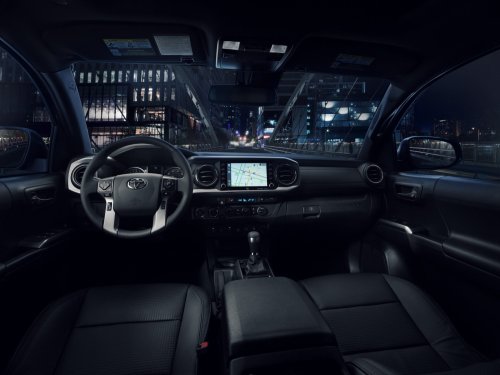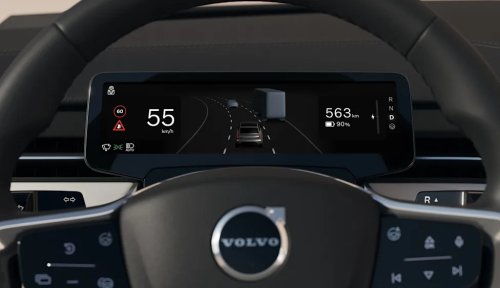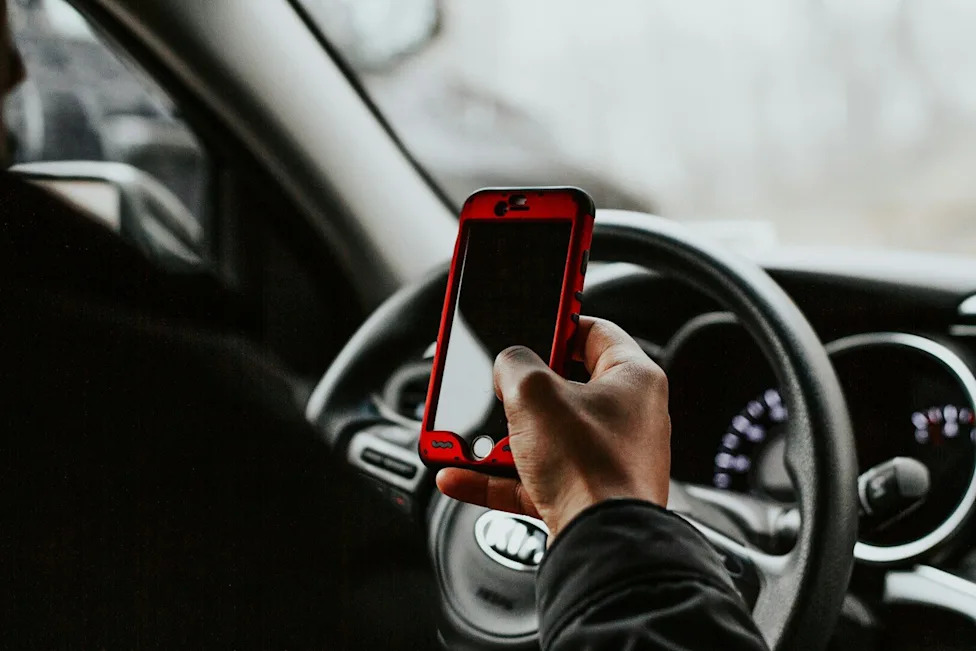



















Hands-Free Laws Were Never About Safety. New Crash Data Proves They Were About LoopholesThat's the headline. It's not the real story.Every state in the country regulates distracted driving in some form. Twenty-one of them now ban holding a phone at all behind the wheel. All of that legislation, all of that enforcement, all of those windshield reminders to pull over before texting, is built on police crash reports. According to a new IIHS analysis, those reports are missing most of what actually happens in the seconds before a crash. That's the headline. It's not the real story.The real story is buried in the breakdown of the data: the specific behavior lawmakers spent two decades legislating against, talking on a hands-free phone, turns out to be one of the rarest forms of distraction on the road. The feature the auto industry built an entire compliance strategy around was never the primary danger. Something else was, and it has been sitting in plain sight on every dashboard for a decade.What IIHS actually measuredWorking with Cambridge Mobile Telematics, IIHS researchers linked nearly 17,000 police-reported crashes in four states to telematics data collected between 2021 and 2024 from drivers voluntarily enrolled in safe-driving apps, the same category of program many insurers use to calculate discounts. Matching crash times and locations let researchers compare what a phone was actually doing in the moments before impact against what a police officer wrote down afterward.AdvertisementAdvertisementThe gap was enormous. Telematics data showed phone use in the 30 seconds before impact in 7 percent of single-vehicle crashes and 8 percent of two-vehicle crashes. Police reports captured cellphone involvement in less than 1 percent of those same crashes, an undercount IIHS says runs at least sevenfold.Wait, hands-free calls barely register?Here is the number that should embarrass twenty years of legislative strategy. In the roughly 15,300 two-vehicle crashes IIHS examined, telematics logged just 87 hands-free calls and 19 hand-held calls in progress within 30 seconds of impact, a combined 106. Active screen manipulation, meaning tapping, swiping, or typing, showed up 590 times. Passive use, an unlocked screen doing something like running navigation or playing a video, appeared 534 times.Read those numbers again. Phone calls, hands-free included, accounted for a small fraction of the phone-related activity logged before a crash. Touching the screen, or simply having it lit up and unattended, accounted for the rest.That is an uncomfortable finding for the industry, because hands-free calling is exactly the feature automakers spent the 2000s and 2010s building entire infotainment strategies around. Bluetooth pairing, steering-wheel call buttons, voice-activated dialing, all engineered, marketed, and in many states legally required as the responsible alternative to holding a phone to your ear. This publication's own reporting on speeding and phone habits already suggested that real-world risk tracks more closely with what a driver does on a screen than with any phone call, hands-free or not.AdvertisementAdvertisementHands-free driving was never really about safety. It was about enforceability. An officer can see a phone held to someone's ear. An officer cannot see a Bluetooth connection. Lawmakers wrote rules around what was visible, and the industry built a compliance solution to match.The second surprise: nobody agrees on what "distraction" meansEven in cases where both police and telematics flagged phone use, they agreed on the specific type of activity in exactly three crashes out of nearly 17,000.Three.That is not a rounding error. It is a sign that the distracted-driving category inside crash databases nationwide, the same category that ultimately feeds federal crash statistics, is built on inference more often than evidence. A responding officer typically arrives minutes after a crash, working from witness accounts, a driver's own admission, or a cracked phone screen on the passenger seat. None of that reliably distinguishes texting from navigation from a phone that was simply sitting there, screen-lit, doing nothing dangerous at all.The blind spot nobody's telematics can seeHere is the detail that should worry automakers more than lawmakers. The telematics platform behind this study only detects phone activity when a screen physically unlocks or a call connects. It has no way of seeing a driver interact with a phone's content through CarPlay or Android Auto, where the phone stays locked in a pocket or cupholder while its apps run on the car's own screen.AdvertisementAdvertisementAs automakers push bigger center screens and deeper phone-mirroring integration, a trend this publication has watched reshape what a dashboard even is, the industry is building an entire category of phone-based distraction that neither police nor telematics apps can currently measure. The safest-looking data set in this study may also be its most incomplete.Your insurance discount app is also a distraction logOne more detail is worth sitting with. The drivers in this study were not tracked by a covert surveillance program. They opted in, voluntarily, to safe-driving apps, mostly to earn insurance discounts. IIHS did not need a subpoena. It needed a data-sharing agreement with a telematics vendor.IIHS research scientist Aimee Cox, the study's lead author, put it simply: "The apps may be new, but the danger isn't." The same could be said of the data trail. Insurers already use telematics scoring to price risk down to the mile. A data set detailed enough to reconstruct, to the second, whether a screen was unlocked before impact is also detailed enough to matter well beyond a monthly premium.What to actually rememberTwenty-one states now ban holding a phone at all behind the wheel, full stop, a policy IIHS research shows outperforms laws that target specific behaviors like texting. That is because an officer no longer needs to prove what a driver was doing with a phone, only that they were holding one. It is a tacit admission that the old approach, the one built around hands-free technology, never solved the problem it claimed to.AdvertisementAdvertisementHands-free was never the fix. It just made distraction quieter, and a lot harder to write down.Join our Newsletter, follow our Instagram page, and connect with us on Facebook.