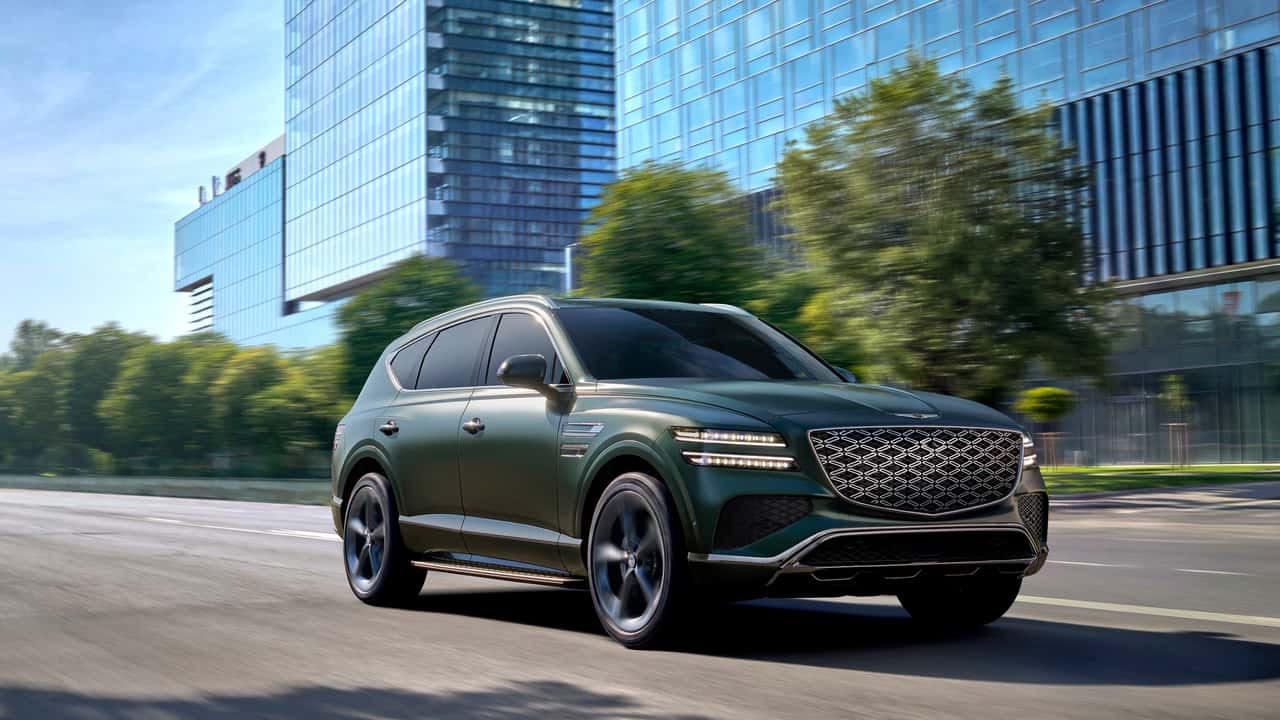
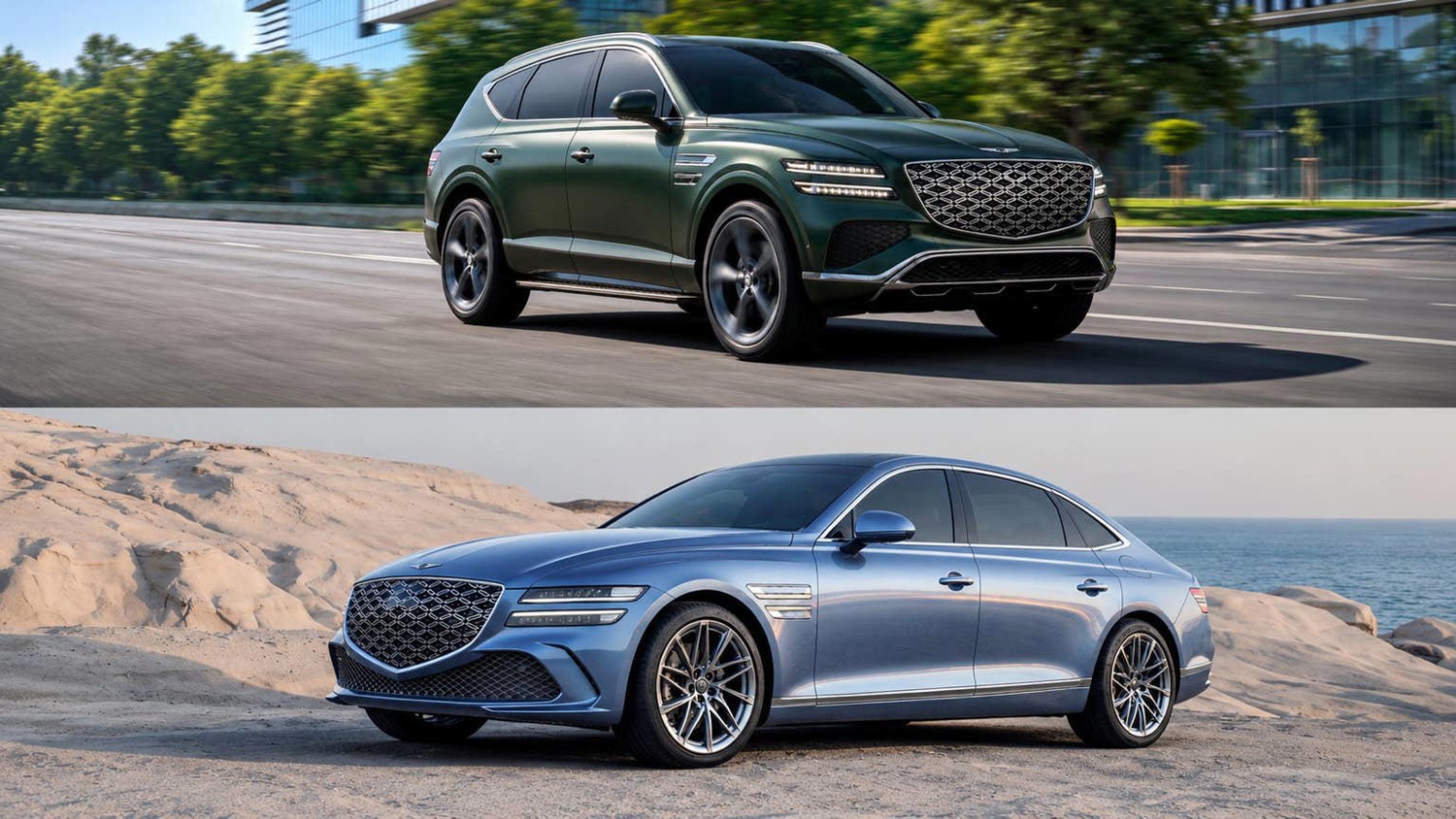
Genesis is entering a new era of luxury motoring with two vehicles designed to deliver more power while using significantly less fuel. The South Korean automaker has unveiled hybrid versions of its G80 luxury sedan and GV80 SUV, introducing a 347-horsepower powertrain that combines turbocharged performance with electric assistance.
Announced in Los Angeles on November 19, 2026, the new hybrids promise fuel-efficiency improvements of up to 30%, alongside an estimated driving range exceeding 800 kilometres. The announcement represents a major expansion of Genesis’s electrified lineup, offering an alternative to conventional gasoline engines and fully electric vehicles.
For Canadian drivers concerned about fuel costs but unwilling to compromise on luxury or performance, these new models could become particularly attractive. However, official fuel-consumption ratings, Canadian pricing and availability remain unconfirmed.
Genesis Introduces Its First Luxury Hybrids for North America
Genesis officially introduced the G80 Hybrid and GV80 Hybrid at a special event in Los Angeles on November 18, ahead of the 2026 Los Angeles Auto Show. The G80 Hybrid made its global debut, while the GV80 Hybrid received its North American introduction. Together, they mark a significant development for a luxury brand that has previously concentrated on gasoline-powered and fully electric vehicles.
The announcement also demonstrates how Genesis is adapting its product strategy to provide customers with additional choices. Rather than requiring drivers to make an immediate transition to battery-electric vehicles, the company is introducing technology that combines a traditional gasoline engine with electric motors. That approach could appeal to buyers who want greater efficiency without changing their established refuelling habits.
Genesis Motor North America chief operating officer Tedros Mengiste described the introduction as an important step in offering products suited to evolving customer needs. With hybrid technology now entering two established luxury nameplates, Genesis is positioning efficiency as another defining feature of its premium driving experience.
A 347-Horsepower Powertrain Delivers V6-Level Torque
Both the G80 Hybrid and GV80 Hybrid use a new 2.5-litre turbocharged four-cylinder engine combined with two electric motors. One motor handles engine starting and electricity generation, while the other provides propulsion and captures energy during deceleration. The combined system produces 347 horsepower and 391 pound-feet of torque, representing approximately 16% more horsepower than the comparable gasoline-powered 2.5-litre models.
Perhaps more importantly, that torque output matches the 3.5-litre twin-turbocharged V6 offered in Genesis’s conventional lineup. The hybrid system is paired with a seven-speed automatic transmission designed to deliver smooth acceleration and make effective use of electric power.
For drivers, the practical advantage is potentially stronger responsiveness during everyday situations such as entering highways, accelerating from traffic lights or overtaking slower vehicles. Genesis has also engineered the powertrain to engage its electric motor across a wider range of driving conditions. The goal is to combine the responsive character of electric propulsion with the flexibility of a gasoline-powered luxury vehicle.
Fuel Economy Could Improve by as Much as 30%
The biggest selling point of the new Genesis hybrids may be their projected fuel efficiency. According to Genesis, the G80 Hybrid delivers a 30% improvement over its comparable gasoline-powered model, while the larger GV80 Hybrid achieves a 24% improvement. Those figures are based on internal testing of all-wheel-drive models equipped with 19-inch wheels. If confirmed through official testing, the improvements would represent a meaningful reduction in the operating costs associated with driving a luxury sedan or SUV.
However, an important distinction remains. These percentages represent improvements in fuel economy, rather than necessarily equivalent percentage reductions in litres consumed. Genesis has not yet released certified Canadian fuel-consumption ratings in litres per 100 kilometres. Those figures will ultimately provide a clearer picture of potential savings for Canadian motorists. Driving conditions, temperature, vehicle configuration and individual driving habits will also affect real-world results. For now, the manufacturer’s preliminary findings suggest substantial progress, but the final numbers will determine how competitive the vehicles really are.
Driving Range Could Exceed 800 Kilometres on a Single Tank
Beyond improving efficiency, Genesis claims both hybrid models will offer an estimated driving range exceeding 800 kilometres. That figure could make the G80 Hybrid and GV80 Hybrid especially appealing to motorists who regularly cover significant distances for work, family commitments or vacations. A longer range can mean fewer fuel stops, allowing drivers to spend more time travelling and less time planning where to refuel.
For Canadian motorists, however, real-world range deserves particular attention. Cold temperatures, highway speeds, road conditions and the use of climate-control systems can substantially influence fuel consumption. The U.S. Department of Energy has documented particularly noticeable winter-related efficiency losses in hybrid vehicles, while Natural Resources Canada cautions that laboratory ratings cannot reproduce every driving condition.
Genesis has based its range claims on internal evaluations rather than finalized government-certified figures. The estimated distance should therefore be treated as an early indication of the vehicles’ capabilities, not a guarantee for every journey. Nevertheless, combining substantial power with the possibility of travelling more than 800 kilometres between fill-ups gives both hybrids an appealing practical advantage.
A New Liquid-Cooled Battery Makes Hybrid Technology More Advanced
One of the most significant engineering developments is the introduction of Hyundai Motor Group’s first liquid-cooled hybrid battery system. Unlike conventional air-cooled designs, the new system uses liquid cooling to regulate battery temperature more effectively. According to Genesis, this technology enables higher maximum electrical output and allows the vehicle to make greater use of its available battery power during everyday driving.
The importance of this advancement goes beyond the battery itself. Greater access to electric power allows the hybrid system to assist the gasoline engine more frequently, potentially improving responsiveness while reducing noise and fuel consumption. Genesis has specifically designed the system to use electric propulsion during low-speed operation, including when departing parking areas and navigating congested city streets.
The vehicles remain conventional hybrids rather than plug-in hybrids, meaning owners do not need access to home charging equipment or public charging stations. Their batteries are replenished through the gasoline engine and recovered braking energy. For buyers seeking the benefits of electrification without adopting a charging routine, that distinction could be particularly important.
Smart Regenerative Braking and Predictive Technology Improve Efficiency
The new Genesis hybrids introduce several technologies designed to manage energy more intelligently. One is Smart Regenerative Braking, which uses navigation information and traffic conditions to automatically adjust how much energy the vehicle recovers while slowing down. Instead of allowing all deceleration energy to be lost as heat through conventional braking, the system can recover some of that energy and store it in the hybrid battery.
Another feature, called Hierarchical Predictive Control, evaluates the planned driving route and anticipated road conditions to manage the battery’s charge level. This allows the powertrain to select more appropriate operating modes throughout a journey.
Genesis has also introduced Stay Mode, allowing occupants to operate climate control and multimedia functions using battery power without immediately starting the gasoline engine. This could be useful while waiting for someone in a parking area or making a brief stop during a trip. Together, these technologies aim to make the hybrid system operate efficiently without requiring constant adjustments from the driver.
The G80 Hybrid Receives Important Design and Comfort Upgrades
The G80 Hybrid introduces several changes beyond its electrified powertrain. Genesis has redesigned the sedan’s front grille with a three-dimensional G-Matrix pattern, giving it a distinctive appearance while preserving the brand’s recognizable styling. New wheel designs and exterior paint options, including Tromso Green, Wadden Gray, Milos Blue and Barolo Red, provide additional opportunities for personalization.
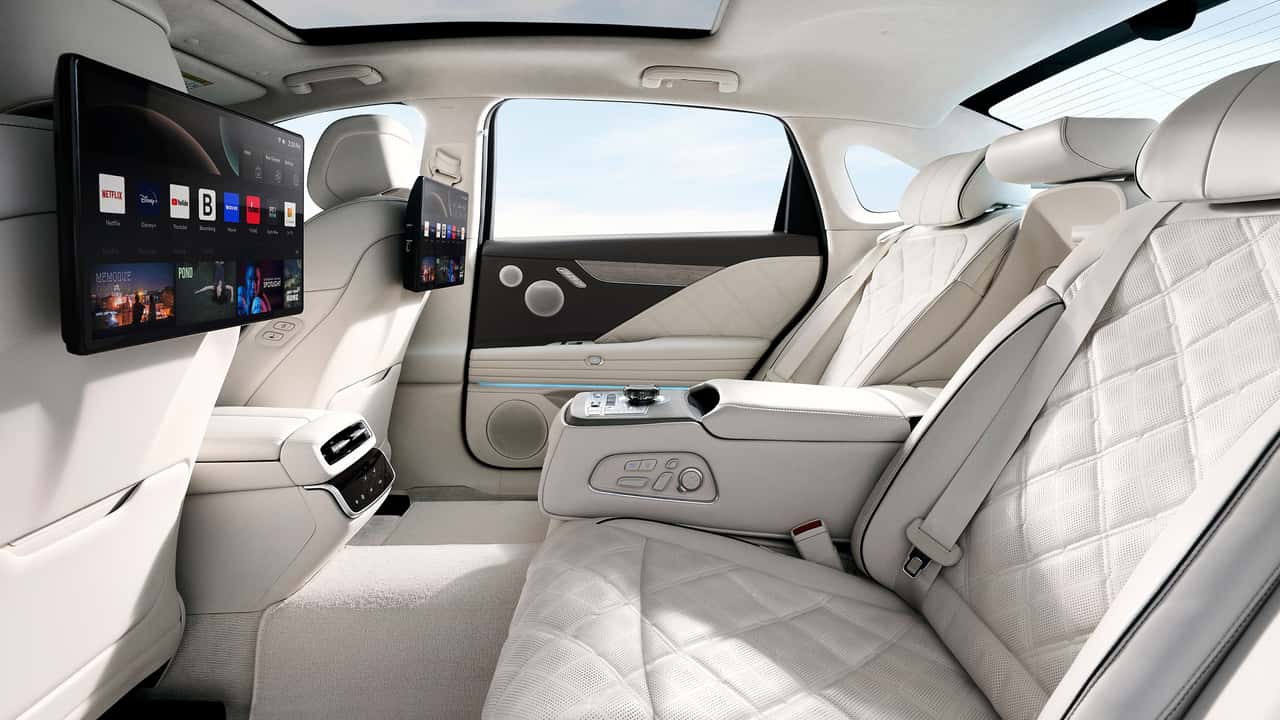
The sedan also grows by approximately 130 millimetres in overall length, an increase of just over five inches. Its premium positioning is reinforced through available features such as a front passenger Ergo-Motion seat, Vision Roof and electronically controlled suspension with Road Preview technology.
The suspension system is designed to anticipate changes in the road surface and adjust damping to improve comfort. For someone spending considerable time commuting or travelling between cities, that emphasis on ride quality could be just as important as the improvement in fuel economy. Genesis is clearly attempting to ensure that the hybrid G80 retains the refinement and luxury expected from its conventional gasoline-powered counterpart.
The GV80 Hybrid Combines SUV Practicality With Premium Comfort
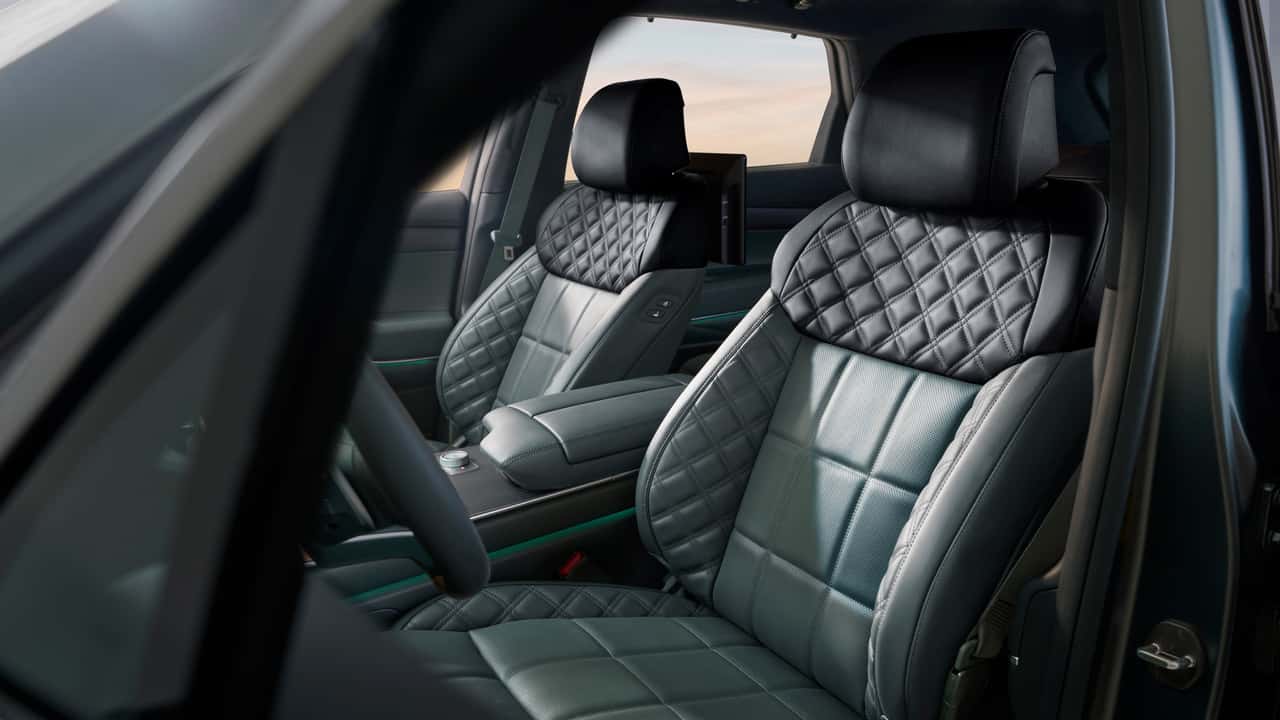
The GV80 Hybrid follows a similar approach but places greater emphasis on the needs of SUV buyers. Genesis has developed new 19-inch, 20-inch and 22-inch wheel designs specifically for the hybrid, accompanied by additional exterior colours such as Seychelles Beige, Cardiff Green and Brunswick Green Matte. Inside, the SUV introduces four new two-tone colour combinations, available real-wood trim and distinctive quilting patterns.
Comfort remains a major focus. Genesis Canada says the GV80 Hybrid includes heated front and rear seats, with available ventilated seating for both rows. Other available conveniences include a Digital Centre Mirror, Mood Curator and Remote Smart Parking Assist 2.
These features are particularly relevant to families who spend substantial time travelling together, whether navigating daily traffic or taking longer road trips. The availability of second-row ventilation, for example, recognizes that luxury should extend beyond the driver’s seat. With improved fuel efficiency now joining its existing emphasis on passenger comfort, the GV80 Hybrid could offer a more balanced combination of everyday practicality and premium performance.
Advanced Safety and Technology Remain Central to Both Models
Genesis has equipped both hybrids with technology designed to preserve the premium experience associated with its vehicles. A 27-inch OLED display integrates the digital instrument cluster and navigation system into a single widescreen interface. Available equipment includes a Bang & Olufsen premium audio system, Genesis Digital Key and Active Noise Control-Road technology, which is intended to reduce unwanted road noise inside the cabin.
Safety is another major consideration. Both models offer an extensive collection of driver-assistance technologies, including Forward Collision-Avoidance Assist 2, Lane Keeping Assist, Lane Following Assist 2, Blind-Spot Collision-Avoidance Assist and Highway Driving Assist 2. Additional available equipment includes Surround View Monitor, Blind-Spot View Monitor and Parking Collision-Avoidance Assist.
These features can provide valuable assistance in situations ranging from crowded parking lots to lengthy highway journeys, although they do not replace an attentive driver. Genesis is integrating its new hybrid technology into an established luxury environment rather than treating efficiency as a reason to compromise on comfort, connectivity or advanced safety equipment.
Canadian Pricing and Availability Remain the Biggest Unanswered Questions
The introduction of the G80 Hybrid and GV80 Hybrid comes as Canadian interest in gasoline-electric vehicles continues to grow. Statistics Canada reported 91,868 registrations of conventional hybrid vehicles during the second quarter of 2026, a 39.5% increase compared with the same period in 2025. Gasoline-only vehicle registrations declined 7.3% over that period. These figures suggest a growing market for vehicles that combine lower fuel consumption with familiar ownership requirements.
Genesis has confirmed the new hybrids through its Canadian communications channels, but several important details remain unresolved. As of November 20, 2026, the automaker has not announced Canadian pricing, a confirmed delivery schedule or complete market-specific specifications. Official fuel-consumption and driving-range ratings also remain subject to certification.
Ultimately, those missing details will determine the vehicles’ value proposition. A competitive starting price, meaningful fuel savings and strong standard equipment could make the hybrids appealing alternatives to conventional luxury vehicles. For Genesis, the opportunity is significant: delivering the comfort and performance buyers already recognize while reducing the fuel required to enjoy them.