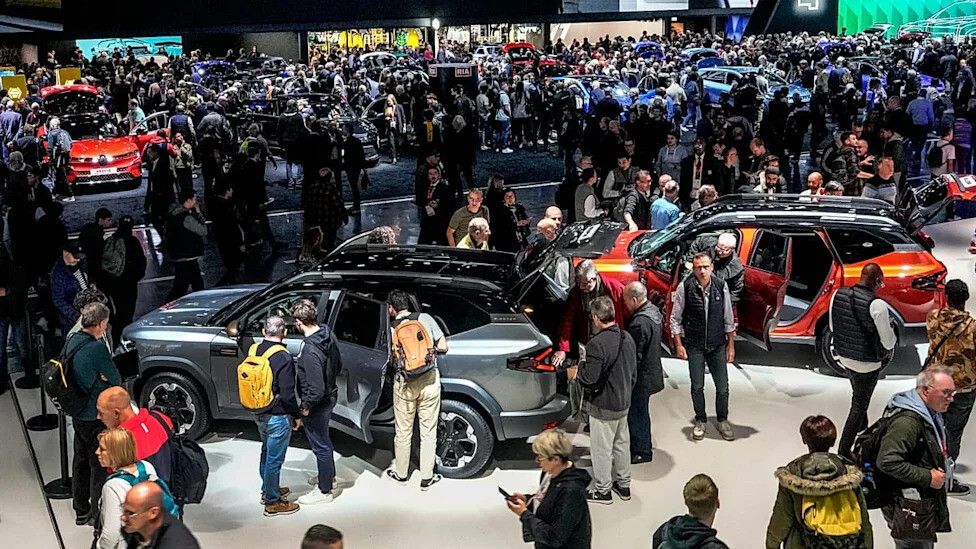
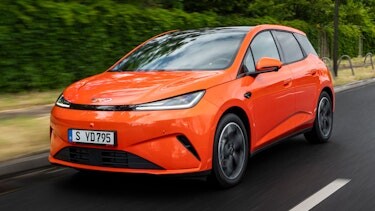
EVs Cost A Lot Less To Drive Than Gas Cars in Europe—Even With Public ChargingInsideEVscontact@insideevs.com (Iulian Dnistran)Thu, September 10, 2026 at 10:30 AM UTCAdd us on GoogleEurocharge 2025Plus, EVs have gotten cheaper to buy, and there are hundreds of new models to choose from.New research shows that EVs were cheaper to run than combustion cars in Europe by at least a quarter in 2025.The ICCT's latest study underlines that even when using more expensive public charging, EVs are still more affordable.Purchase prices have also gone down, with dozens of affordable models to choose from and over 150 in total.It's a good time to drive an electric car in Europe. With gas selling for roughly $9/gallon (€2/liter) in the European Union, EVs are gaining a lot of popularity, and lower running costs are a big part of the boom.Last year, EVs that were charged at home and at public stations were 33% cheaper to run than gas-powered combustion cars, according to new research published by the International Council on Clean Transportation (ICCT), a leading nonprofit organization that provides research to environmental regulators.Various European-spec EVs.Even when using public charging stations exclusively, which are typically much more expensive than home charging, EVs driven on European roads were 28% cheaper to run than comparable gas cars, making the ownership experience a little easier to bear in times when everything seems to be more expensive.AdvertisementAdvertisement"Electric car drivers in Europe are paying about a third less than those with gasoline cars," said Marie Rajon Bernard, ICCT senior researcher and lead author of the report. "Those savings are hard to ignore. They also explain why the car market keeps moving in one direction. We expect battery electric car adoption across Europe to scale up in the coming years if current policies are maintained."But the day-to-day costs aren't the only thing that attracts car buyers to EVs. The same report shows that Europe now offers a huge number of electric models to choose from, with plenty of affordable options on the table. In Germany, the region's largest car market, the number of passenger EVs has quadrupled from 2020 to 2025, reaching roughly 160 offerings. Of these, approximately 35 models are priced below €30,000 ($35,000) and are considered affordable.The latest-generation Dacia Spring is one of the cheapest new EVs in Europe.Except for the small and lower-medium segments, EVs have now reached price parity with their combustion counterparts for the medium, upper-medium, and luxury segments. When compared to plug-in hybrids, EVs cost the same irrespective of the segment.Electric cars have also become cheaper over time, as long as we take inflation into account and compare similar vehicles. Between 2020 and 2025, prices have decreased by about 18%, whereas combustion cars have gotten 2% more expensive. It's worth noting, however, that the landscape has evolved considerably in the first half of this decade, with many new models offering outrageous performance and extra-long driving ranges. These features come with much higher price tags, which in turn have increased the median price for a new EV by 42%. That said, there was no point of reference for many of these cars five years ago.AdvertisementAdvertisementA big reason for the democratization of electric cars is the decreasing battery costs. The high-voltage battery is the single most expensive component of an electric car, and battery prices have gone down globally by about 35% in the past five years, the ICCT said.Adding to all of this is an increasingly large, more reliable, and more powerful charging infrastructure. The EU now has nearly 1.2 million public EV chargers for cars, with an additional 2,450 for heavy-duty vehicles. That's nearly eight times more than in 2020, and there's still plenty of room for growth.In the United States, where gas is roughly half the price compared to the European Union, driving an EV still makes a lot of sense financially. According to the Zero Emission Transportation Association (ZETA), driving a Tesla Model 3 costs roughly 55% less to run compared to a Honda Civic, as long as the EV is charged at home, though the figures vary depending on the state and the cost of electricity.More Stuff Like ThisOne Of Our Favorite Hyundai EVs Is Suddenly Cheaper Than EverRivian's Latest Partnership Unlocks Cheaper Home EV ChargingThe 2027 Volvo EX60 Is Cheaper Than A Plug-In Hybrid XC60The 2027 BMW iX3 Is Actually Cheaper Than A Comparable Gas BMW