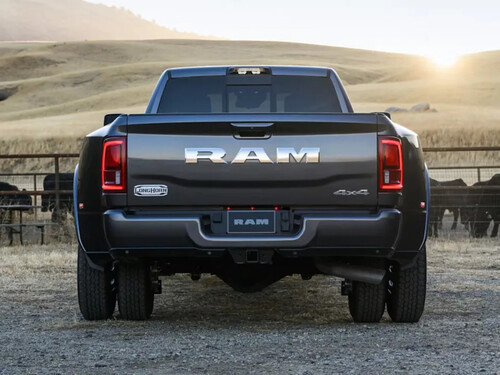
Sacrificing Safety in the Name of Making SpaceMost car owners with traditional-looking shift knobs probably don't realize that they're no longer mechanical. Traditional automatic-transmission levers made gear selection fairly obvious. A driver moved a mechanical-looking handle through a fixed gate, felt a detent, and could usually see the lever resting beside "P," "R," "N," or "D." There aren't any more mechanical automatic transmissions made anymore. You have to migrate to a manual transmission in order to get a mechanical version these days, and it's not like those are e2027 Hyundai Palisade HybridAmos KwonElectronic gear selectors have solved some packaging problems for automakers by creating more open space on the center console, but they can create a new one for drivers: uncertainty about whether the vehicle is actually in Park. The best 2026 vehicles pair their shift-by-wire controls with automatic Park safeguards that intervene if a driver opens the door, unbuckles, or shuts off the vehicle while a drive gear remains selected.Why Shifter Design Matters2025 Land Rover Range RoverAmos KwonRather than using a conventional shifter connected to the transmission by mechanical rods or cables, an electronic system interprets the driver's movement of the lever as an electronic command. When the driver selects Park, Reverse, Neutral, or Drive, sensors send that request to the vehicle's control computer, which checks operating conditions and directs electric actuators or electrohydraulic components at the transmission to engage the appropriate gear. This not only frees up space, but it also endows engineers and designers with more freedom when it comes to the shape, location, and action of the shift knob.2025 Ford Maverick LoboCole AttishaMany current vehicles work differently. A compact electronic selector may be a dashboard toggle, rotary dial, column stalk, push-button bank, or spring-loaded "monostable" lever that returns to center after every shift. These controls free up center-console space, make room for storage, and can suit an EV or hybrid's minimalist cabin. They can also be unfamiliar—especially when a rental, loaner, or newly purchased vehicle uses a different approach than the owner's previous car.Amos KwonThat matters because an electronic selector may not physically remain in the position corresponding with the selected gear. The dashboard should indicate the active range, but a hurried driver can still mistake Neutral or Drive for Park, exit with the vehicle running, and allow it to roll. The silence of EVs and hybrids exacerbates the problem. On an incline, even a slow rollaway can pin a person, strike a pedestrian, hit another vehicle, or cause property damage.Consumer Reports has long criticized confusing shifter interfaces and says its testing of vehicles lacking rollaway protection encouraged manufacturers to add safeguards. It specifically notes that electronic dials, buttons, and other unconventional selectors can make it harder to confirm Park, and that a vehicle without a failsafe may roll away after a simple driver error.What a Useful Fail Safe DoesAutoblog (AI-generated image)Rollaway accidents can cause property damage and injure or potentially cause fatalities. Drivers are so often in a hurry that they think the vehicle is in park, but electronic systems can be deceptive. The most useful protection is typically called automatic Park, Auto Park, or a similar name. Its exact operation varies by manufacturer, but the goal is straightforward: if the driver appears to be leaving the vehicle while it remains in a non-Park gear, the system commands Park.A well-designed system may shift to Park when one or more of these events occurs:The driver's door opens while the vehicle is stationary.The ignition is switched off while Drive, Reverse, or Neutral is selected.The driver unbuckles and opens the door.The vehicle detects an attempted exit while it is stopped.This should not be confused with an electronic parking brake. The two systems complement one another, but they are not identical. Park generally uses a transmission parking pawl to lock the driveline; the parking brake clamps the rear brakes or applies a separate brake mechanism. Drivers should still use the parking brake whenever parked, particularly on hills, because it reduces the load on the parking pawl and provides another layer of protection.Thinking about selling your car? Get an instant cash offer online now. Click here to get started.2026 Cars Brands with Fail Safe ProtectionThere is no single, reliable, industrywide 2026 list because the feature can vary by model, trim, powertrain, market, and even software revision. If you're considering buying a new or used car with an automatic transmission, test the vehicle to see if it will automatically return to Park or engage the parking brake when the engine is shut off, or when the driver's door is opened with the engine running. It's the only way to really know. Buyers can begin with brands that have deployed automatic-Park strategies across electronic-shifter vehicles.Brand familyTypical 2026 electronic-shifter safeguardBuyer takeawayFord and LincolnAutomatic shift to Park when an exit-related condition occurs on many electronically shifted modelsCheck the owner's manual and test the behavior during deliveryGeneral Motors: Chevrolet, Buick, GMC, CadillacAutomatic Park logic is common on many push-button, column, and electronic-selector vehiclesConfirm the system applies Park—not merely a warning chime—when the driver door opensHonda and AcuraElectronic-shifter vehicles commonly include Park-related exit protectionVerify operation by model, especially among hybrids and premium trimsStellantis: Jeep, Ram, Dodge, ChryslerNewer vehicles commonly use software-based Park safeguards following earlier rollaway concernsDo not assume every rotary-dial or button-shift vehicle works identicallyHyundai, Kia, GenesisMany newer push-button and shift-by-wire products use exit warnings and Park-related interlocksReview the exact manual; alerts and automatic Park are different levels of protectionMercedes-Benz, BMW, AudiMany have sophisticated electronic interlocks, but control layouts and exit logic differ substantiallyFamiliarize yourself with the specific selector before driving awayThe History Behind the IssueThe issue is more than theoretical. In 2016, federal investigators examined more than 856,000 Jeep Grand Cherokee, Dodge Charger, and Chrysler 300 vehicles fitted with a spring-loaded electronic shifter that returned to a central position rather than staying aligned with the selected gear. Investigators said the interface provided poor tactile and visual feedback and could increase the risk of unintended gear selection. The probe cited 314 complaints, 121 crashes, and 30 injuries at that point.RamLater, Fiat Chrysler added software behavior that could automatically place certain vehicles into Park when the driver opened the door. Similar attention was paid to rotary shifters in certain Ram and Dodge vehicles after complaints of rollaways. Not every electronic shifter is unsafe. It is that a novel control needs intuitive feedback and a robust backup when human beings inevitably make mistakes.Final ThoughtsElectronic automatic shift knobs are the norm today. Unless you have an early 2000s vehicle, the chances of you owning one with an electronic shifter are very high. Hopefully, yours has a fail safe that prevents rollaways. More automakers are implementing auto Park functionality to their vehicles to the point when, someday soon, it will be standard on all electronic automatic transmissions.