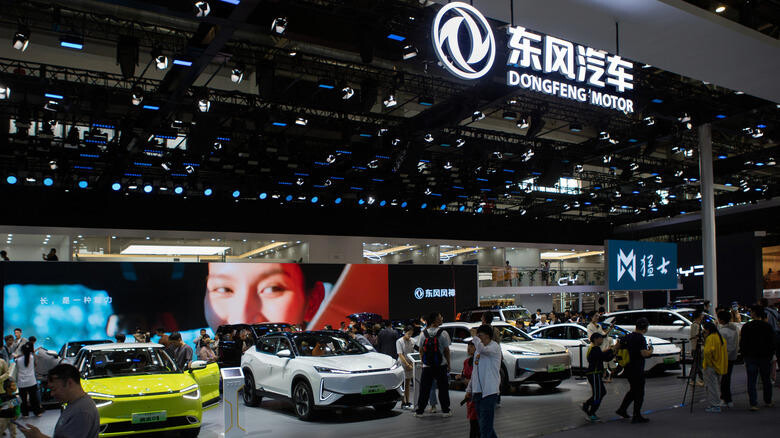
On November 17, Voyah Automotive announced in a filing with the Hong Kong Stock Exchange that it had obtained vehicle manufacturer admission approval from China’s Ministry of Industry and Information Technology (MIIT). Voyah was included in the list of approved vehicle manufacturers in the 412th batch of the Road Motor Vehicle Manufacturers and Products catalog, published under MIIT Announcement No. 31 of 2026. The change primarily concerns the entity responsible for vehicle production. Voyah announcement confirming its independent road motor vehicle production qualification. Although Voyah had already established independent brand, R&D, sales and supply chain operations, its models were previously registered with MIIT under Dongfeng Motor’s name, with production authorization provided through Dongfeng’s manufacturing system. Following the approval, Dongfeng has formally transferred production capacity at its facility in the Wuhan Economic and Technological Development Zone to Voyah. Future models will be registered and manufactured independently under the Voyah Automotive name, eliminating the need to produce vehicles under Dongfeng’s name. Voyah did not apply for an entirely new vehicle manufacturing license from scratch. Instead, it secured independent status through the admission process for member companies of an existing corporate group. Under the relevant vehicle manufacturer admission rules, qualifying group subsidiaries can undergo a simplified review process. Luxeed was also granted independent production status in the same batch, entering the approved manufacturer list as a member company of Chery Group. Both automakers followed a similar route, using their parent groups’ existing manufacturing systems while changing the registered production entities. Notably, China has long since stopped approving new passenger vehicle manufacturing licenses. Xiaomi was the last company to receive a completely new vehicle manufacturing qualification. Since then, new automotive brands seeking independent production status have had to rely on one of three routes: transferring existing production capacity, using contract manufacturing through a joint venture, or separating their manufacturing entities from a parent company. Independent production qualifications have consequently become a scarce resource. Voyah’s approval is also significant in the context of its capital markets status. In March this year, the company went public on the Hong Kong Stock Exchange through an introduction listing. Although Voyah had operated as an independent brand, its manufacturing entity remained within Dongfeng’s corporate structure, potentially weighing on its valuation as part of a traditional automaker. With production status now independent, Voyah will have greater separation across its financial reporting, production capacity and manufacturing entity, giving investors a basis to assess it more like an independent EV maker. In terms of operating scale, Voyah has already built a substantial product portfolio and delivery base. Its lineup includes the Dream, Taishan, Passion, Zhiyin and FREE series, spanning MPVs, SUVs and sedans. According to official data, Voyah delivered 13,030 vehicles in October, bringing its cumulative deliveries for January to October to 128,511, up 13% year over year. Meanwhile, the right-hand-drive version of the Voyah Dream is scheduled to enter overseas markets in November, as the brand continues to expand its presence internationally.

 Liked by Jenna Green, Amélie Fortin




 Liked by Jenna Green, Amélie Fortin