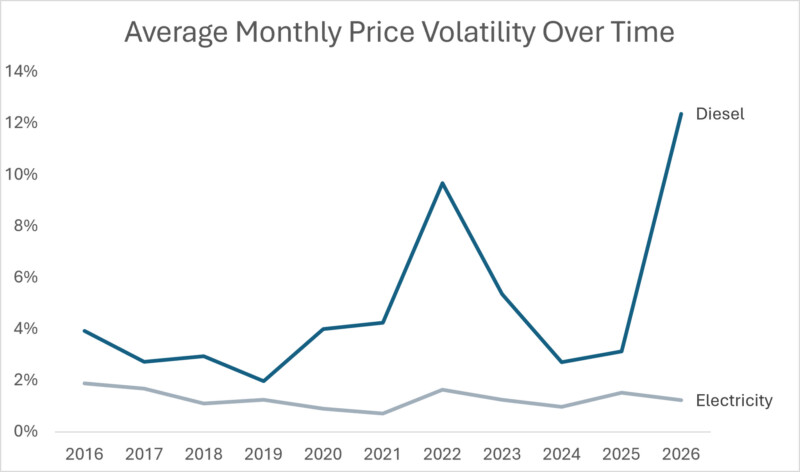
Toronto drivers are facing an unusually large divide at the pumps, with diesel costing 85 cents more per litre than regular gasoline. On November 16, 2026, Gas Wizard listed regular gasoline at 151.9 cents per litre and diesel at 236.9 cents, creating a substantial difference between the two fuels. While gasoline prices have fallen to some of their lowest levels in months, diesel remains considerably more expensive, putting additional pressure on commercial operators and motorists who depend on diesel-powered vehicles. The disparity also raises broader questions about global fuel supplies, refinery production and transportation costs. For businesses already struggling with operating expenses, the growing gap could have consequences that extend well beyond the gas station.
Toronto’s 85-Cent Diesel Premium Adds Up Quickly
Gas Wizard’s November 16 Toronto price data shows regular gasoline at $1.519 per litre and diesel at $2.369 per litre. That works out to an 85-cent difference, meaning diesel costs approximately 56% more per litre. For a driver purchasing 50 litres, regular gasoline would cost $75.95, compared with $118.45 for diesel. The difference is $42.50 on a single purchase. An 80-litre fill would produce an even larger $68 gap when comparing equal volumes of the two fuels.
These figures represent Gas Wizard’s regional pricing estimates rather than guaranteed prices at every station. Other forecasting services can report slightly different amounts. For example, En-Pro’s forecast published by CityNews placed Toronto-area regular gasoline at 153.9 cents per litre for November 16. Using the same provider for both fuel prices is therefore essential when calculating the 85-cent difference. Regardless of those variations, diesel motorists are paying a substantial premium for every litre they purchase, even before considering differences in vehicle fuel efficiency.
Gasoline Prices Have Fallen While Diesel Remains Expensive
The latest price history highlights how quickly the difference between gasoline and diesel has widened. On November 12, Gas Wizard recorded regular gasoline at 156.9 cents per litre and diesel at 231.9 cents, a 75-cent gap. By November 16, gasoline had fallen five cents while diesel had increased five cents, widening the difference to 85 cents. Those movements illustrate how two products originating from crude oil can follow noticeably different pricing patterns over just a few days.
Gasoline drivers have benefited from a broader decline. CityNews reported that a five-cent reduction on November 15 would bring Toronto-area gasoline prices to their lowest level in approximately eight months, according to En-Pro’s figures. That represented a 23-cent decline over 30 days and offered meaningful relief for regular gasoline users. Diesel drivers have not experienced the same immediate benefit. Although the recent widening is clear in Gas Wizard’s data, it remains a short-term development rather than proof that the price gap will continue increasing indefinitely.
Refinery Production Helps Explain Why Diesel Costs More
Although gasoline and diesel both come from crude oil, their prices are determined by different supply and demand conditions. Refineries process crude into several petroleum products, including gasoline, diesel and jet fuel. According to the U.S. Energy Information Administration (EIA), gasoline typically accounts for approximately 45% to 50% of output at U.S. refineries. However, equipment limitations mean producers cannot simply convert unlimited quantities of gasoline production into diesel whenever one product becomes more valuable. This creates opportunities for prices to move in different directions.
A November 5, 2026, EIA report revealed that U.S. refineries have increasingly shifted production toward diesel and jet fuel because of elevated refining margins. Gasoline yields averaged less than 45% during the first eight months of 2026, while distillate yields remained above their recent five-year average. Despite these adjustments, international demand and restricted supplies continued supporting higher diesel prices. For Toronto motorists, the important distinction is that abundant gasoline does not necessarily mean abundant diesel, even when both products originate from the same barrel of crude.
Global Supply Disruptions Are Keeping Diesel Markets Under Pressure
International energy developments are contributing to unusually expensive diesel. In its November 10 Short-Term Energy Outlook, the EIA identified damage to refineries in the Middle East and Russia as an important reason for reduced supplies of refined petroleum products in global markets. These disruptions have supported elevated refining margins and encouraged North American producers to maximize output where possible. However, increasing production cannot immediately replace supplies lost elsewhere, particularly when refinery capacity, transportation systems and shipping availability are constrained.
American diesel inventories also illustrate the pressure facing the broader market. EIA figures show U.S. distillate fuel stocks reached approximately 103.3 million barrels during the week ending November 6, 2026. Although that represented an improvement from the previous week, inventories remained below the approximately 110.9 million barrels recorded a year earlier. Lower inventories can make markets more sensitive to unexpected disruptions. While these conditions help explain unusually expensive diesel across North America, they cannot independently account for every cent of Toronto’s current price difference.
Winter Heating Demand Could Keep Diesel Prices Elevated
The arrival of colder weather introduces another complication for diesel markets. Diesel and heating oil belong to the broader category of distillate fuels, and their production and pricing are closely connected. According to the EIA, demand for heating oil typically increases during autumn and winter, particularly in the northeastern United States. Agricultural harvesting also contributes to seasonal diesel consumption. These overlapping demands can strengthen distillate prices at the same time that gasoline demand begins easing after the summer driving season.
The EIA notes that distillate refining margins are generally strongest from October through February, reflecting these seasonal pressures. This does not mean diesel sold at Toronto filling stations is identical to every heating fuel used in homes, or that winter demand alone explains the current premium. Nevertheless, competing uses for related refined products can influence wholesale market conditions. A colder-than-expected winter or additional refinery disruptions could create further pressure. Conversely, milder weather and improving inventories could help ease the imbalance, providing some relief to diesel-dependent businesses.
Commercial Trucking Operators Face a Particularly Heavy Burden
For a commercial truck operator, diesel prices represent much more than a frustrating number on a roadside sign. Fuel is a recurring operating expense that directly affects the cost of transporting freight, servicing customers and maintaining delivery schedules. At Toronto’s November 16 benchmark of $2.369 per litre, a hypothetical 400-litre diesel purchase would cost $947.60. Even a relatively small 10-cent change in the diesel price would alter that transaction by $40, making price volatility particularly important for businesses purchasing large quantities of fuel.
The scale of diesel consumption across Canada’s economy is considerable. Statistics Canada reported that 29.4 billion litres of diesel fuel were sold to Canadian end-users in 2025. Separate figures for secondary fuel distributors show agriculture, road transportation, commercial operations and construction among the major customer categories. For a small trucking company operating several vehicles, elevated fuel costs can complicate cash-flow planning and decisions about accepting new contracts. Larger fleets may have more purchasing flexibility, but they are still exposed to market prices and the financial consequences of prolonged diesel volatility.
Fuel Surcharges Are Passing Higher Costs Through Transportation Networks
Businesses transporting goods have developed mechanisms to manage changing diesel costs, with fuel surcharges among the most common. These charges are added to transportation rates according to formulas tied to fuel-price benchmarks. FedEx Freight Canada, for example, calculates its domestic fuel surcharge using Canadian wholesale diesel prices published by Natural Resources Canada. The company adjusts the surcharge weekly, allowing changes in energy costs to affect customer invoices without requiring an entirely new base transportation rate.
Canadian National Railway also uses fuel-based pricing adjustments. Its published intermodal schedule for the week beginning November 16, 2026, listed an intra-Canada fuel surcharge of 39.26% under one applicable tariff, calculated using a U.S. diesel-price benchmark. This percentage is specific to that pricing arrangement and should not be interpreted as a universal surcharge on Canadian shipments. Still, it demonstrates how energy-market conditions can influence freight bills. Businesses receiving those bills may absorb some additional expenses, renegotiate shipping arrangements or eventually adjust their own prices. The effect depends on individual contracts and competitive conditions.
Higher Diesel Costs Could Eventually Affect Everyday Purchases
Diesel prices matter to households even when their personal vehicles run exclusively on gasoline. Food, building supplies, household appliances and countless other products rely on transportation networks before reaching stores and customers. When carriers face elevated fuel expenses, those costs become one consideration in negotiating shipping rates. The eventual effect on retail prices is not immediate or automatic, but sustained transportation-cost increases can place additional financial pressure on manufacturers, distributors and retailers.
Statistics Canada reported that Canadian truck transportation service prices increased 9.5% year over year during the second quarter of 2026, amid rising global energy costs. Its third-quarter business survey also found that 22.4% of transportation and warehousing businesses expected to raise their service prices over the next three months. Among businesses in that sector identifying input costs as an obstacle, energy was the most frequently cited concern, at 68.1%. These findings predate Toronto’s latest diesel-price snapshot, but they help demonstrate why fuel affordability remains important throughout the supply chain. Consumers may benefit from falling gasoline prices while businesses delivering their purchases face different financial conditions.
Diesel’s Fuel-Efficiency Advantage May No Longer Offset Its Price
Diesel engines have historically appealed to drivers who value fuel efficiency, particularly for highway travel and heavier vehicles. Natural Resources Canada explains that diesel fuel contains approximately 10% more energy per litre than gasoline. Combined with the efficiency advantages of diesel engines, this can reduce fuel consumption by roughly 15% to 30% compared with similar gasoline-powered vehicles. Under more balanced fuel-price conditions, these savings can help compensate for the higher purchase price of some diesel models.
Toronto’s current pricing changes that calculation substantially. Consider a hypothetical gasoline vehicle consuming 10 litres per 100 kilometres. At $1.519 per litre, fuel costs would be $15.19 per 100 kilometres. A comparable diesel vehicle consuming 7.5 litres over the same distance would cost approximately $17.77 at $2.369 per litre, despite using 25% less fuel. At these prices, a diesel vehicle would need to consume approximately 36% fewer litres to match the gasoline vehicle’s fuel cost per kilometre. Actual comparisons depend on vehicle specifications, driving conditions and maintenance costs, but the example illustrates how a large diesel premium can outweigh a meaningful efficiency advantage.
Fuel Taxes Alone Cannot Explain the 85-Cent Difference
Taxes are an important component of Canadian pump prices, but current policy does not explain most of Toronto’s diesel premium. Ontario permanently reduced its gasoline and clear-diesel fuel tax rates to nine cents per litre, effective July 1, 2025. Both fuels are also subject to Ontario’s 13% harmonized sales tax. Meanwhile, the federal government temporarily suspended its fuel excise taxes on April 20, 2026. That removed the usual 10-cent-per-litre federal excise tax on gasoline and four-cent tax on diesel, with the suspension extended through January 31, 2027.
The federal consumer carbon fuel charge also ceased applying on April 1, 2025, removing another tax that previously affected transportation fuel prices. Although the different amounts of federal excise tax relief can influence the relative prices of gasoline and diesel, they are far smaller than the current 85-cent gap. The remaining difference is much more closely associated with underlying fuel-market conditions, including wholesale prices, refining margins, international supply, distribution costs and retail pricing. Tax adjustments can provide relief to motorists, but they cannot automatically eliminate disparities created by separate commodity markets.
What Drivers Can Do While Waiting for Diesel Prices to Ease
Motorists cannot control international refinery production or global fuel demand, but they can take practical steps to reduce consumption. Natural Resources Canada estimates that fuel-efficient driving techniques can lower vehicle fuel use by as much as 25%, depending on circumstances. Maintaining steady speeds, accelerating gently, avoiding unnecessary idling and planning efficient routes can all help. Proper tire maintenance also matters: tires underinflated by eight pounds per square inch can increase fuel consumption by up to 4%. Comparing recently reported diesel prices at nearby stations may produce additional savings, provided the cost of travelling farther does not outweigh the discount.
The longer-term outlook remains uncertain. The EIA’s November 2026 forecast suggests elevated refinery margins could persist through much of 2027, although changes in production, inventories, shipping conditions and global demand may alter that outlook. Toronto drivers should watch whether diesel inventories recover and whether wholesale diesel prices begin declining alongside gasoline. The present 85-cent premium is a verified comparison for November 16, not a permanent price relationship. For now, the widening divide illustrates an important reality: cheaper gasoline does not necessarily signal relief for the trucking companies, businesses and diesel motorists that help keep Canada’s economy moving.