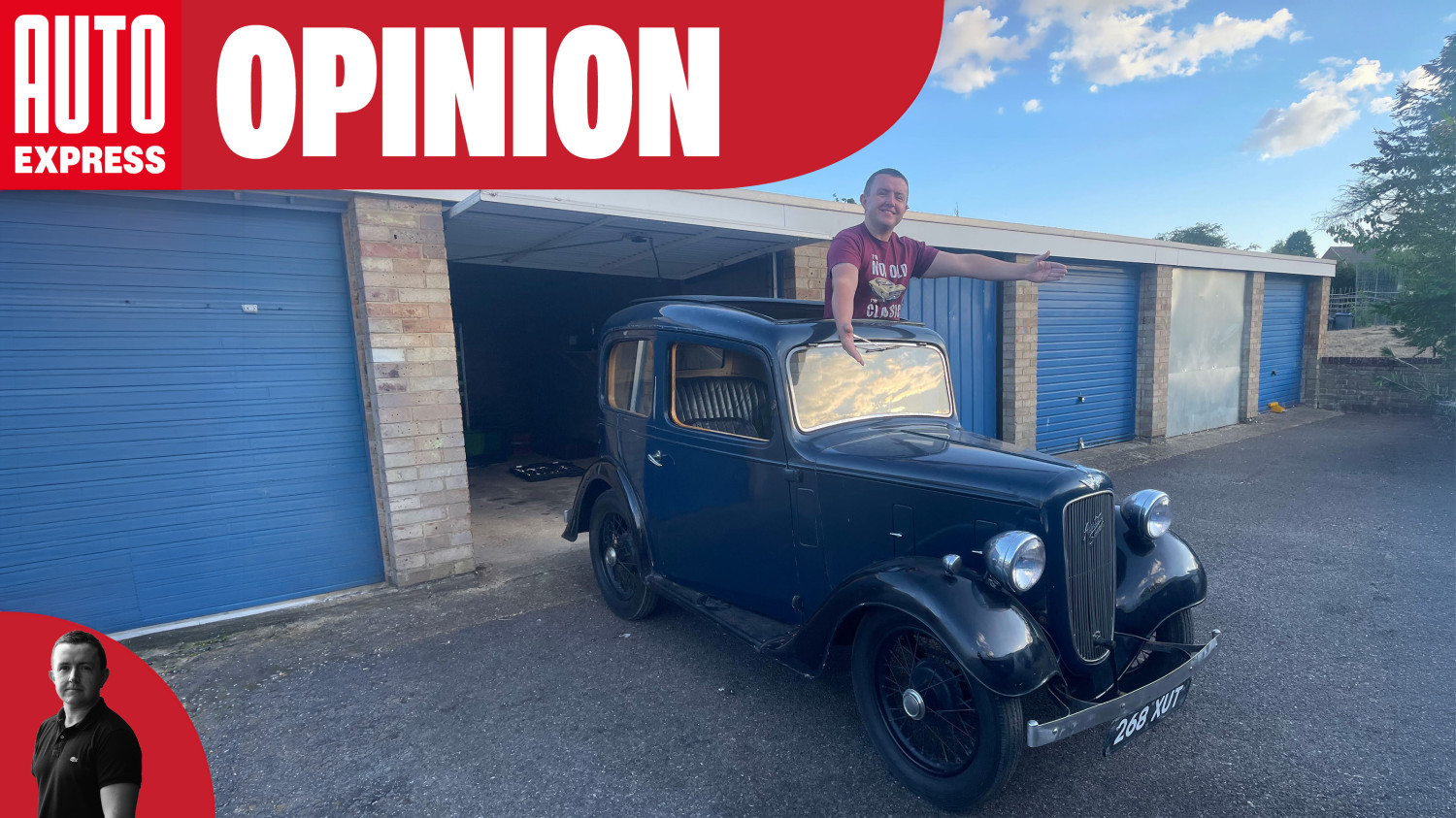



















Despite a number of objections being raised by both my fiancée and my finances, I recently decided to do what many would consider renouncing all common sense and buy myself a car that’s getting on for 100 years old. The car in question is a 1937 Austin Seven Ruby, and while it’s currently sitting in bits in my garage, I simply couldn’t be happier. Now it’d be grossly naive to expect a car of this age — or just about any classic or vintage car for that matter — to be without its foibles, and the reason my Austin is in bits is an enormous coolant leak. However, the sheer simplicity of the Seven is one of the things that I reckon makes it (and most pre-war vintage cars, to be honest) so attractive: virtually every one of its components is accessible and straightforward to work on. Sure, you do need to be a bit mechanically minded, but even the bigger jobs can be done at home. Although I do know the basics of repair and maintenance, my little Seven has certainly provided me with an engineering education. My good friend Tony is nothing short of a mechanical wizard, and he’s been very kindly assisting me and showing me the ropes. As a result, whether it’s fettling with electronics or even dismantling the engine, it’s all been far less intimidating than I thought it would be. You might not have a Tony to guide you, but many vintage cars have spawned owners’ clubs that are fiercely dedicated and supportive. Whether you’re attending shows or simply asking a question in an online forum, I guarantee that your fellow enthusiasts will be all too happy to advise. It’s this sense of community that makes vintage cars even more appealing. Those are big plus points before I even get to the driving experience, and each vintage car has a unique character on the road. In fact, even if you drive two examples of the same model back-to-back, they’re likely to feel very different to each other. Admittedly, some cars of this age are a lot more difficult to drive than others, and it’s probably best if we overlook their safety credentials. However, whichever one you choose, the sensations, sounds and smells of vintage cars will bring you plenty of joy – along with, yes, plenty of challenges. I won’t deny that you’ll need to get used to your own car’s quirks. But with a bit of time, patience and understanding, you’ll have an enormous smile on your face at a relatively modest cost.